

How is an anal abscess treated?
The treatment of an anal abscess depends on the stage of the disease, as well as the extent and location of the abscess. Most anal abscesses are treated surgically. In principle, however, there are both conservative and surgical therapy approaches for treating an anal abscess.
Conservative therapy consists of antibiotics or medications to combat inflammation combined with painkillers. However, a conservative treatment approach is only a promising option in exceptional cases with very small inflammations or anal abscesses or after spontaneous perforation of the abscess. In such cases, close medical monitoring is very important to prevent possible complications such as a recurring abscess or even an anal fistula. Read more here about the necessary steps and options in the treatment of an anal abscess, as well as the anal abscess operation.
Medication treatment for anal abscess
Various options are available for treatment with medications, which can be used depending on the position, condition, and size of the encapsulated inflammatory focus.
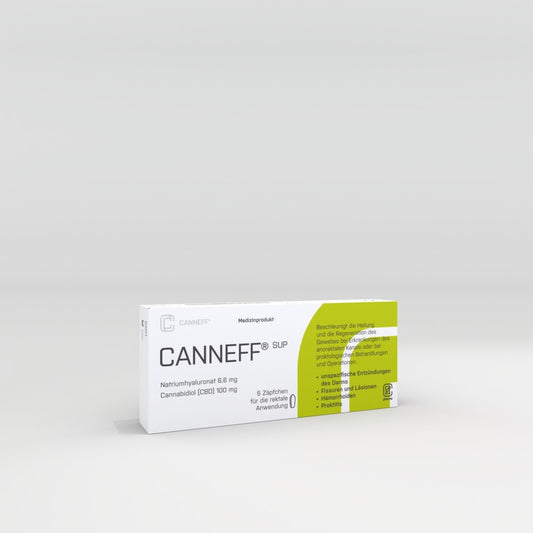
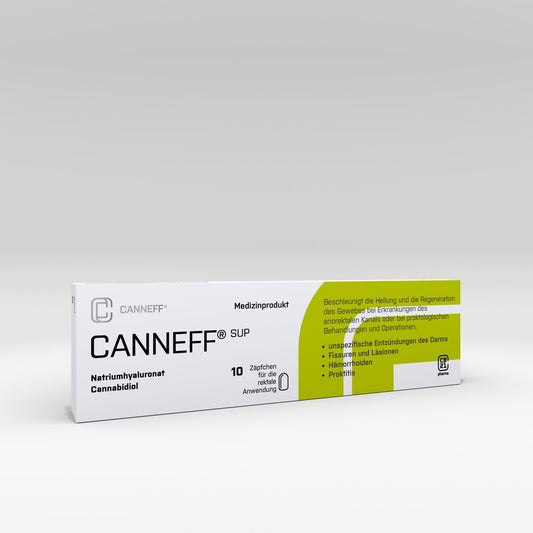
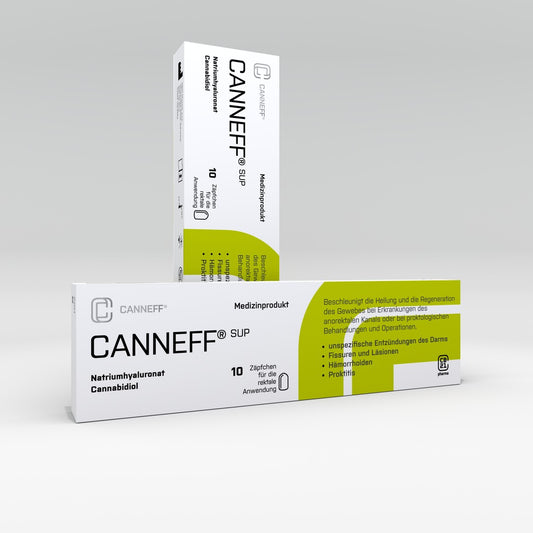
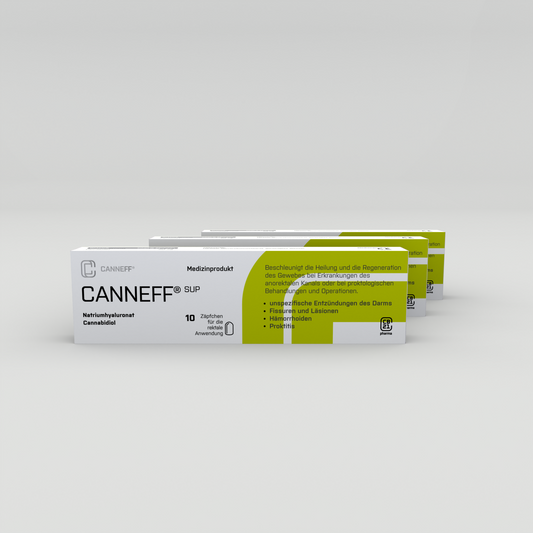
In the early phase of the disease or with minor inflammations, an attempt can be made to treat the abscess with antibiotics, especially if it is mild, small, and superficial. However, antibiotics only help in a few cases and are often used in addition to surgical therapy, the anal abscess operation. An anal abscess often arises from blocked glands in the anal area, but also from inflamed anal fissures. With CANNEFF® SUP suppositories, you can Healing and tissue regeneration in diseases of the anorectal canal can accelerate or also support the healing process of ulcers in the rectal area. Also Suppositories with anti-inflammatory or pain-relieving active ingredients can thus be recommended by the treating physician as part of a conservative therapy approach.
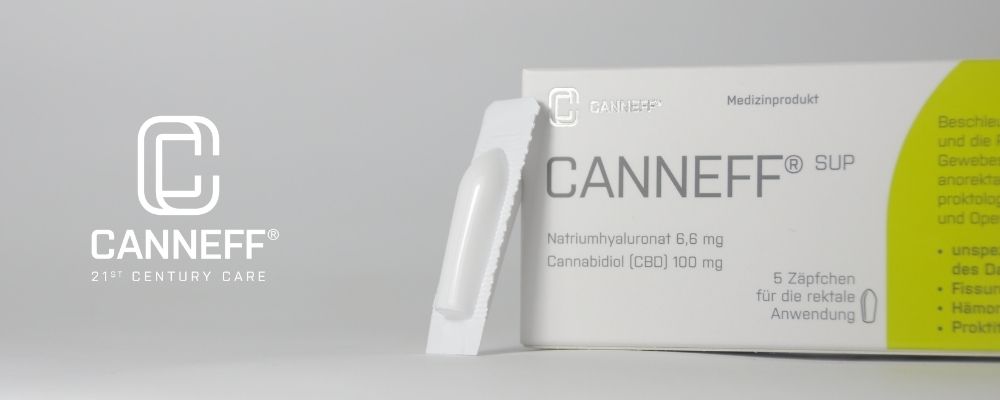
CANNEFF® SUP can help alleviate symptoms caused by nonspecific intestinal inflammations and thus improve patients' well-being. But even after anal abscess surgery, you can support the healing process with CANNEFF® SUP suppositories to promote wound healing accordingly. If it is already a chronic anal abscess, there is a risk of complications and the formation of an anal fistula. You can also support the healing process of anal fistulas with CANNEFF® SUP suppositories. Read more here about how to accelerate the healing process in the article on anal abscess treatment with suppositories.
Anal abscess surgery for incision and drainage
In most cases of anal abscesses, surgical intervention is necessary. The anal abscess is opened by a small incision to allow the pus to drain. This is often done under local anesthesia, but for larger or deeper abscesses, general anesthesia may be required. Read everything here about the surgery for anal abscesses.
Aftercare and wound care after surgery to accelerate the healing process of anal abscesses
Aftercare and wound care following an anal abscess operation play a central role in accelerating the healing process. The wound is left open in the anal canal for drainage so that the wound area can heal well from the inside out. Regular rinsing and dressing changes are necessary to prevent reinfection. Measures to support wound healing in the anal canal should also be taken to prevent complications. There are valuable testimonials about CANNEFF® SUP suppositories to support the healing process after anorectal surgeries, showing how wound healing can be promoted accordingly. Read more here about the treatment of anal abscesses with suppositories.
Which ointment for anal abscess?
Ointments alone are often not enough to solve the problem. However, ointments can be used as a supportive treatment to relieve the symptoms of an anal abscess, such as pain and inflammation around the anus. It is important to seek medical advice quickly in the case of an anal abscess, as surgical treatment is often necessary. Some ointments that can be used for symptomatic treatment of anal abscesses include pain-relieving ointments containing lidocaine or corticosteroid ointments that can reduce inflammation, used under medical recommendation. However, it is important to emphasize that surgical drainage is often required for an anal abscess. Ointments can only be used as an adjunct. If you suspect an anal abscess, you should urgently see a doctor to ensure a rapid, effective, and stage-appropriate treatment.
What home remedies are there for the complementary treatment of an anal abscess?
Home remedies for complementary treatment of anal abscesses primarily serve to relieve symptoms and can support healing after anal abscess surgery. Since anal abscesses are often more severe and require surgical treatment, a medical diagnosis and treatment should always be carried out. Therefore, home remedies should only be used alongside medical treatment to alleviate symptoms such as pain and inflammation in the anal area. However, home remedies do not replace medical treatment, as anal abscesses often need to be surgically opened and drained to ensure complete healing. Of course, there are some proven home remedies for complementary treatment of an anal abscess.
Sitz baths with anti-inflammatory additives like chamomile
Sitz baths with chamomile or oak bark have anti-inflammatory and soothing effects. Regular use of sitz baths, about two to three times daily, can clean the anal area, promote blood circulation in the anal region, and thus support healing.
High-fiber diet with sufficient fluid intake
In addition, a high-fiber diet combined with adequate fluid intake supports bowel movements. This can help avoid unnecessary pressure in the anal area.
Thorough hygiene in the anal area
Thorough anal hygiene also plays a crucial role in supporting wound healing and promoting the healing process in the anal canal after anal abscess surgery. Despite these home remedies, a doctor should always be consulted if an anal abscess is suspected, as surgical treatment is often necessary.
What is the course of an anal abscess?
The course begins with the acute symptoms of an anal abscess. These include severe pain, swelling, and redness in the anal area. The abscess often forms as a painful, swollen, encapsulated spot that progressively fills with pus. Timely and appropriate treatment is crucial for a rapid healing process of an anal abscess.
The primary treatment is surgical drainage, where the pus is removed and the tissue affected by the anal abscess is thoroughly cleaned. This surgical procedure helps eliminate the infection and relieve pain in the anal area. After drainage, careful wound care is important to support healing and prevent complications such as the development of an anal fistula or a recurring anal abscess. This includes regular wound checks, maintaining hygiene in the anal area, and possibly taking antibiotics to prevent reinfection. With appropriate treatment and good aftercare, most patients with an anal abscess fully recover. However, if left untreated, an anal abscess can lead to serious complications and significantly prolong the healing process.
How quickly or when should an anal abscess be operated on?
An anal abscess should be operated on as soon as possible after diagnosis, ideally within 48 hours. An untreated anal abscess can enlarge and lead to serious complications, such as fistula formation or blood poisoning, known as sepsis. An anal abscess is an acute inflammation that can manifest with severe pain, redness, swelling, and fever. Since the condition usually does not heal on its own, surgical intervention is required in most cases to drain the abscess and eliminate the infection. Healing after an anal abscess surgery typically takes several weeks, with regular follow-up appointments being important to avoid complications. In particularly severe cases, an anal fistula may develop, requiring further treatment.
Why is timely surgery important for anal abscesses?
Early anal abscess surgery not only prevents the spread of infection in the anal tissue but also relieves the severe pain and symptoms of anal abscesses. At the same time, it reduces the risk of secondary diseases. Delayed treatment of anal abscesses can cause the inflammation to penetrate deeper into the surrounding tissue, resulting in a complicated and longer healing process.
Is surgery always performed for an anal abscess, or is there a conservative treatment?
Whether surgical treatment is performed for an anal abscess largely depends on the stage of the disease, the location, and the size of the abscess. In principle, there are both conservative and surgical treatment approaches for an anal abscess or perianal abscess. However, the conservative approach is only promising in exceptional cases with very small inflammations or anal abscesses, or after spontaneous perforation of the abscess. In such cases, close medical monitoring is very important to prevent complications such as recurrent abscesses or even an anal fistula. Conservative therapy consists of antibiotics to combat the inflammation combined with painkillers. Suppositories with anti-inflammatory or pain-relieving agents can also be used here. CANNEFF® SUP can help alleviate symptoms caused by nonspecific intestinal inflammations and thus improve patients' well-being. Even after anal abscess surgery, you can support the healing process with CANNEFF® SUP suppositories to promote wound healing. Read more here about the treatment of anal abscesses with suppositories. Learn how CANNEFF® SUP suppositories Can accelerate healing and tissue regeneration in diseases of the anorectal canal.
Can an anal abscess heal on its own?
In smaller anal abscess or perianal abscesses, spontaneous healing can also occur without anal abscess surgery. However, this is extremely rare. Usually, anal abscesses increase in size, and the pus cavity can also grow accordingly. This swelling in the anal tissue can worsen the symptoms of the anal abscess. The abscess may also drain on its own, which can consequently lead to an anal fistula. Therefore, the treatment of an anal abscess is almost always surgical and should be performed as early as possible.
Is a complete cure of an anal abscess possible?
Yes, a complete cure of an anal abscess is generally possible if the abscess is treated early and appropriately. With proper treatment and careful follow-up care, most anal abscesses can fully heal, allowing patients to return to their normal lives. However, in some cases, long-term effects may occur or there may be a tendency for recurrent anal abscesses, especially if chronic diseases causing the abscess are not adequately treated.
The key to successful healing lies in thorough surgical drainage of the abscess, where all pus is removed and the affected area is thoroughly cleaned. Effective treatment also includes managing complications such as anal fistulas that can develop from an abscess. If a fistula is present, it is crucial to treat it as well, as otherwise it can serve as a chronic source of infection that delays healing and increases the risk of recurrent abscesses.
It is also important to treat possible underlying causes such as chronic diseases or inflammatory processes that could contribute to the formation of abscesses. This includes, for example, therapy for diseases like Crohn’s disease, which can play a predisposing role. Good aftercare is also crucial: patients should follow their doctor’s instructions for wound care and hygiene carefully to avoid reinfection or complications. This includes regularly changing dressings and observing hygiene regulations in the affected area.
What complications can arise as a result of an anal abscess?
An untreated anal abscess can lead to serious health complications that are not only painful but can also have long-term consequences. It is therefore important to seek medical treatment early if an anal abscess is suspected to minimize risks. Here are some of the most common complications that can occur around an anal abscess explained in more detail.
Formation of an anal fistula
One of the most common complications of an anal abscess is the development of an anal fistula. This is an unnatural, tunnel-like channel that forms between the anal canal and the skin surface. This fistula developed from the original abscess that could not fully heal. Anal fistulas usually cause recurring infections and a constant discharge of pus or secretions through the fistula tract. Anal fistulas are generally treated only through surgery, which can be very complex and lengthy depending on the complexity of the fistula.
Spread of infection leading to sepsis
A particularly serious complication is sepsis, which can occur if the abscess infection spreads throughout the body. Sepsis is a life-threatening immune system reaction that can cause organ damage. People with weakened immune systems are especially at risk. Sepsis requires immediate intensive medical treatment, as it can be fatal without rapid intervention. If the abscess remains untreated, there is generally a risk that the infection will spread to surrounding tissue in the anal area. Such spread of the anal abscess significantly complicates treatment, as deeper infections often can only be treated with extensive surgical procedures and intensive aftercare. In such cases, the healing time is prolonged and there is a higher risk of recurrent infections. Even with a sudden drainage of the abscess, when the abscess bursts uncontrollably, hygiene in the intimate area is a crucial factor. Otherwise, bacteria can easily spread in the intimate area, and especially for women, there is a risk of vaginitis or cystitis.
Chronic Pain and Fecal Incontinence
Long-term complications of an anal abscess can also include chronic pain and dysfunction of the anal sphincter muscle. Repeated procedures or the spread of the infection can damage the surrounding tissue. In some cases, this leads to impaired sphincter function, which in turn can result in incontinence. Such damage is usually difficult to repair and represents a significant reduction in quality of life for those affected.
Wound Healing Disorders in Anal Abscesses
After the surgical drainage of an anal abscess, wound healing disorders can also occur. The mucous membrane in the anal region is a very sensitive area. Wound healing disorders occur when the wound in the anal canal does not heal properly or, for example, becomes reinfected due to inadequate aftercare, anal hygiene, or wound cleaning. This can lead to a significantly prolonged healing process and may also require further surgical interventions such as a repeat anal abscess operation for treatment. Wound healing disorders also increase the risk of developing an anal fistula or the recurrence of an abscess.
Recurrent Anal Abscesses
Perianal abscesses tend to recur. Repeated inflammation and breakthrough of the inflammation through the rectal mucosa can also lead to the formation of anal fistulas. Recurrences of anal abscesses refer to the reappearance of an abscess after initially successful treatment. A recurring anal abscess can occur if the abscess is not completely removed or the underlying cause is not adequately treated. Treating a recurrent anal abscess often requires a more thorough examination and more precise surgical intervention. It is important to ensure that all infected areas are thoroughly removed while simultaneously addressing the underlying causes to prevent future recurrences. In some cases, additional diagnostic procedures such as an examination for anal fistulas or chronic diseases may be necessary.
Connection between Anal Abscess and Anal Fissure
An anal fissure, a painful tear in the mucous membrane of the anal canal, can be both a cause and a consequence of an anal abscess. An untreated anal fissure can lead to an infection in the anal canal, which may develop into an abscess. Conversely, the intense pressure and inflammation caused by an anal abscess can damage the sensitive mucous membrane in the anal canal, causing or promoting a fissure of the mucosa. Both conditions often exacerbate each other, as the severe pain and tension of the sphincter muscle in a fissure hinder the healing of an abscess and vice versa. In such cases, comprehensive treatment is necessary to address both the infection and the damage or fissures of the mucous membrane in the anal area, thereby providing long-term relief of symptoms.
What Causes a Recurring Anal Abscess?
A recurring anal abscess can be due to incomplete drainage during the anal abscess operation, but also due to the formation of an anal fistula. The symptoms of a recurring anal abscess are similar to those of the original abscess and include severe pain, redness, swelling, and sometimes fever. The following causes for a recurrent anal abscess are possible:
Incomplete Drainage
If during the first anal abscess surgery not all infected areas or pus could be completely removed, the anal abscess may return. Inadequate drainage allows the infection to regrow and form a new abscess.
Anal Fistulas
In many cases, an anal abscess can lead to an anal fistula. If a fistula is not properly treated, it can serve as a chronic source of infection and promote the formation of new anal abscesses. Read more here about the treatment of anal fistulas with suppositories.
Inadequate Treatment of the Cause of the Anal Abscess
Factors such as chronic inflammation or certain diseases like Crohn's disease can also promote the development of abscesses. If these underlying causes are not adequately treated, there is a risk that the anal abscess may recur.
Hygienic Factors
Insufficient hygiene in the anal area can also lead to reinfection. Poor anal hygiene can increase the likelihood of bacteria entering the wound area and forming a new anal abscess.