

What are the most common causes of cervicitis and how are they medically classified?
Cervicitis, the inflammation of the cervix, can be triggered by a variety of different factors. From a medical perspective, the causes are divided into two main groups: infectious and non-infectious triggers. This differentiation is essential for choosing the appropriate therapy.
Infectious causes
The most common cause of cervicitis is sexually transmitted infections (STI). The most important bacterial and viral pathogens include:
|
Pathogens |
Type |
Significance |
|
Chlamydia trachomatis |
Bacterial |
Most common pathogen, often asymptomatic, high risk of recurrence |
|
Neisseria gonorrhoeae |
Bacterial |
Causes gonorrhea, leads to purulent cervicitis |
|
Mycoplasma genitalium |
Bacterial |
Difficult to detect, often chronic course |
|
Trichomonas vaginalis |
Protozoa |
Typically associated with heavy discharge |
|
Herpes simplex virus type 2 |
Viral |
Acute symptomatic with pain and ulcerations |
|
Human papillomavirus (HPV) |
Viral (low/high risk) |
Usually causes chronic silent inflammation |
Non-infectious causes
Besides infections, there are a number of non-infectious triggers that can also cause cervicitis:
-
Mechanical stimuli: e.g., from intrauterine devices (IUDs), diaphragms, tampons, or intense sexual intercourse. Such stimuli cause micro-injuries to the mucosa.
-
Chemical irritations: e.g., from perfumed intimate washes, intimate sprays, lubricants, or spermicides. These products can irritate the mucosa or cause allergic reactions.
-
Hormonal factors: Especially during menopause, estrogen deficiency leads to mucosal atrophy. The thin and dry mucosa is more susceptible to irritation and inflammation.
-
Microbial dysbiosis: A disturbed vaginal flora – such as in bacterial vaginosis – weakens the natural protection of the cervix and promotes inflammatory reactions.
-
Immunological factors: Local immune weaknesses or systemic immunosuppression can maintain a chronic readiness for inflammation.
How do infectious and non-infectious triggers of cervicitis differ in their development and treatment?
Infectious and non-infectious triggers of cervicitis differ fundamentally in their Pathogenesis (development), Symptoms and Therapy strategy. A precise distinction is essential for targeted treatment, as both forms differ significantly not only in their cause but also in their course and response to medication.
Development
|
Characteristic |
Infectious cervicitis |
Non-infectious cervicitis |
|
Cause |
Bacteria, viruses, protozoa |
Mechanical stimuli, chemical substances, hormonal deficiencies |
|
Transmission route |
Mostly sexual (STI) |
Contact with foreign bodies, intimate hygiene products |
|
Entry point |
Microdamage of the cervical mucosa |
Microtraumas, mucosal atrophy |
|
Example pathogens |
Chlamydia trachomatis, Neisseria gonorrhoeae, HSV, HPV |
IUD, diaphragm, perfumed wash lotions, estrogen deficiency |
Infectious cervicitis usually arises from the invasion of pathogenic microorganisms into the sensitive transitional epithelium of the cervix. In contrast, non-infectious forms develop due to irritations that do not require primary pathogen involvement but are caused, for example, by local mucosal injuries or hormone deficiency.
Symptoms
Both forms can cause similar symptoms, e.g., discharge, irritation, or bleeding. However, it is evident that:
-
Infectious cervicitis: Rather acute, more pronounced (purulent discharge, pain, possibly fever)
-
Non-infectious cervicitis: often milder, chronic, recurrent, burning or dryness-related
Treatment
|
Therapy aspect |
Infectious cervicitis |
Non-infectious cervicitis |
|
Primary treatment |
Anti-infectives (antibiotics, antifungals, antivirals) |
Mucosal care, avoidance of irritants, if necessary local hormone therapy |
|
Goal |
Pathogen eradication |
Regeneration of the mucosa and stabilization of the environment |
|
Duration |
Short-term therapy (usually 5–10 days) |
Long-term, repeated treatment cycles required |
|
Examples of medications |
Doxycycline, azithromycin, metronidazole, acyclovir |
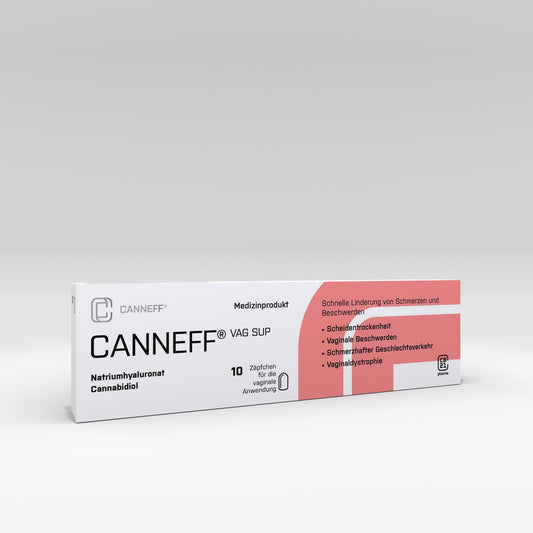
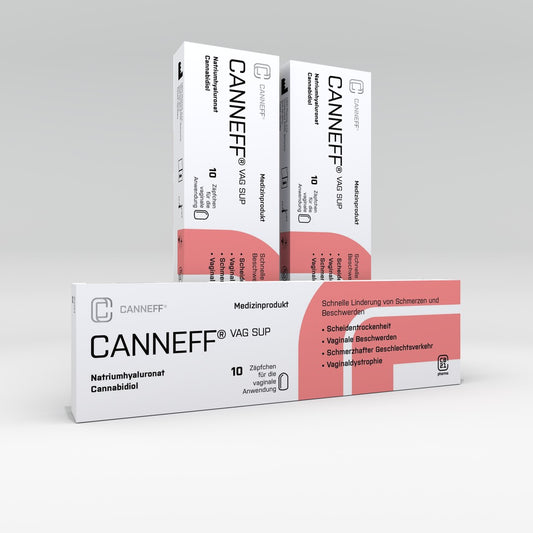
CANNEFF® vaginal suppositories, estriol suppositories, lactic acid, probiotics |
|
Partner treatment |
Often necessary |
Usually not necessary |
Why are sexually transmitted infections considered a significant risk factor for the development of cervicitis?
Sexually transmitted infections (STIs) are considered one of the main risk factors for the development of cervicitis because they directly damage and immunologically activate the cervical mucosa. In particular, bacterial and viral pathogens enter the cervix through sexual intercourse, cause local inflammatory reactions there, and if untreated, can lead to chronic complaints and complications.
Pathogens with affinity for cervical mucosa
The following STI pathogens are particularly relevant for cervicitis:
|
Pathogens |
Special feature regarding cervicitis |
|
Chlamydia trachomatis |
Most common cause, often asymptomatic, can become chronic |
|
Neisseria gonorrhoeae |
Causes purulent inflammation, high risk of complications |
|
Mycoplasma genitalium |
Difficult to detect, increasingly significant |
|
Trichomonas vaginalis |
Protozoan with typical frothy discharge |
|
Herpes simplex virus type 2 |
Leads to acute, painful mucosal lesions |
|
Human papillomavirus (HPV) |
Causes subacute inflammation and cellular changes |
These pathogens use microlesions of the cervix as an entry point. Some are active intracellularly (e.g., chlamydia) and thus evade direct immune defense, which promotes persistent inflammation.
Pathophysiology of the inflammatory reaction
The cervix has a sensitive transition epithelium (squamocolumnar zone) that is particularly susceptible to infections. STI pathogens activate local immune cells here and lead to:
- Increased blood flow and mucosal edema
- Increased leukocyte infiltration
- Increased mucus production and cellular exudation (discharge)
- Microscopically visible erosions or ulcerations
The result is acute or subacute cervicitis with clinical symptoms such as discharge, contact bleeding, or dysuria.
Medical relevance
- High number of unreported cases: Many STIs are asymptomatic, remain untreated, and lead unnoticed to cervicitis.
- Risk of chronicity: Especially with chlamydia or HPV, the inflammation can persist and cause structural mucosal changes.
- Complications: Ascending infections (e.g., pelvic inflammatory disease), fertility disorders, or cervical dysplasias with HPV are possible.
- Transmission: Infected sexual partners can repeatedly transmit the infection – therefore partner diagnosis is essential.
Which mechanical stimuli can promote cervicitis and how do they affect the cervical mucosa?
Mechanical stimuli are considered non-infectious but clinically relevant triggers of cervicitis. They affect the sensitive mucosa of the cervix and can cause micro-injuries that promote an inflammatory response. This form of irritation often leads to chronic or recurrent cervicitis – especially with predisposing factors such as hormonal imbalance or impaired mucosal regeneration.
Common mechanical triggers
|
Source of irritation |
Description and effect on the cervix |
|
Tampons |
Dry, rough surface can cause microtraumas with frequent use |
|
Menstrual cups |
Mechanical pressure possible during insertion and removal |
|
Diaphragms/Pessaries |
Long-term contact with the cervix, potentially causing chronic irritation |
|
Intrauterine devices (IUDs) |
Copper IUDs act as local irritants through wire contact or chemical ion release |
|
Sexual intercourse |
Deep penetration can cause irritation or micro-injuries in sensitive mucosa |
|
Gynecological procedures |
Cervical manipulation (e.g., biopsy, conization) can lead to local inflammatory reactions |
Pathophysiological effect on the cervical mucosa
Mechanical stimuli primarily act through:
- Microlacerations: Tiny mucosal tears that serve as entry points for pathogens or as sites of inflammation
- Chronic pressure or friction: Reduces blood flow, disrupts regeneration
- Irritation of the transformation epithelium: Especially sensitive area at the cervix
- Barrier disruption: The protective function of the mucous membrane is reduced, leading to dysbiosis and inflammatory processes
Clinical relevance
- Chronic cervicitis: Especially in women with IUDs or repeated mechanical contact, mucosal complaints such as discharge, pressure sensation, or contact bleeding occur more frequently.
- Increased symptoms in postmenopause: Atrophic mucous membranes are more sensitive to mechanical irritation.
- Differential diagnosis is important: Mechanically induced cervicitis must not be confused with infectious causes – microbiological tests are therefore essential.
Preventive measures
- Use of soft tampons and limited duration of use
- Breaks from mechanical contraception (e.g., pessary)
- Lubricants during intercourse, especially with vaginal dryness
- Gentle gynecological examinations
- Local regenerative care, e.g., with CANNEFF® vaginal suppositories to stabilize the mucosa
What role do chemical irritants from intimate care products play in the development of cervicitis?
Chemical irritants from intimate care products are a frequently underestimated, non-infectious cause for the development or persistence of cervicitis. Many of these products contain ingredients that disrupt the delicate balance of the vaginal and cervical microbiome, damage the mucosal barrier, or can trigger an immune-mediated reaction.
Problematic ingredients in intimate care products
The most common irritating or sensitizing substances include:
- Fragrances (e.g., synthetic fragrances) – can trigger mucosal irritation and allergic reactions
- Preservatives (e.g., parabens, formaldehyde releasers) – have cytotoxic effects on epithelial cells
- Surfactants/foaming agents (e.g., sodium lauryl sulfate) – destroy the lipid film of the mucous membrane
- Dyes and alcohols – cause dryness, irritation, and dysbiosis
- Spermicides and aggressive cleaning agents – alter the pH and weaken the natural defense
Pathophysiology: How does cervicitis develop from irritants?
Disruption of vaginal pH: An increase in pH (>4.5) can displace the physiological lactobacillus flora and promote pathogenic germs.
Mucosal damage: Chemical substances penetrate or damage the epithelium and cause inflammatory reactions.
Allergic contact reactions: Sensitizing ingredients can lead to allergic contact cervicitis – often associated with itching, burning, or discharge.
Increased mucosal atrophy during menopause: Atrophic mucous membranes are particularly sensitive to chemical substances – even minor irritants can promote chronic inflammation.
Clinical signs of chemically induced cervicitis
- Slightly irritable cervix with redness and edema
- Burning, itching, or increased discharge after using intimate products
- Contact bleeding during examination or intercourse
- Often no infectious pathogens detectable
Prevention and therapy
- Avoidance of perfumed or alcohol-containing intimate products
- Gentle cleansing with water or pH-neutral products
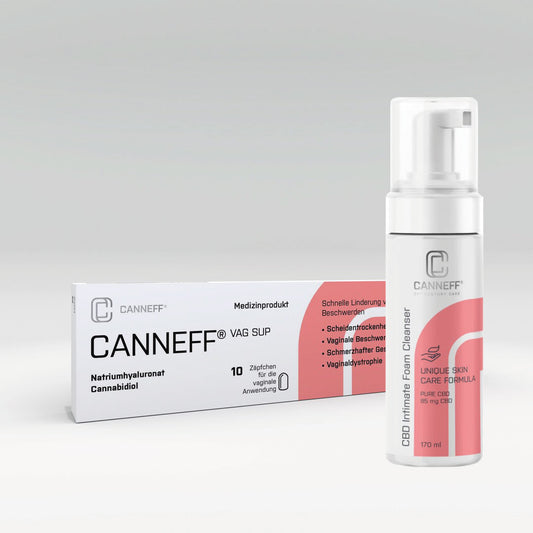
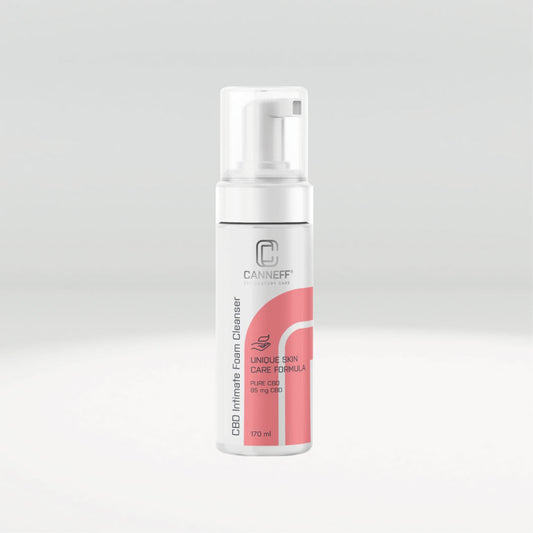
- Use of medical intimate care such as CANNEFF® Intimate Care Foam free of irritating additives, pH skin-neutral, soothing
- Local therapy with CANNEFF® VAG SUP for mucosal care, especially with accompanying atrophy or irritation conditions
- Allergy testing with recurring symptoms without identifiable cause
How does a hormonal deficiency – especially during menopause – influence the development and course of cervicitis?
A hormonal deficiency, especially the decline of estrogens during menopause, is a central non-infectious risk factor for the development and chronicity of cervicitis. The hormonal change directly affects the structure and function of the vaginal and cervical mucosa and promotes inflammatory processes – even without detectable pathogens.
Pathophysiological changes due to estrogen deficiency
Mucosal atrophy: Estrogens promote the regeneration and maturation of the cervical squamous epithelium. Without this stimulus, the mucosa becomes:
- drier
- thinner
- more vulnerable to mechanical or chemical stimuli
Disruption of the vaginal microbiome: The physiological estrogen influence supports the growth of Lactobacillus-strains that stabilize the acidic pH and microbial balance. In hormone deficiency:
- lactobacillus density decreases
- pH value rises (>4.5)
- increased susceptibility to infections
Reduced local immune defense: An estrogen-deficient mucosa is less well perfused, less immunoactive, and produces fewer protective mucus substances (cervical secretions).
Clinical consequences in menopause
- Chronic irritation conditions without clear pathogen
- Contact bleeding due to fragile mucosa
- Burning, dryness, discharge – often misinterpreted as nonspecific complaints
- Mucosal sensitivity to mechanical stress (intercourse, tampons) or care products
- Therapy resistance compared to classic antimicrobial strategies
Particularities of cervicitis in postmenopause
- Common infection pathogen type-negative Courses
- Subclinical inflammation with histological changes (e.g., lymphocytic infiltration)
- Low regenerative capacity → high risk of chronicity
Therapeutic approaches
- Local hormone therapy with estriol (only with appropriate indication and after medical consultation)
- Hormone-free local care with regenerative suppositories such as CANNEFF® VAG SUP promotes moisture and epithelial healing and has anti-inflammatory, soothing, and antioxidant effects
- Environment optimization with lactic acid suppositories or vaginal probiotics
- Long-term mucosal care for relapse prevention and maintenance therapy
What is the significance of the vaginal flora for maintaining cervical health and how does dysbiosis promote cervicitis?
The vaginal flora – also called the vaginal microbiome – plays a central role in maintaining the health of the female genital tract, especially the cervix. A balanced flora protects against pathogenic germs, maintains the acidic environment, and supports the mucosal barrier. Dysbiosis, i.e., an imbalance in the vaginal microbial ecosystem, can weaken these protective mechanisms and significantly promote the development of cervicitis.
Functions of the healthy vaginal flora
Production of lactic acid: Dominant Lactobacillus-strains lower the pH value (3.8–4.5) – a central protective mechanism against bacterial and viral pathogens.
Occupation of mucosal receptors: "Good" bacteria prevent the adhesion of pathogenic germs through so-called colonization resistance.
Formation of antimicrobial substances: Lactobacilli produce hydrogen peroxide (H₂O₂), bacteriocins, and biosurfactants with antimicrobial effects.
Strengthening immune defense: An intact flora modulates local immune reactions and prevents excessive inflammation.
How dysbiosis promotes cervicitis
In a disturbed vaginal flora – e.g., due to antibiotics, hormonal changes, hygiene products, or chronic stress – the number of Lactobacilliwhile facultatively pathogenic germs gain the upper hand.
Increased pH value: Promotes the survival of pathogens such as Gardnerella vaginalis, Mycoplasma genitalium, Chlamydia trachomatis.
Loss of barrier function: Pathogens more easily penetrate the cervical mucosa and trigger an inflammatory response.
Promotion of silent infections: Particularly problematic with HPV infections or persistent biofilms.
Chronic irritation: Even without detectable pathogens, dysbiosis can trigger immune-mediated cervicitis – with discharge, burning, or contact bleeding.
How can a weakened immune system promote the development or chronicity of cervicitis?
A functioning immune system is crucial for the defense and control of pathogenic microorganisms in the cervix. If the immune defense is weakened locally or systemically, the risk of developing cervicitis increases significantly – especially for chronic or recurrent forms. The immune status thus influences both susceptibility to infections and the mucosa's ability to regenerate.
Impact of a weakened immune system on cervical health
Reduced pathogen defense: Reduced immune activity leads to viral or bacterial pathogens – e.g. Chlamydia trachomatis, HPV or Mycoplasma genitalium – not adequately combated. This promotes persistent infections.
Chronic inflammation: Disturbed immune regulation can cause inflammatory processes not to fully resolve but to transition into a chronic irritation state – typical for chronic cervicitis.
Misguided immune response: In autoimmune or inflammatory dysregulation, even minor irritations can lead to persistent mucosal reactions without a classic pathogen being detectable.
Impaired mucosal regeneration: An intact immune defense is closely linked to the regeneration of epithelial cells. When weakened, the cervical mucosa remains sensitive and prone to irritation for longer.
Causes of immune weakness that can promote cervicitis
- Chronic stress: Cortisol inhibits immune-reactive cells
- Malnutrition: Especially deficiencies in vitamin D, zinc, selenium, iron
- Infections: e.g., HIV or chronic viral load with HPV
- Medications: Immunosuppressants, cytostatic therapies
- Systemic diseases: Diabetes mellitus, autoimmune diseases
- Hormonal imbalances: e.g., in postmenopause
Relevance in gynecology
Women with immune deficiencies or weakened defense status more frequently show:
- persistent HPV infections
- recurrent bacterial cervicitis
- persistent mucosal irritation despite therapy
In these cases, standardized acute therapy is often insufficient – rather, a comprehensive treatment concept with local mucosal care, immunomodulation, and microbial recolonization is required.
Is there a connection between chronic stress and the occurrence of cervicitis?
Yes – numerous medical and psychosomatic observations suggest that chronic stress can negatively influence both the development and course of cervicitis. While stress is not a direct infectious cause, it acts as a significant modulating factor, especially in chronic or recurrent inflammatory processes of the cervix.
How does chronic stress affect cervical health?
Immunosuppressive effects: Chronic stress leads to a sustained release of glucocorticoids (especially cortisol), which have immunomodulatory effects. The result is a weakened cellular immune response, allowing viral and bacterial pathogens – such as HPV or Chlamydia trachomatis – can persist more easily.
Disruption of mucosal regeneration: Stress-induced inflammatory mediators can inhibit epithelial regeneration. This leaves the cervical mucosa vulnerable for longer, increasing the risk of chronic irritation and cervicitis.
Influence on the vaginal microbiome: Psychosocial stress can alter the composition of the vaginal flora – for example, by reducing protective LactobacillusStrains. A disturbed flora (dysbiosis) is a known risk factor for inflammatory processes of the cervix.
Behavioral influences: Under stress, health behavior and intimate hygiene often change. More frequent use of irritating care products, lack of sleep, or poor nutrition also promote increased susceptibility.
Clinical relevance in chronic cervicitis
-
Women with high psychological stress more often report irritation symptoms in the intimate area, e.g., burning, discharge, or dyspareunia.
-
In therapy-resistant or recurrent cervicitis, psychosomatic causes should be considered.
- Studies show that psychological stress is associated with an increased viral load in HPV infections.
To what extent does genital hygiene influence the risk of cervicitis – and what should you pay attention to?
The cervix is part of a finely balanced ecosystem in the lower genital tract, maintained by the physiological vaginal flora, a acidic pH value and a intact mucous membrane barrier is protected. If this balance is disturbed, colonization with pathogenic germs can occur, leading to inflammation of the cervix.
Hygiene mistakes that increase the risk:
Excessive intimate hygiene: Frequent intimate rinses or the use of perfumed soaps, intimate sprays, and aggressive cleaning products can increase the natural pH value and reduce the protective Lactobacillus-Displace flora. This promotes bacterial dysbiosis and infections.
Use of irritating care products: Surfactants, fragrances, or preservatives in washing lotions can irritate the sensitive mucous membrane – especially with hormonally induced atrophy or existing inflammation.
Wrong wiping direction: Cleaning the intimate area should always be done from front to back – to avoid transferring germs from the anal area to the vagina.
Non-breathable clothing: Synthetic underwear and tight clothing promote moisture retention and create an environment where bacteria and fungi multiply faster.
Tampons and panty liners: Frequent use – especially with dry mucous membranes – can cause mechanical microtraumas and weaken the mucous membrane barrier.
What should you pay attention to?
-
Mild, pH-neutral intimate care products (ideally without fragrances and parabens) use
-
No excessive washing or rinsing – 1–2× daily with lukewarm water is usually sufficient
-
Cotton underwear prefer and change daily
-
Use tampons only with sufficient lubrication and change regularly
-
For irritations, dryness, or existing cervicitis:
→ Mucous membrane-protective preparations such as CANNEFF® VAG SUP use to promote regeneration and moisture