

Why does the scalp become itchy during menopause?
The itchy scalp during menopause mainly arises from the decline in estrogen levels. Estrogen normally supports skin moisture and elasticity. When hormone levels drop, the scalp loses moisture, promoting dryness and itching. Additionally, a changed sweat composition due to hormonal fluctuations can disrupt the skin barrier and lead to increased itching. Reduced blood circulation in the skin may also play a role, as fewer nutrients and oxygen reach the scalp.
What symptoms accompany an itchy scalp during menopause?
In addition to itching, other symptoms may occur that are due to hormonal changes:
|
Symptom |
Description |
|
Dryness |
Skin loses moisture, becomes brittle |
|
Tightness sensation |
Scalp feels uncomfortable |
|
Dandruff formation |
Dry skin flakes shed |
|
Redness |
Skin irritation, often worsened by scratching |
|
Possible due to altered hair growth cycles |
|
|
Increased sensitivity |
Scalp reacts more strongly to hair care products |
|
Inflammation |
Skin can be irritated or red, small wounds may occur |
How do hormonal fluctuations affect scalp health?
As estrogen levels decrease, collagen production declines, causing the skin to lose elasticity. The sebaceous glands produce less oil, which promotes dryness of the scalp and reduces protection against external irritants. Additionally, skin renewal can slow down, causing dead skin cells to remain on the scalp longer and increasing dandruff formation. Hormonal fluctuations can also lead to altered activity of hair follicles, which may be noticeable through increased hair loss or thinning hair.
Which external factors worsen the problem?
In addition to hormonal causes, environmental factors and habits can also further irritate the scalp:
-
Dry heating air – depletes skin moisture
-
Aggressive hair care products – irritate the skin barrier
-
Frequent hair coloring – damages the natural protective layer
-
Stress and sleep deprivation – worsen skin problems
-
Unbalanced diet – can cause nutrient deficiencies that affect skin health
-
Frequent hair washing – can destroy the scalp's natural protective film
-
UV rays – damage the skin barrier and promote dryness
Which care measures help against itchy scalp during menopause?
To relieve discomfort, mild care is recommended:
-
Gentle, moisturizing shampoos with aloe vera or panthenol
-
Avoid sulfates and alcohol in care products
-
Regular scalp massages to stimulate blood circulation
-
Avoid heat from blow-drying and straightening irons
-
Use moisturizing scalp serums with hyaluronic acid or jojoba oil
-
Avoid frequent hair washing – maximum 2-3 times per week
-
Wearing a hat in strong sunlight to protect the scalp
Which diet helps against scalp itching during menopause?
A nutrient-rich diet supports skin health and can relieve dry scalp:
|
Nutrient |
Effect on the scalp |
Food examples |
|
Omega-3 fatty acids |
Supports moisture balance |
Fish, chia seeds, walnuts |
|
Vitamin A |
Promotes cell renewal |
Carrots, spinach |
|
Zinc |
Supports wound healing |
Pumpkin seeds, lentils |
|
Vitamin C |
Promotes collagen formation |
Citrus fruits, bell peppers |
|
Iron |
Promotes healthy hair roots |
Red meat, legumes |
|
Silicon |
Strengthens hair and scalp |
Oats, millet, potatoes |
Which natural home remedies relieve scalp itching?
There are various natural remedies that can provide relief:
-
Aloe vera gel – soothes irritated skin
-
Coconut oil – provides moisture
-
Tea tree oil – antibacterial, good for dandruff
-
Apple cider vinegar rinses – regulate the scalp's pH balance
-
Chamomile tea rinse – anti-inflammatory and soothing
Which dietary supplements can help?
Certain micronutrients can specifically help:
|
Supplement |
Recommended daily dose |
Effect |
|
Biotin |
30–100 µg |
Strengthens skin and hair |
|
Omega-3 |
1000–2000 mg |
Has anti-inflammatory effects |
|
Vitamin E |
15–30 mg |
Supports skin protection |
When should you seek medical help?
If symptoms do not improve or worsen despite intensive care, a doctor’s visit is advisable. Especially with inflamed areas, severe hair loss, or persistent itching that affects daily life, a dermatological examination should be conducted.
How do CANNEFF® suppositories help with menopausal symptoms?
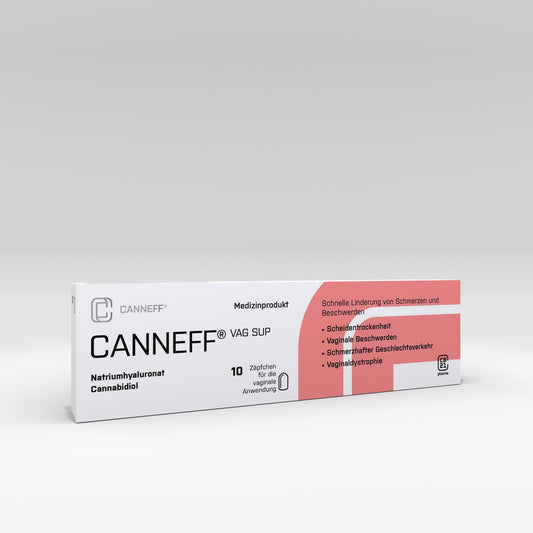
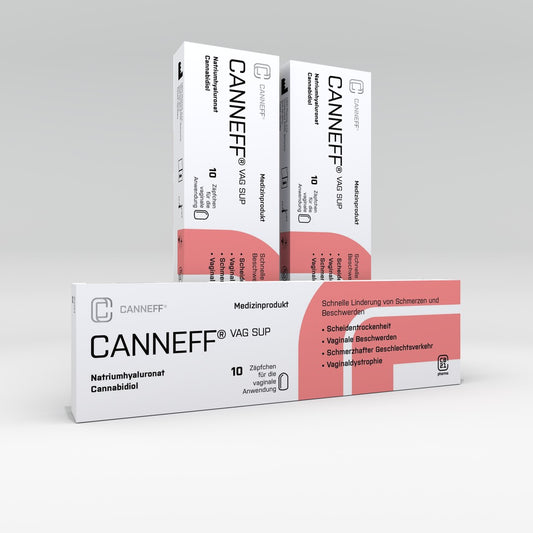
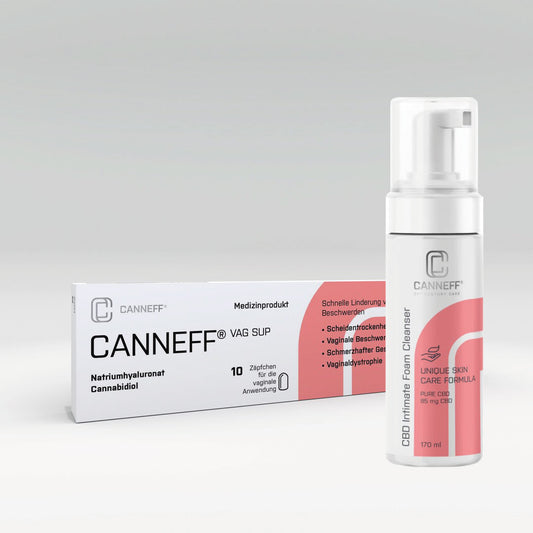
The menopause affects not only the scalp but often the intimate area as well. CANNEFF® VAG SUP vaginal suppositories provide targeted moisture care for this area and can soothe dry mucous membranes. They contain CBD (cannabidiol), which has anti-inflammatory effects, as well as hyaluronic acid, which moisturizes and supports skin regeneration. Although CANNEFF® suppositories are not intended directly for the scalp, they contribute to the overall relief of typical menopausal symptoms and promote well-being during this phase. Itchy scalp is a common symptom of menopause caused by hormonal changes that dry out the skin. With appropriate care, proper nutrition, and supportive supplements, the symptoms can be significantly alleviated. Additionally, special products like CANNEFF® suppositories help reduce other menopausal symptoms and improve overall well-being.