

How do the symptoms of menopause and pregnancy differ?
The symptoms of menopause and early pregnancy are similar in many ways but differ in cause, duration, and intensity – which makes distinguishing them especially difficult during the transitional age.
Both menopause and pregnancy involve profound hormonal changes – and this is exactly why typical signs of both conditions can overlap significantly. However, there are subtle differences that help better identify the respective cause.
|
Symptom |
Menopause |
Early pregnancy |
|
Missed period |
Irregular, can be absent for months |
Usually first sign, consistently absent |
|
Very typical, often intense |
Unusual in early stage |
|
|
Breast tenderness |
Possible, often cycle-dependent |
Common early sign |
|
Nausea/morning sickness |
Unusual |
Very common in the 1st trimester |
|
Very common due to hormone drop |
Also common due to hormone increase |
|
|
Weight gain |
Slowly, especially on the abdomen |
Initially due to water retention |
|
Common, often due to night sweats |
Possible, but usually only relevant later |
|
|
Increased urge to urinate |
With vaginal dryness/irritable bladder |
From the 6th–8th week of pregnancy due to uterine pressure |
|
Changes in libido |
More frequent decrease |
Individual – increase also possible |
|
Very common |
Uncommon in early pregnancy |
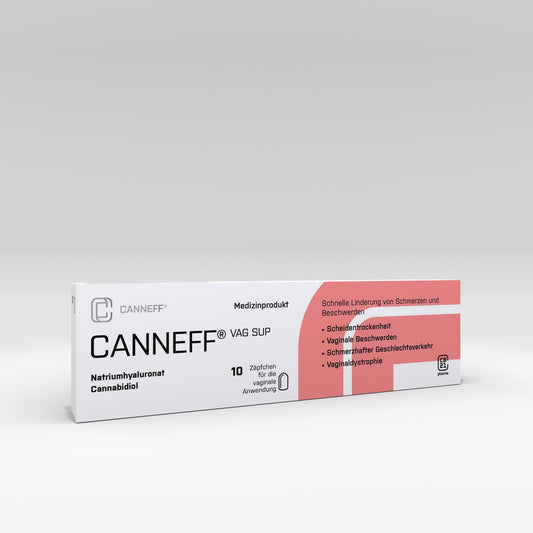
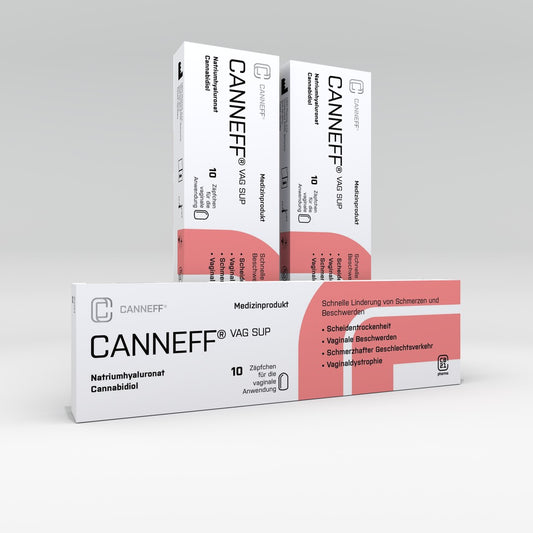
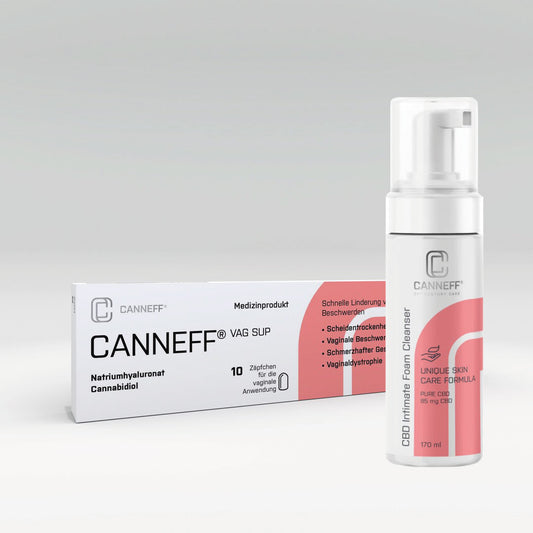
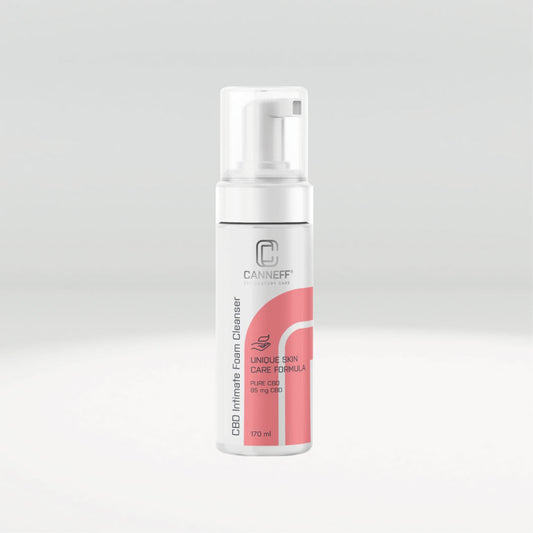
Women between 40 and 50 who are already experiencing irregular cycles often interpret early signs of pregnancy as the beginning of menopause – or vice versa. Therefore, if uncertain, a reliable pregnancy test and possibly a medical examination are recommended. For symptoms such as vaginal dryness, inner restlessness, or sleep problems during menopause, CANNEFF® vaginal suppositories with CBD and hyaluronic acid can provide effective relief – without hormonal burden and with clinically proven effects.
Can you still get pregnant during menopause?
Yes, pregnancy is still possible during menopause – especially in pre- and perimenopause – as long as ovulation is still occurring and full menopause has not yet been reached.
The menopause usually begins between the ages of 40 and 50 and occurs in several phases. In premenopause and early perimenopause, the female cycle becomes more irregular but is still basically functional. This means: As long as a woman still ovulates – that is, has ovulation – she can become pregnant.
|
Phase |
Fertility |
Pregnancy possible? |
|
Perimenopause |
Slightly reduced |
Yes |
|
Early perimenopause |
Highly variable |
Yes |
|
Late perimenopause |
Very limited |
Limited possibility |
|
No more ovulation |
No |
|
|
Postmenopause |
Permanently infertile |
No |
Even if menstruation becomes irregular or stops for months, this is not a reliable indicator marks the end of fertility. Only when a woman at least 12 months without menstruation has been without menstruation for at least 12 months, she is considered postmenopausal – and thus permanently infertile.
Statistical probability:
-
women aged ages 40–44: 10–20% chance of pregnancy per year with regular intercourse.
-
women aged ages 45–49: approx. 12%.
Therefore, contraception is also necessary during this life phase contraception still essential if pregnancy is not desired. To assess fertility, gynecologists can measure the FSH level (follicle-stimulating hormone) as well as the ovarian reserve determine. If the FSH level is consistently above 30 IU/L and hardly any mature follicles are detectable, natural conception is very unlikely – but not completely ruled out.
How reliable is a pregnancy test during menopause?
A standard pregnancy test is also reliable during menopause – provided it is used correctly and not taken too early. However, in individual cases, confusion can arise because hormonal changes can affect the test.
A pregnancy test measures the hormone hCG (human chorionic gonadotropin), which is produced by the body shortly after the fertilized egg implants. This hormone is not part of typical menopausal hormonal changes and is only during pregnancy produced – which is why the test is generally reliable even for women over 40.
When can uncertainties occur?
Despite high reliability (usually over 95% with correct use), it can during hormonal transition phases, such as menopause, occasionally false negative results occur:
|
Possible cause |
Impact on the test result |
|
Test taken too early |
hCG not yet detectable → false negative |
|
Diluted urine (e.g., drank a lot) |
hCG concentration too low |
|
Incorrectly stored or expired test |
unreliable result |
|
Severe hormonal disorders or rare tumors |
rarely be false-positive |
A pregnancy test can not to distinguish between pregnancy and menopause. During pregnancy, hCG rises, while in menopause FSH and LH are elevated – this must be specifically measured in the blood.
-
At the earliest from the first day of missed period – better yet 3–5 days later.
-
Test the morning urine – this contains the highest hCG concentration.
-
In case of uncertainty or ambiguous results, use the repeat test or a Blood test at the gynecologist cause.
What hormonal changes occur during menopause?
During menopause, a woman's hormonal balance changes fundamentally – especially due to the decline of estrogen and progesterone. These hormonal changes are the main cause of many typical climacteric symptoms. Menopause is characterized by a complex interplay of hormonal adjustments that increasingly destabilize the female cycle and eventually lead to the end of fertility.
|
Hormone |
Changes during menopause |
Effects on the body |
|
Estrogen |
Slow, then rapid decline |
Hot flashes, vaginal dryness, osteoporosis, mood swings |
|
Progesterone |
Earlier decline than estrogen |
Cycle irregularities, sleep disturbances, inner restlessness |
|
FSH (follicle-stimulating hormone) |
Sharp increase |
Diagnostic marker for menopause |
|
LH (luteinizing hormone) |
Also elevated |
No direct symptom effect, but an indicator of hormonal change |
|
Testosterone |
Remains relatively constant |
Shift in the ratio to estrogen → skin problems, hair loss |
progression in phases:
-
Perimenopause: Initially, Progesterone, which can lead to irregular or heavier bleeding.
-
Perimenopause: Estrogen fluctuations intensify, with first typical symptoms like hot flashes appearing.
-
menopause/postmenopause: The Estrogen levels drop permanently, FSH and LH increase sharply. The cycle stops.
Important: The decline in estrogen affects many body systems – such as bone metabolism, the nervous system, skin, blood vessels, and mucous membranes.
How can the doctor determine if you are pregnant or in menopause?
Whether a woman is pregnant or going through menopause can be clearly determined by targeted hormone analyses and a gynecological examination. Since early pregnancy symptoms and initial signs of menopause can be very similar – such as missed periods, breast tenderness, fatigue, or mood swings – a medical evaluation by the gynecologist the safest way to diagnose.
Step-by-step diagnostics at the gynecologist
Medical history and cycle observation
-
Collection of symptoms (e.g., cycle disturbances, hot flashes, nausea)
-
Questions about the last menstrual period and cycle history
Pregnancy test
-
Urine test (quick but prone to errors in early stages)
-
Blood test for hCG – gold standard for pregnancy diagnosis
→ hCG is exclusively increased during pregnancy, not in menopause.
Hormone status in the blood
The following values are measured to assess possible menopause:
|
Hormone |
Meaning |
Typical result in menopause |
|
FSH (Follicle-Stimulating Hormone) |
Marker for ovarian activity |
> 30 IU/l → indication of menopause |
|
LH (Luteinizing Hormone) |
Regulates ovulation |
Also elevated |
|
Estradiol (E2) |
Most important estrogen |
Significantly reduced |
|
Progesterone |
Supports the uterine lining |
Significantly reduced |
Ultrasound examination
-
Assessment of ovarian reserve (Number of maturing follicles)
-
Assessment of the uterine lining (indication of cycle activity or pregnancy)
What can the doctor infer from this?
|
Scenario |
Typical findings |
|
Pregnancy |
hCG ↑, FSH ↓, estradiol ↑, active uterine lining |
|
Menopause |
hCG normal, FSH ↑, estradiol ↓, ovarian reserve depleted |
What are typical signs of the onset of menopause?
The first signs of entering menopause – medically known as Perimenopause referred to – usually appear from around age 40. During this time, the production of female sex hormones, especially Progesterone and later estrogen, gradually decreasing. These changes lead to a range of physical and emotional symptoms that can vary from woman to woman.
Early signs of menopause
|
Symptom |
Typical description |
|
Cycle irregularities |
Prolonged or shortened cycles, spotting, heavy or very light periods |
|
Irritability, sadness, inner restlessness without an obvious reason |
|
|
Breast tenderness |
Hormone-dependent feelings of tension, often more pronounced before menstruation |
|
Difficulty falling or staying asleep, often caused by night sweats |
|
|
Sudden sensations of warmth, especially in the upper body, often accompanied by sweating |
|
|
Increased irritability |
Emotional reactions seem exaggerated or difficult to control |
|
Hormone-related headaches, especially around ovulation |
|
|
Weight gain |
Often without changes in diet, especially in the abdominal area |
|
Initial vague pains without a clear cause |
|
|
Changes in libido |
Often a decrease in sexual desire |
Which symptoms are more indicative of pregnancy?
Some symptoms are more typical of early pregnancy than menopause – especially morning sickness, sensitive breasts, cravings, and elevated hCG levels in blood or urine. Both menopause and pregnancy can involve nonspecific complaints like fatigue, mood swings, or missed periods. However, there are typical signs that more strongly indicate pregnancy – especially in the early stages.
|
Symptom |
Description |
Menopause? |
Pregnancy? |
|
Morning sickness |
Nausea or vomiting, especially in the morning |
Rare |
Very common (especially weeks 6–12) |
|
Cravings or appetite changes |
Sudden craving for certain foods or aversion to former favorites |
Possible |
Common |
|
Sensitive or tender breasts |
Tension, sensitivity to touch |
Possible |
Common |
|
Darker areolas |
Color change and enlargement of areolas |
Unusual |
Typical from week 6 of pregnancy |
|
Increased vaginal discharge |
Thin, odorless discharge |
Unusual |
Common |
|
Elevated basal temperature |
Persistently elevated > 14 days |
No |
Yes, if ovulation + implantation have occurred |
|
Frequent urge to urinate |
Possible from week 6 of pregnancy |
Usually only in later postmenopause |
|
|
Metallic taste in the mouth |
Perception of metallic taste |
Rare |
Frequently reported in early pregnancy |
|
Extreme fatigue |
Sudden exhaustion despite adequate sleep |
Possible |
Common (due to progesterone increase) |
|
Absence of period (amenorrhea) |
No menstruation |
Typical for both conditions – not conclusive on their own |
How does the menstrual cycle change during menopause?
The menstrual cycle becomes increasingly irregular during menopause – both in length and bleeding intensity. These changes are an early and typical sign of hormonal transition. With the onset of menopause, hormone production in the ovaries changes – especially the level of Progesterone and later Estrogen decreases. These hormonal fluctuations directly affect the menstrual cycle long before menstruation completely stops.
|
Change |
Description |
|
Cycle becomes irregular |
The intervals between bleeding vary: sometimes every 21 days, sometimes only after 45 days |
|
Heavier or lighter bleeding |
From very heavy menstruation with tissue pieces to light spotting |
|
Shortened cycle |
Common in the early phase, e.g., every 20–24 days |
|
Extended cycle |
In later phases with intervals over 40 days |
|
Spotting between periods |
Bleeding outside the normal rhythm – sometimes cycle-independent |
|
Absence of menstruation (amenorrhea) |
In late perimenopause, bleeding initially stops for months |
|
Last bleeding (menopause) |
Confirmed only retrospectively after 12 months of no bleeding |
Cycle disturbances during menopause are normal, but should be medically evaluated.
|
Technical term |
Definition |
|
Oligomenorrhea |
Bleeding with long intervals (35–90 days) |
|
Polymenorrhea |
Shortened cycle (< 25 days) |
|
Hypomenorrhea |
Very light bleeding, often shorter than 2 days |
|
Hypermenorrhea |
Very heavy menstrual bleeding (> 80 ml) |
|
Menorrhagia |
Bleeding lasting longer than 8 days |
|
Metrorrhagia |
Irregular bleeding outside the cycle |
|
Menometrorrhagia |
Combination of heavy and irregular bleeding |
|
Amenorrhea |
Absence of menstruation for more than 3 months |
What treatment options are there for menopausal symptoms?
The treatment of menopausal symptoms depends on the type and intensity of symptoms. In addition to hormonal therapies, there are now also herbal remedies, lifestyle changes, and modern, hormone-free medical products such as vaginal suppositories available.
|
Treatment method |
Goal & effect |
Advantages |
Risks / limitations |
|
Hormone therapy (HRT) |
Relief of severe symptoms (especially hot flashes, sleep disorders) |
Very effective, protects against osteoporosis |
Increased risk of breast cancer, thrombosis, not suitable for all women |
|
Herbal preparations (e.g., black cohosh, red clover) |
Natural support for mild symptoms |
Hormone-free, well tolerated |
Effects vary individually, limited study data |
|
Antidepressants in low doses |
Reduction of hot flashes, mood stabilization |
Alternative when avoiding HRT |
Side effects possible, no effect on vaginal complaints |
|
CANNEFF® CBD Vaginal Suppositories with hyaluronic acid |
Moisturizing, mucous membrane regeneration, relief from dryness, sleep problems, hot flashes, and more |
Locally effective, hormone-free, well tolerated, clinically tested |
No systemic effect – targeted support in the intimate area and for stress symptoms |
|
Local estrogen therapy (e.g., creams, suppositories) |
Treatment of vaginal dryness, atrophy, pain during sex |
Very effective for vaginal complaints |
Hormonal – contraindicated in hormone-dependent diseases |
|
Dietary changes & exercise |
General stabilization, supports metabolism, weight, mood |
No side effects, promotes holistic health |
Effects take time, requires personal initiative |
|
Psychological/psychotherapeutic support |
Coping with life changes, mood swings |
Supports emotional stability, strengthens self-efficacy |
No direct effect on physical symptoms |
Learn more about the treatment of menopausal symptoms in the special article.