

Causes and symptoms of bleeding during menopause
Irregular bleeding and cycle complaints are often the first signs of menopause and accompany many women until their last menstruation. These changes are mainly caused by hormonal adjustments, similar to other menopause symptoms such as sleep disturbances, hot flashes, or bladder problems.
Hormonal influences on the cycle
The female cycle is primarily regulated by the hormones estrogen and progesterone. Estrogen promotes the growth of the uterine lining to create optimal conditions for a fertilized egg. Progesterone, on the other hand, causes the lining to be shed if fertilization does not occur.
During menopause, the balance of these hormones is disrupted. Only in postmenopause, one year after the last bleeding, does the hormonal balance stabilize again. Therefore, altered bleeding during menopause is usually normal and due to hormonal fluctuations.
Changes in bleeding
After a stable phase of the cycle following puberty, women experience changes again during menopause. The hormonal shift, especially of estrogen and progesterone, leads to a "little chaos" in the body, which manifests in various bleeding patterns:
Pre-bleeding:
This occurs when menstruation starts earlier than expected, often a sign of progesterone deficiency.
Post-bleeding:
These are prolonged bleedings, often caused by estrogen deficiency.
Irregular bleeding:
These refer to a disrupted cycle due to a hormonal imbalance.
Phases of menopause and bleeding patterns
Premenopause:
Typical are shorter cycles of about 21 days and heavier bleeding.
Perimenopause:
Ovulation becomes less frequent, and bleeding occurs only occasionally, but it can be heavy. There are often weeks or months between periods, and the bleeding is usually heavy, lasting between five and ten days. Women should always be prepared for unexpected periods by keeping tampons or pads handy.
Menopause:
The last bleeding in a woman’s life marks the beginning of postmenopause.
Different forms of bleeding during menopause
Bleeding during menopause can be unpredictable. It can vary in duration and intensity, causing uncertainty for many women. However, a better understanding of the different types of bleeding can help face these changes with more confidence.
Normal bleeding types during menopause
Spotting and intermenstrual bleeding:
These often occur as normal cycle fluctuations. Spotting is brownish and mucous-like, often appearing before or after the period. Intermenstrual bleeding is bright red, lasts longer than three days, and can occur during the cycle.
Longer and weaker bleeding:
This can last up to 14 days. Bleeding beyond this should be medically evaluated.
Light, bright red bleeding:
Indicates estrogen deficiency, which is common during menopause.
Heavy bleeding with clots:
These are normal before menopause, as ovulation becomes less frequent and intervals between bleedings vary. Bleeding lasting longer than 14 days is called prolonged bleeding.
Missed bleeding:
This can be a precursor to menopause. Menopause is only diagnosed after 12 months without bleeding.
Irregularities before menopause
More frequent bleeding (Polymenorrhea):
The cycle shortens and brown spotting may occur when the interval between bleedings is less than 25 days.
Less frequent bleeding (Oligomenorrhea):
The cycle lengthens, with the interval between bleedings being more than 35 but less than 45 days.
Missed bleeding (Amenorrhea):
Months without bleeding can occur, followed by a return to regular cycles.
Very light bleeding:
This can appear as light, bright red bleeding or brown spotting.
Very heavy bleeding (Hypermenorrhea):
This can be caused by extended cycle intervals and the buildup of the uterine lining. Fibroids, benign tumors, can also lead to heavy, long-lasting bleeding.
Prolonged bleeding (Menorrhagia):
This type of cycle disorder can last for weeks. Medical evaluation is recommended if bleeding does not stop.
Accompanying symptoms before bleeding
Some women experience premenstrual symptoms during menopause such as headaches, breast tenderness, water retention, and irritability. Even women who previously had no problems with premenstrual syndrome (PMS) can suffer from these.

Bleeding after menopause
Even after menopause, that is one year after the last menstrual period, vaginal bleeding can occur. These bleedings, which can also occur after three, five, or more years, should be taken seriously and medically evaluated as they can be a warning sign.
Possible causes of bleeding after menopause
Hormone replacement therapy (HRT):
Treatment with estrogen and progestogen can cause regular bleeding because the hormones stimulate the uterine lining to build up. During the break in medication, the lining is shed, similar to a normal period. Pure estrogen preparations can also cause spotting, which is usually harmless.
Cervical polyps:
These benign tissue growths on the cervix can bleed especially after sexual intercourse.
Atrophic vaginitis:
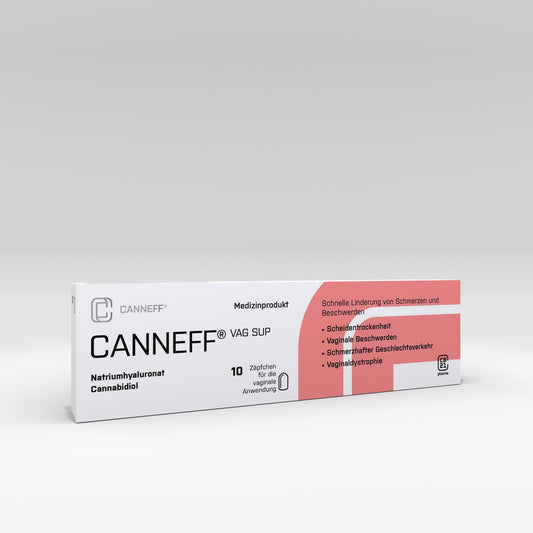
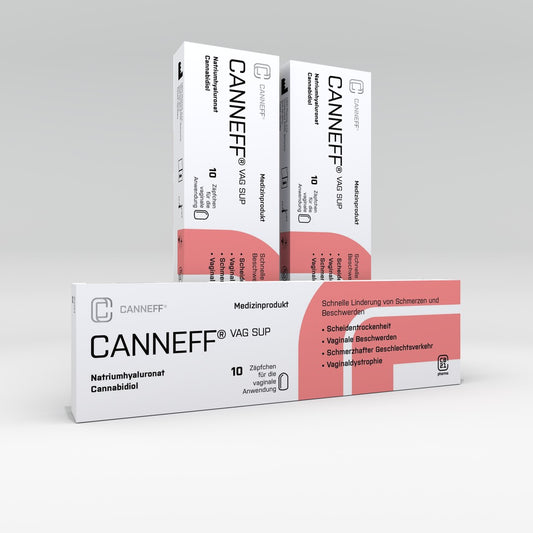
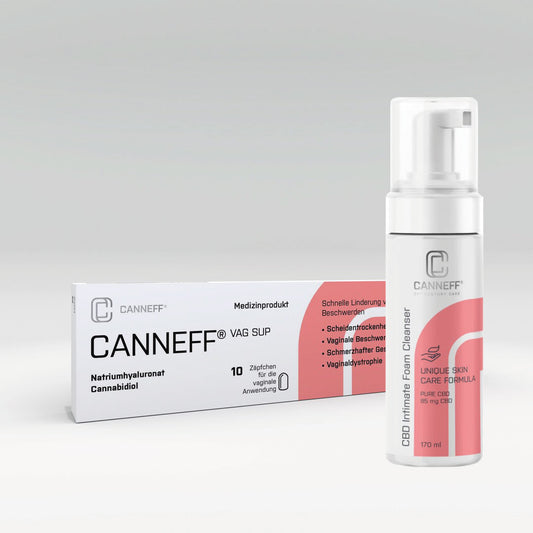
Reduced hormone production leads to vaginal dryness and tears in the vaginal mucosa, which can bleed especially during or after sexual intercourse. There is also the option to counteract this with special medical products like CANNEFF vaginal suppositories with CBD and hyaluronic acid.
Endometrial carcinoma:
Uterine cancer is often associated with vaginal bleeding.
Fibroids:
These benign growths in the uterine muscle can cause heavy and painful bleeding.
Cervical carcinoma:
Cervical cancer often leads to spontaneous bleeding and so-called contact bleeding, which occurs during or after sexual intercourse.
Ovarian carcinoma:
Ovarian cancer is rare but also often associated with vaginal bleeding.
Bleeding after menopause should always be medically examined. Although it is sometimes harmless and can be caused by stress, prompt evaluation is important. The earlier a serious condition is detected, the better the chances of treatment.