

What are the first signs of cervicitis?
Cervicitis, inflammation of the cervix, often begins with nonspecific, subtle symptoms. Especially in the initial phase, it often goes unnoticed because many affected women cannot clearly identify the first signs or confuse them with normal fluctuations in vaginal well-being. Nevertheless, early detection is important because untreated cervicitis can lead to ascending infections and serious complications.
early symptoms at a glance
The first signs usually include:
changed vaginal discharge: The discharge may be noticeable in amount, color, or consistency – often becoming more yellowish, purulent, or less commonly greenish. It can be sticky or foamy and accompanied by an unpleasant odor.
mild burning or itching: Irritation of the mucosa caused by inflammatory secretions often leads to nonspecific burning or itching – especially around the vaginal entrance and the external cervix.
bleeding outside of menstruation: Early signs of cervicitis can also include slight spotting or contact bleeding – especially after sexual intercourse or tampon insertion.
pressure sensation in the lower abdomen: Although not specific, some women report a slight pulling or pressure sensation in the lower abdomen, similar to menstrual cramps.
distinction from other vaginal diseases
Especially in the early phase, distinguishing from other gynecological complaints is important. Bacterial vaginosis, vaginal yeast infections, or trichomoniasis can cause similar symptoms. A characteristic difference in cervicitis often lies in the combination of changed discharge and contact bleeding, which occurs less frequently in vaginal infections.
|
symptom |
cervicitis |
bacterial vaginosis |
vaginal yeast infection |
|
discharge |
yellowish, purulent |
grayish-white, thin |
white, crumbly |
|
Odor |
slightly fishy or purulent |
fishy |
rather neutral |
|
itching/burning |
possible |
rare |
very common |
|
bleeding after intercourse |
common |
rare |
very rare |
Importance of early detection
Early diagnosis of cervicitis can prevent the inflammation from spreading to the upper genital organs (uterus, fallopian tubes). Additionally, timely therapy – usually with antibiotics or antivirals – allows for complete healing without lasting damage. A simple cervical smear test at the gynecologist can detect the inflammatory process early.
CANNEFF® as a supportive measure
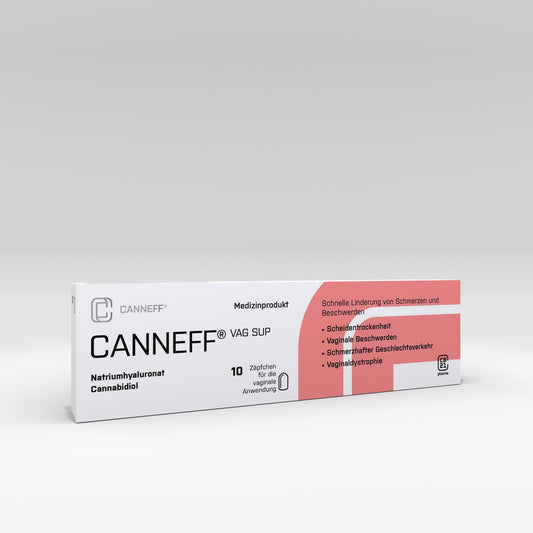
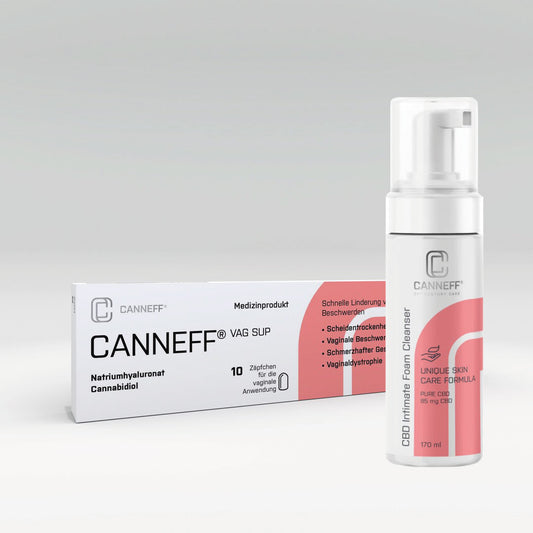
In the early phase, especially when irritation, dryness, or mucosal damage are prominent, local support of the mucosa can be beneficial. CANNEFF® vaginal suppositories, which CBD (anti-inflammatory, antimicrobial) and Hyaluronic acid (moisturizing, regenerating) contained, promote mucous membrane health and can support medical treatment or the recovery phase by stabilizing the mucosal barrier – especially for women with sensitive or hormonally atrophic vaginal mucosa.
How Does Cervicitis Manifest in Everyday Life?
Cervicitis, especially in its active or chronic form, can affect the daily lives of affected women in many ways – physically, emotionally, and socially. While the medical description often focuses on symptoms like discharge or bleeding, daily life reveals a more complex picture that goes far beyond physical complaints.
Physical Effects in Everyday Life
Discomfort when Sitting or Walking: Due to inflammatory irritation of the cervix and surrounding tissue, some women experience a constant feeling of pressure or pulling in the lower abdomen – especially when sitting for long periods or walking quickly. This can significantly affect concentration at work or well-being in the office.
Pain during Toilet Use: The proximity of the urethra and cervix can cause burning during urination – especially if there is additional irritation of the urethra. Bowel movements can also be uncomfortable due to pressure or pulling pain in the pelvic area.
Recurring or Unpleasant Discharge: A constantly noticeable, often sticky or moist discharge leads many women to feel unhygienic. Frequent changing of panty liners or underwear and fear of odor affect daily routines, body image, and self-confidence.
Effects on Sexuality and Partnership
Pain during Intercourse (Dyspareunia): Inflamed tissue is sensitive to pressure. Many women report pulling, stabbing, or burning pain during intercourse, especially with deep penetration. This can lead to fear of intimacy, avoidance of sexual activity, and distance from the partner.
Insecurity in the Relationship: The recurring symptoms can affect confidence in one's own attractiveness. Questions like "Am I still desirable?" or "Does my partner understand my situation?" burden many affected individuals – especially when no clear diagnosis has been made.
Psychological Stress
Cervicitis is a medically treatable condition, but the associated limitations often lead to emotional stress:
Persistent uncertainty about the cause: Especially with recurring or chronic courses without clear pathogen detection, many women experience a distressing "diagnostic odyssey," which can lead to frustration and anxiety.
Fear of serious illness: Repeated bleeding or pain is often associated with more serious gynecological diseases such as cervical cancer – a thought that causes fear and psychological pressure.
Shame and withdrawal: Many affected individuals do not openly discuss their complaints – neither with their partner nor with friends. Withdrawal from social situations and the desire for "control" over symptoms (e.g., frequent bathroom visits or clothing that conceals discharge) is common.
Differences between acute and chronic cervicitis
Cervicitis can be both acute and chronic. Differentiating these two forms is essential for targeted therapy and prognosis assessment. While the acute cervicitis typically characterized by a sudden onset of inflammation, the chronic form usually due to an inadequately treated or unrecognized infection. Both forms affect the mucosa of the cervix but have different symptoms, causes, and therapeutic challenges.
Medical definition and course
Acute cervicitis usually occurs as a result of a Infection with sexually transmitted pathogens (e.g., chlamydia, gonococci, trichomonads). It develops rapidly and often causes clearly noticeable symptoms such as purulent discharge, pain during sexual intercourse, or bleeding.
Chronic cervicitis on the other hand, is a long-lasting or recurrent inflammationthat usually develops over months or years. It can be the result of an incompletely healed acute inflammation or a persistent irritation of the cervix – for example, due to mechanical stress (e.g., intrauterine devices), hormonal deficiencies, or persistent infections.
|
Criterion |
Acute cervicitis |
Chronic cervicitis |
|
Course |
Sudden, short-term |
Slowly progressive, often recurrent |
|
Symptoms |
Abnormal discharge, pain, bleeding |
Irritation symptoms, itching, occasional bleeding |
|
Pathogen detection |
Mostly positive (e.g., chlamydia, gonorrhea) |
Often negative or mixed flora |
|
Microbial swab |
Often clear |
Often inconspicuous or nonspecific |
|
Therapy |
Targeted anti-infective treatment |
Long-term mucosal care, if necessary avoidance of irritation |
|
Risk of complications |
High if untreated (PID, endometritis) |
Risk of mucosal atrophy, cervical insufficiency |
|
Is partner treatment required? |
Yes, for STIs |
Rarely necessary |
Therapy approaches compared
In Acute cervicitis focuses on targeted treatment of the infection. Antibiotics, antifungals, or antiviral agents are used depending on the pathogen. Partner treatment is also important here to prevent reinfections.
The Chronic cervicitis requires a more comprehensive, long-term treatment concept. The focus is on:
- Reduction of local irritants (e.g., removal of mechanical irritants)
- Regeneration of the mucous membranee.g., through local care products
- Stabilization of the vaginal environmentto avoid recurrences
Vaginal discharge in cervicitis: color, odor, consistency
Vaginal discharge is one of the most common and noticeable symptoms of cervicitis. Changes in color, odor, and consistency can provide important clues to the underlying cause—especially in infectious forms of cervical inflammation. A targeted look at the discharge characteristics can facilitate diagnosis and significantly influence therapy decisions.
Normal vaginal secretion vs. pathological discharge
A certain degree of vaginal secretion is physiological and depends on the cycle, hormone status, and other individual factors. In contrast, Pathological discharge Cervicitis is often characterized by changes in the following features:
- Color (e.g., yellowish, greenish, gray)
- Consistency (e.g., thin fluid, foamy, viscous)
- Odor (e.g., fishy, foul, sour)
-
Accompanying symptoms (e.g., itching, burning, blood admixture)
Typical discharge forms in cervicitis and possible pathogens
|
Pathogen |
Color/consistency |
Odor |
Therapy approach |
|
Chlamydia trachomatis |
Clear yellowish, slightly mucous |
Unremarkable to sweetish |
Doxycycline or Azithromycin |
|
Neisseria gonorrhoeae |
Yellow-greenish, purulent |
Often strong/unpleasant |
Ceftriaxone + Azithromycin |
|
Trichomonas vaginalis |
Yellowish-green, foamy |
Fishy, pungent |
Metronidazole or Tinidazole |
|
Candida albicans |
White, crumbly |
Yeasty smell |
Clotrimazole or Fluconazole |
|
Gardnerella vaginalis |
Gray-white, thin fluid |
Typical amine odor |
Metronidazole or Clindamycin |
|
Herpes simplex virus |
Little discharge, possibly watery |
Unremarkable |
Aciclovir or Valaciclovir |
|
Mixed infection/dysbiosis |
Variable, often mucous or sticky |
Unclear to sour |
Combined treatment, regeneration if necessary |
Differential diagnosis
Not every discharge automatically indicates cervicitis. Other gynecological conditions such as bacterial vaginosis, vulvovaginitis, or hormonal imbalances can also lead to altered vaginal secretions. A Microbiological examination using cervical smear (including PCR) is therefore indispensable to make an accurate diagnosis.
Special attention should be paid to so-called Mixed infections may be present – here the vaginal flora is disturbed, so multiple pathogens can occur together. Treatment must then be individually adjusted.
mucous membrane care after therapy
After successful treatment, the vaginal mucosa can be weakened by medication, inflammation, and pH shifts. To prevent relapses and renewed irritation, it is recommended to targeted regeneration with mucous membrane-friendly preparations.
CANNEFF® vaginal suppositories, which CBD (anti-inflammatory, antioxidant) and Hyaluronic acid (moisturizing, tissue-stabilizing) can be usefully applied here. Especially after antibiotic or antifungal therapy, they support the restoration of vaginal balance, improve the mucous membrane barrier, and relieve irritation symptoms such as burning, itching, or dryness.
Pain during intercourse – a typical symptom?
Yes – pain during intercourse (medically: Dyspareunia) are common symptoms of cervicitis. They mainly occur when the cervix, the inflamed tissue, or surrounding areas are mechanically irritated. In many cases, this is the first reason women seek medical advice – especially if the pain repeatedly occurs during or after sex.
How does pain during intercourse occur with cervicitis?
The cervix is located in the lower part of the uterus and extends into the vagina. In cervicitis, its mucous membrane is inflamed, often red, swollen, and very sensitive to touch. Penetration during intercourse exerts mechanical pressure on this sensitive tissue – the result is stabbing or pulling pain, often associated with an unpleasant feeling of pressure in the lower abdomen.
In addition, other factors can intensify the pain:
- contact bleeding due to fragile mucous membrane
- Increase in irritation due to discharge or pH shifts
- co-infections (e.g., with Chlamydia or Mycoplasmas) with inflammatory reaction in adjacent tissues
-
Protective tension (reflexive tension of the pelvic floor muscles)
Mechanical vs. inflammatory dyspareunia
|
Type |
feature |
|
Mechanically caused |
Pain from direct contact, e.g., during deep penetration |
|
Inflammation-related |
Pain due to inflammatory reactions, even without mechanical stress |
|
Psychosomatic |
Consequence of fear of pain, often after repeated dyspareunia experiences |
|
Atrophic/hormonal |
Common during the menopause, due to dry and sensitive mucous membranes |
Especially in chronic or postmenopausal cervicitis, multiple causes often overlap: hormonally induced mucous membrane atrophy, inflammatory changes, and mechanical irritation – a vicious cycle for sexual quality of life.
Therapeutic options for dyspareunia due to cervicitis
Treatment depends on the cause:
- Infectious causes → Targeted antibiotic, antiviral, or antifungal therapy
- Hormonal causes (e.g., menopause) → Local estrogens (with medical indication) or hormone-free care products
- Mechanical causes → Temporary sexual abstinence, pelvic floor therapy
- Mucous membrane care & regeneration → Crucial in inflammatory irritation
CANNEFF® Vaginal Suppositories – targeted support for dyspareunia
In supportive therapy for dyspareunia due to cervicitis, CANNEFF® vaginal suppositories have proven CANNEFF® VAG SUP Suppositories Proven.
-
CANNEFF® Has anti-inflammatory, pain-relieving, and muscle-relaxing effects – especially helpful for hypersensitive or tense muscles.
-
CANNEFF® Regenerates and moisturizes the vaginal mucosa, promotes elasticity and healing of small mucous membrane lesions.
The suppositories can be used both in the acute stage (e.g., alongside antibiotic therapy) and During the convalescence phase Can be used – ideal for women with recurring complaints or hormonally caused mucous membrane weakness during the menopause.
Bleeding outside the period: Warning signs?
Bleeding outside of menstruation – so-called Spotting or contact bleeding – are a common symptom of cervicitis but are often misinterpreted or initially trivialized. Especially bleeding after sexual intercourse or during gynecological examination indicates Increased mucous membrane sensitivity Or inflammatory changes in the area of the cervix. At the same time, this symptom can also indicate other, sometimes serious gynecological diseases.
Why does bleeding occur in cervicitis?
In cervicitis, the Mucous membrane of the cervix inflamed, swollen, and more highly perfusedAt the same time, the tissue becomes more fragile – even slight mechanical stimuli like tampons, intercourse, or speculum examinations can Smallest lesions and capillary bleeding Cause. The blood usually appears as:
- Bright red spotting
- Contact bleeding after intercourse
- Sudden onset of spotting, independent of the cycle
Difference: Spotting vs. Contact Bleeding
|
type of bleeding |
characteristics |
possible causes |
|
intermenstrual bleeding |
occurs independently of the menstrual cycle |
cervicitis, hormonal dysregulation, polyps |
|
contact bleeding |
after sexual intercourse or vaginal examination |
cervical fragility, infection, dysplasia |
Cervicitis as a cause – or something else?
Although cervicitis is a common cause of atypical bleeding, the gynecological exclusion of other diagnoses are performed. Especially if the bleeding occurs regularly or is accompanied by other symptoms, also organic causes should be considered:
- cervical polyps – benign mucosal growths, often bleeding-active
- myomas – benign uterine muscle tumors, especially submucosal forms
- cervical dysplasias or carcinomas – especially with postcoital bleeding in perimenopause
- atrophy of the vaginal and cervical mucosa – especially in menopause
The evaluation typically includes a Speculum findings, cervical smear (Pap test), HPV test, and possibly colposcopy to assess suspicious mucosal areas.
Bleeding as a leading symptom: When to be cautious?
Single, mild bleeding is not necessarily an emergency – however, repeated or heavy bleeding outside of menstruation should always be medically evaluated, especially if:
- they often after sex occur
- they longer than 1–2 days persist
- they by foul odor, discharge, or pain are accompanied
- they in postmenopausal women occur
irritation and burning in the intimate area
burning, itching, or irritation in the intimate area are among the most common and unpleasant symptoms of cervicitis. These symptoms usually reflect local inflammatory processes, changes in the vaginal environment, or mechanical irritation caused by infection-related secretions. Particularly distressing is that these sensations are not only acutely disturbing but can also affect sleep, sexual life, and self-esteem.
Pathophysiological causes of irritation and burning
The causes of burning and irritation are diverse and often multifactorial:
inflammatory reaction in the cervical area: In cervicitis, the cervical mucosa is reddened, swollen, and inflamed. During this, inflammatory mediators (cytokines, prostaglandins) are released, which irritate the nerve endings and cause burning sensation or stabbing pain lead to.
discharge as an irritant: The discharge typical of cervicitis increased, often purulent or alkaline discharge alters the vaginal environment. This results in unfavorable pH value, which weakens the protective function of the mucous membrane and causes direct irritation causes irritation of sensitive skin and mucous membrane areas.
Microdamage from mechanical irritation: Tampons, sexual intercourse, tight clothing, or constant wearing of panty liners promote Microinjuriesespecially if the vaginal mucosa is already inflamed or atrophic due to estrogen deficiency.
Disturbance of the vaginal flora (dysbiosis): The healthy vaginal flora mainly consists of Lactobacillithat maintain an acidic pH (3.8–4.5). In cervicitis, there is often a Overgrowth of pathogenic germs and thus additional irritation from bacterial toxins or fungal components.
|
Cause |
Mechanism |
Typical consequence |
|
Inflammation of the cervix |
Release of inflammatory mediators |
Burning, pressure pain |
|
Purulent or alkaline discharge |
Mucous membrane irritation due to pH shift |
Itching, burning |
|
Mucosal atrophy |
Reduced elasticity and moisture |
Microtraumas, burning pain |
|
Mechanical irritation |
Friction, e.g., from tampons or intercourse |
Local inflammation, microlesions |
|
Dysbiosis |
Imbalance in the vaginal environment |
Increased susceptibility to irritation |
What helps with burning and irritation?
Therapy depends on the cause. In infectious cases, antibiotics, antifungals, or antivirals are the main treatments. In addition, local symptom relief and mucous membrane care crucial:
- Avoid aggressive intimate hygiene products
- No intimate douching or disinfecting washes
- Wear breathable cotton underwear
- Reduce mechanical stress (e.g., by abstaining from intercourse)
Symptom progression without treatment – what happens?
Untreated cervicitis can lead to serious health consequences—especially if it is an infectious form. While symptoms often appear mild or nonspecific at first, the inflammatory process can silently spread to surrounding organs and become chronic. The possible progression ranges from persistent irritation to irreversible damage to the reproductive organs.
Typical course of untreated cervicitis
Initial phase (acute inflammation): The infection begins locally at the cervix with typical symptoms such as discharge, contact bleeding, and possibly pain. In many cases, however, the disease remains asymptomatic.
Persistence (ongoing inflammation): If the infection is not detected or adequately treated, it can persist for weeks or months. Chronic irritation and structural changes of the cervix (e.g., cervical ectropion, scarring) develop.
Ascending infection: The pathogens can ascend into the uterine cavity, fallopian tubes, and ovaries and there a pelvic inflammatory disease (PID) cause. This is associated with fever, severe pain, and potential infertility.
Long-term consequences: Chronic lower abdominal pain, Adhesions in the pelvis and tubal infertility (adhesions of the fallopian tubes) are possible long-term complications. In HPV-associated cervicitis, there is also an increased risk of Cervical dysplasias and Cervical cancer.
|
Course stage |
Typical changes |
Possible complications |
|
Acute inflammation |
Discharge, bleeding, cervical redness |
Contact bleeding, dyspareunia |
|
Persistent infection |
Cervical irritation, chronic irritation |
Mucosal atrophy, scar formation |
|
Ascending infection |
Involvement of endometrium and tubes (PID) |
Endometritis, salpingitis, adnexitis |
|
Post-inflammatory stage |
Scars, adhesions |
Chronic pain, tubal infertility |
|
HPV-associated changes |
Cell changes, dysplasias |
Cervical cancer, risk of cervical cancer |
What does this mean for fertility?
Particularly problematic is the possible damage to the fallopian tubes caused by an ascending chlamydia or gonorrhea infection. Even a single undetected or untreated episode can lead to:
- Adhesions of the fallopian tubes
- Ectopic pregnancies
- Secondary infertility
can result. Even mild inflammation can Cervical mucus quality alter, which hinders sperm passage.
Cervicitis without symptoms – how common is it?
A cervicitis can occur completely without noticeable symptoms – in the medical literature, this is referred to as asymptomatic or subclinical cervicitis. Although the mucous membrane of the cervix is inflamed, this initially goes unnoticed by those affected. This silent form poses a particular risk: it is often not detected or only detected very late – often only during a preventive examination or in cases of infertility.
How common is asymptomatic cervicitis?
Exact figures on prevalence vary depending on studies and populations, but estimates suggest that:
- 40–60% of all cervicitis cases are asymptomatic can progress
- especially in chlamydia and mycoplasma infections hardly any symptoms occur
- younger women under 25 years old younger women under 25 years old are particularly affected – due to more active sexual behavior and a more sensitive cervical mucosa
Especially Chlamydia trachomatis, one of the most common pathogens of cervicitis, causes no noticeable symptoms in up to 70% of cases. Nevertheless, the pathogen can permanently damage the mucous membrane and lead to serious long-term complications.
Why is silent cervicitis so dangerous?
Even if no acute symptoms occur, inflammatory processes can take place in the background:
- Chronic inflammation, e.g., due to persistent irritation or bacterial dysbiosis
- Gradual spread to adjacent tissues (Endometrium, fallopian tubes)
- change in cervical mucuswhich impairs sperm passage
- increased risk of fallopian tube adhesions and infertility
Without targeted diagnostics, the infection often remains undetected for years – until it is discovered, for example, during infertility evaluation or an abnormal Pap test.
|
feature |
symptomatic cervicitis |
asymptomatic cervicitis |
|
symptoms |
discharge, bleeding, pain |
no or very mild symptoms |
|
detection |
due to symptoms |
incidental finding during screening |
|
common pathogens |
Gonococci, Trichomonads |
Chlamydia, Mycoplasma genitalium |
|
risk of chronicity |
high if untreated |
very high, as it often goes undetected for years |
|
complications |
early treatment possible |
late consequences such as PID, infertility |
importance of gynecological screening
Because asymptomatic cervicitis is so insidious, regular gynecological check-up a central role. This should be at least once a yearshould be performed more frequently if risk factors are present and include the following components:
- Gynecological palpation and visual examination
- Cervical smear (for Pap test and microbiological diagnostics)
- Chlamydia screening, especially in women under 25 years or with changing partners
- HPV testing, especially with abnormal Pap results
What to do after an asymptomatically detected cervicitis?
If the inflammation is detected during screening, a targeted therapy according to the pathogen (antibiotic, antifungal, or antiviral). To stabilize the mucosa after treatment and avoid chronic irritation, local mucosal care is particularly important.
CANNEFF® vaginal suppositories with CBD and Hyaluronic acid are recommended in this context:
- CANNEFF® has anti-inflammatory effects and protects the tissue from oxidative stress
- CANNEFF® supports regeneration and ensures an intact mucosal barrier
Especially in asymptomatic patients with cervical mucosal weakness, hormonal atrophy, or post-infectious irritation CANNEFF® can help reduce silent inflammations.
When are the symptoms particularly pronounced?
The symptoms of cervicitis – such as burning, discharge, bleeding, or pain during sexual intercourse – can vary greatly in intensity. In addition to the individual course of the disease and the cause of the inflammation, hormonal factors, external stimuli, and mechanical stress a crucial role in the development of symptoms. Especially in certain life phases or situations, cervicitis can significantly worsen or become symptomatic for the first time.
Cycle dependence of symptoms
The female cycle influences the condition of the cervical mucosa, its blood flow, and the vaginal pH – factors that in turn affect Irritability and infection defense affect. The cervix is particularly vulnerable in the following phases:
-
Around ovulation: The cervical mucus is more permeable and the opening slightly widened – making it easier for pathogens to enter.
-
Premenstrual: Hormonal changes can lead to a Change of the environment occur, which intensifies symptoms like burning or discharge.
- During menstruation: Blood in the vaginal tract can promote the growth of pathogenic germs.
Hormonal fluctuations and life phases
Hormonal changes significantly affect Mucosal stability and infection risk from:
-
Puberty: The cervix is more sensitive, and the immune defense is still immature.
-
Pregnancy: Increased estrogen levels and altered immune status can cause latent cervicitis to manifest more strongly.
-
Menopause/Postmenopause: The decreasing estrogen levels leads to Mucosal atrophy – the vaginal and cervical mucosa becomes thinner, drier, and more vulnerable. Symptoms like itching, burning, or bleeding increase significantly, even without detectable infection.
Note: Non-infectious cervicitis also increases with hormonal changes during menopause.
Sexual contacts as triggers or amplifiers
The mechanical contact during sexual intercourse can cause irritation, pain (dyspareunia), and Contact bleeding to develop. Women with the following are particularly affected:
- acute cervicitis
- cervical fragility (e.g., due to atrophy)
- a not fully healed infection
In addition, intercourse can cause Pathogen spread are favored – especially with ascending infections like chlamydia or gonorrhea.
Mechanical irritants and external factors
Also mechanical or chemical irritants can worsen the symptoms:
- Use of Tampons, menstrual cups, or poorly fitting diaphragms
- Intimate shaving or use of perfumed intimate care products
- Synthetic underwear, tight clothing, lack of air circulation
These factors lead to local irritation and can "activate" latent cervicitis.
|
Triggering factor |
Increased symptoms |
|
Cycle – before/after the period |
Discharge, burning, dysuria |
|
Sexual intercourse |
Pain, contact bleeding |
|
Dryness, irritation, slight bleeding |
|
|
Use of intimate products |
Itching, burning, pH shift |
|
Inflammation phases |
Redness, discharge, increased odor development |