

What causes vaginal dryness during or after cancer therapy?
Vaginal dryness is a common side effect of oncological treatments, mainly triggered by profound hormonal and cellular changes in the body. The cause usually lies in the damage or inhibition of estrogen-dependent functions – especially the mucous membrane in the intimate area.
Different mechanisms arise depending on the type of cancer therapy:
-
Anti-hormone therapy (e.g., for hormone receptor-positive breast cancer): This treatment blocks or lowers estrogen levels to inhibit tumor growth. However, estrogen is essential for the health of the vaginal mucosa – without it, the mucosa becomes thinner, drier, and more prone to irritation.
-
Chemotherapy: Cytostatics attack not only cancer cells but also rapidly dividing healthy cells – including those of the vaginal mucosa. This can lead to reduced mucus production, local inflammation, and a disturbed vaginal flora.
-
Pelvic radiation therapy: Targeted radiation for gynecological tumors (e.g., cervical cancer) can damage surrounding healthy tissue. The mucous membrane regenerates poorly, lubrication decreases, which can lead to chronic dryness.
-
Ovariectomy (surgical removal of the ovaries): This procedure leads directly to hormone deprivation, causing an abrupt onset of menopause and associated symptoms such as vaginal dryness.
Additionally, psychological stresses such as anxiety, stress, or shame, as well as pain avoidance during sexual activity, can worsen the symptoms. A changed microbiota (e.g., reduction of lactobacilli) as a result of therapies can also contribute to susceptibility to infections and dryness.
Overall, vaginal dryness is a multifactorial consequence of cancer therapy, associated with physical, hormonal, and emotional changes – and therefore requires a holistic approach and individualized treatment.
Which cancer therapies most commonly cause vaginal dryness?
Several oncological therapies can lead to vaginal dryness, especially those treatments that directly affect hormone balance or mucous membrane tissue. Vaginal dryness occurs particularly frequently after the following cancer therapies:
Antihormone therapy (endocrine therapy): This therapy is mainly used for hormone-dependent tumors such as breast cancer. Medications like aromatase inhibitors (e.g., letrozole, anastrozole) or tamoxifen block or inhibit estrogen production. Since estrogen is essential for the moisture, elasticity, and thickness of the vaginal mucosa, hormone deficiency leads to typical symptoms such as dryness, burning, pain during intercourse, and increased infection risk. Aromatase inhibitors cause more frequent and severe vaginal complaints than tamoxifen.
Chemotherapy: Cytostatics inhibit cell division – also in healthy cells like those of the mucous membranes. The vaginal mucosa loses its natural protective and moisturizing function, which can cause itching, irritation, and a disturbed vaginal flora. Additionally, chemotherapy can temporarily or permanently suppress ovarian function, leading to estrogen deficiency and premature menopausal symptoms.
Pelvic radiation therapy: In cancers such as cervical, endometrial, or ovarian cancer, radiation therapy is often used in the pelvic area. This can damage the surrounding healthy tissue – including the vaginal mucosa. The result is reduced blood flow, collagen breakdown, and mucosal atrophy, leading to long-lasting vaginal dryness and increased susceptibility to infections.
Surgical removal of the ovaries (oophorectomy): When both ovaries are removed – for example, during prophylactic surgery or ovarian cancer treatment – estrogen levels drop abruptly. This causes immediate, intense menopausal symptoms, including pronounced vaginal dryness. These therapies affect the female hormonal balance or mucous membrane tissue in different ways but often lead to similar intimate area complaints. Early education and supportive treatment are essential to maintain the quality of life and sexuality of affected women.
How does vaginal dryness manifest in cancer patients?
Vaginal dryness in cancer patients is a common but often underestimated side effect of oncological therapy. The complaints arise from hormonal changes, mucosal damage, or a combination of both factors – depending on the type of treatment. The symptoms can manifest physically, functionally, and emotionally:
Typical physical signs:
Dryness sensation in the vagina and vulva: The mucous membranes lose their natural moisture, which can cause a constant feeling of tension or friction.
Burning and itching in the intimate area: Especially during movement or friction (e.g., from clothing), irritations occur that feel like skin irritations.
Pressure or foreign body sensation: Some women report a dull discomfort or unpleasant pressure feeling in the vaginal area.
Painful urination (dysuria): The irritated mucosa can make urination difficult and cause a burning sensation.
Increased susceptibility to infections: Due to the impaired protective function of the mucosa, recurrent urinary tract or vaginal infections may occur.
Bleeding from micro-injuries: The thinned vaginal lining can tear and bleed easily with minimal friction.
Functional limitations:
Pain during intercourse (dyspareunia): Reduced lubrication leads to friction, pain, and sometimes even avoidance of intimacy.
Loss of elasticity: The vaginal mucosa loses its stretchability, which can be particularly problematic during sex, gynecological examinations, or tampon insertion.
Psychological and emotional effects:
-
Feeling of alienation from one's own body
-
Loss of sexual desire and intimacy
-
Increased feelings of shame and withdrawal from the partnership
-
Reduced self-esteem – especially when complaints remain unspoken
Many cancer patients find the symptoms deeply distressing – not only physically but also mentally and socially. Therefore, it is important to recognize vaginal dryness early, take it seriously, and treat it individually with appropriate therapies – such as hormone-free vaginal suppositories, moisturizing creams, or modern methods like laser therapy. An open conversation with gynecologists or oncologists can make a crucial difference for the patient’s well-being.
Why does vaginal dryness also occur in young women with breast cancer?
Vaginal dryness does not only affect women in natural menopause – young patients with hormone-dependent breast cancer can also be affected, especially during or after antihormonal therapy. The main cause is the abrupt and medically induced estrogen deficiency, which puts the body into an artificial hormone withdrawal.
Main reasons for vaginal dryness in young breast cancer patients:
Antihormone therapy (endocrine therapy): Medications like aromatase inhibitors or tamoxifen specifically block the effect of estrogen – the hormone responsible for moisturizing and elasticity of the vaginal mucosa. This "intentional" hormone deprivation is a central part of cancer therapy but can lead to vaginal atrophy – even in young women.
Ovarian suppression: When ovarian function is suppressed by medication (e.g., GnRH analogs) or surgically, there is a rapid drop in sex hormones – similar to postmenopause. This also causes vaginal dryness in young women, even though they are not biologically in menopause.
Chemotherapy: Cytostatics can temporarily or permanently impair ovarian function. This also leads to hormonal changes that affect the vaginal mucosa.
Mental stress and anxiety: The diagnosis of cancer, combined with fears and physical exhaustion, can further disrupt hormonal balance. This can also contribute to a reduction in natural lubrication.
Lack of education and shame: Since many young women do not associate these symptoms with their therapy or do not talk about them, the problem often remains untreated – even though there are effective, hormone-free treatment options available.
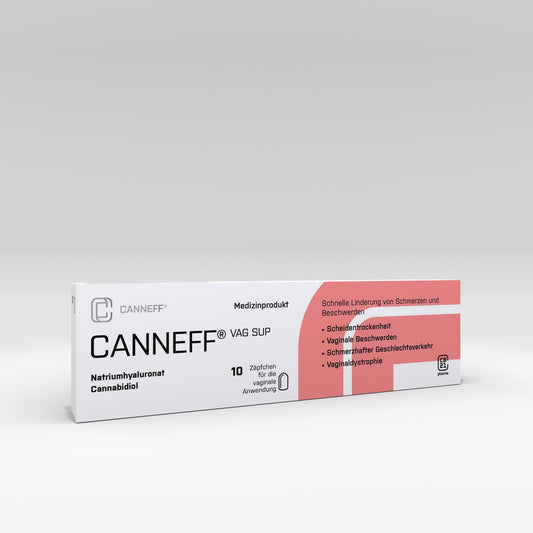
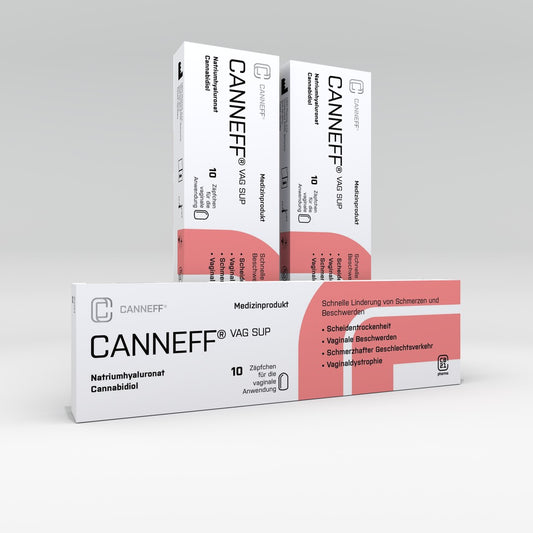
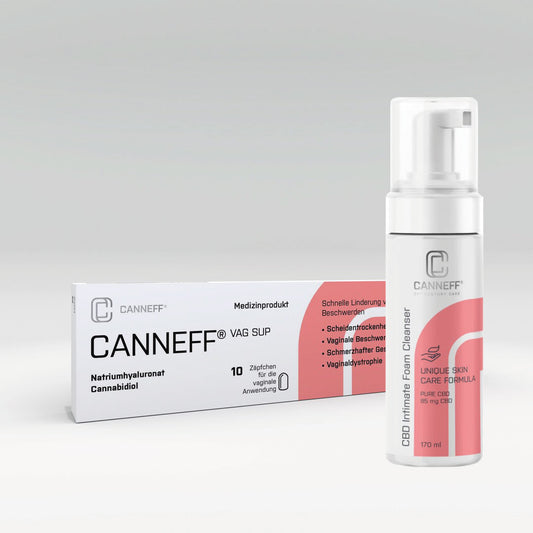
Vaginal dryness in young breast cancer patients is a common but often taboo side effect of cancer therapy. Early education by the medical team and individually tailored, hormone-free therapy – e.g., with moisturizing vaginal suppositories (such as CANNEFF® VAG SUP with CBD and hyaluronic acid), special intimate creams, or laser therapy – is crucial.
What role does estrogen deficiency play in vaginal complaints?
Estrogen deficiency is one of the main causes of vaginal complaints such as dryness, itching, burning, pain during intercourse, and increased susceptibility to infections – especially in women during or after cancer therapy. Estrogen performs many functions in the body, including maintaining a healthy, well-perfused, and elastic vaginal mucosa.
Why is estrogen so important for the vagina?
Estrogen:
-
Stimulates blood flow to the vaginal mucosa, improving nutrient and oxygen delivery to the tissue.
-
Promotes the production of natural vaginal fluid, ensuring intact lubrication.
-
Maintains the thickness and elasticity of the mucosa, preventing cracks and injuries.
-
Strengthens the vaginal environment by promoting a healthy lactic acid flora, which prevents infections.
What happens with estrogen deficiency?
When estrogen levels drop – for example, due to antihormone therapy for hormone-dependent breast cancer, chemotherapy, or ovary removal – vulvo-vaginal atrophy occurs. This is associated with:
-
Thinning tissue that is more sensitive, vulnerable, and less elastic.
-
Decreased mucosal moisture, leading to dryness, friction, and pain.
-
Reduced protective function against germs, increasing the risk of bacterial infections and fungal infestations.
What hormone-free treatment options are available for vaginal dryness after cancer?
Women suffering from vaginal dryness after cancer therapy – especially with hormone-dependent breast cancer – require particularly carefully selected treatment options. Since systemic hormone therapies are usually contraindicated in this patient group, hormone-free, local therapies are prioritized to relieve symptoms such as dryness, itching, burning, or pain during sexual intercourse – without increasing the risk of recurrence.
Proven hormone-free treatment options:
|
Therapy form |
Mode of action |
Special features |
|
Hyaluronic acid-containing suppositories and gels |
Provide intensive moisture, promote mucous membrane regeneration |
Especially effective for dryness, well tolerated, can also be used preventively |
|
CANNEFF® VAG SUP with CBD + hyaluronic acid |
Combines moisturizing hyaluronic acid with anti-inflammatory cannabidiol (CBD) |
Clinically tested, additionally relieving itching, burning, pain, and restlessness |
|
Moisturizing creams and lubricants (e.g., pH-neutral) |
Temporarily moisturize, facilitate sexual intercourse |
Quick relief, sometimes also with lactic acid to stabilize the vaginal environment |
|
Lactic acid treatments / Döderlein capsules |
Builds healthy vaginal flora, lowers pH value |
Effective for infection prevention, also suitable in combination with other preparations |
|
Vaginal laser therapy (e.g., MonaLisa Touch®) |
Stimulates collagen production, promotes blood circulation and cell regeneration |
Hormone-free, outpatient, usually requires several sessions |
|
Pelvic floor physiotherapy |
Promotes blood circulation and elasticity of the intimate area |
Complementary measure, helpful for pain, scars, and after radiation therapy |
|
Psychosexual counseling |
Support for emotional stress and relationship problems |
Especially recommended for pain, loss of libido, or uncertainty |
Why is hormone-free treatment important?
Many patients with hormone-dependent tumors are not allowed or do not want to use estrogen-containing preparations – not even locally. Therefore, non-hormonal alternatives are of central importance. In particular, CANNEFF® VAG SUP vaginal suppositories have established themselves as a safe, practical, and clinically tested option: they not only relieve vaginal dryness but also accompanying symptoms such as itching, irritation, pain during sex, urinary tract infections, as well as restlessness and sleep disturbances.
Is vaginal estrogen therapy possible despite hormone-dependent breast cancer?
This question concerns many breast cancer patients – especially those suffering from severe vaginal dryness, burning, or pain in the intimate area. Basically: systemic hormone replacement therapy is contraindicated in hormone-dependent breast cancer as it can increase relapse risk. But what about local vaginal estrogen therapy?
Current assessment from experts:
Professional societies such as the Gynecological Oncology Working Group (AGO) and international guidelines acknowledge that under certain conditions, low-dose, locally limited use of estriol (not estradiol!) in the form of vaginal suppositories or creams may be possible – but only after careful medical consideration.
Conditions for possible use:
-
Only for very severe symptoms when other measures (e.g., hormone-free creams or suppositories) are insufficient
-
Use exclusively of low-dose estriol (e.g., 0.03 mg/suppository)
-
Time-limited use, e.g., daily for 2–4 weeks, then 2–3 times per week
-
In consultation with the treating oncologist or gynecologist, ideally with oncology experience
-
No concurrent recurrence or advanced tumor
What is estriol?
Estriol is a so-called “weak estrogen” with significantly less systemic effect than estradiol. Absorption through the vaginal mucosa is very low when the mucosa is healthy. The treatment is intended to act locally and not significantly raise estrogen levels in the blood.
Although studies like those by PD Dr. Buchholtz (University of Regensburg) found no increase in relapse risk with vaginal estriol, its use remains controversial in hormone receptor-positive breast cancer. Many package inserts still carry a general warning – although the data should be evaluated more nuancedly.
Alternatives to vaginal estrogen therapy:
Many doctors initially recommend hormone-free products such as:
-
CANNEFF® VAG SUP suppositories with hyaluronic acid and CBD (anti-inflammatory, moisturizing, pain-relieving)
-
Lactic acid treatments to rebuild the vaginal flora
-
Moisturizers or gels with hyaluronic acid
-
Vaginal laser therapy (e.g., MonaLisa Touch®) as a gentle, hormone-free method
How safe are moisturizers, gels, or suppositories for cancer-related vaginal dryness?
Moisturizers, gels, and suppositories are considered for cancer-related vaginal dryness as a safe and proven treatment option, especially when hormones cannot be used – for example, in hormone-dependent breast cancer. They can significantly improve quality of life without affecting the effectiveness of cancer therapy. The CANNEFF® VAG SUP suppositories with hyaluronic acid and CBD were specially developed for treating vaginal dryness in hormone-free sensitive phases. Accompanying symptoms during menopause such as sleep disorders or nervousness can also be improved.
When should affected women seek medical help for vaginal dryness?
Women who suffer from vaginal dryness during or after cancer therapy should do not hesitate to seek medical advice – especially if symptoms persist, limit daily life, or noticeably affect quality of life. Early medical evaluation can help To avoid follow-up problems and to provide targeted relief.
|
Symptom |
When to see a doctor? |
|
Burning, itching, dryness sensation |
If symptoms persist for more than two weeks or worsen |
|
In case of recurring or severe pain – also stressful in the partnership |
|
|
If infections occur several times a year or are unusual |
|
|
If there are minor injuries, mucosal tears, or bleeding |
|
|
Pain when urinating |
In case of severe burning or persistent urge to urinate, to rule out infections |
|
Feeling of tightness or shrinkage |
If the vagina narrows or elasticity noticeably decreases |
|
Unclear discharge |
To clarify a possible bacterial or fungal infection |
|
No improvement despite self-treatment |
If hormone-free moisturizers or suppositories are not sufficient |
Women with with hormone receptor-positive breast or uterine cancer should never independently use hormone-containing products use. Herbal preparations (e.g., with isoflavones) should also only after consulting a doctor should be taken as they can act like hormones.