

Why Does PMS Cause Bloating?
Bloating is a common symptom of premenstrual syndrome (PMS) caused by hormonal fluctuations that affect digestion. In the second half of the cycle, the hormone progesterone rises to prepare the body for a possible pregnancy. Progesterone relaxes muscles, including the intestinal muscles, which slows digestion. This can cause food to remain longer in the intestines, leading to bloating and a feeling of fullness. At the same time, estrogen levels drop before the period, promoting water retention and potentially increasing abdominal bloating. Prostaglandins, which are produced in higher amounts shortly before menstruation, can additionally irritate the gastrointestinal tract and promote gas formation.
|
Hormone |
Impact on the body |
Changes during PMS |
|
Progesterone |
Relaxes intestinal muscles |
Slows digestion, causes bloating |
|
Estrogen |
Regulates water balance |
Drops before the period, promotes water retention |
|
Prostaglandins |
Promote contractions in the body |
Irritate the intestines, promote gas formation |
Hormonal Water Retention and Bloating: The Connection to PMS
Water retention during PMS is the result of hormonal changes, especially the drop in estrogen levels. When estrogen decreases, the body retains more sodium, causing water to be held in the tissues. This can manifest as a bloated belly, swollen hands and feet, or a general feeling of heaviness. At the same time, high progesterone in the second half of the cycle slows digestion, leaving more gas in the intestines. The combination of water retention and slower bowel activity leads to increased pressure in the abdominal area. Affected women often describe an uncomfortable feeling of fullness that gradually improves with the period.
Relieve PMS Bloating: The Best Home Remedies and Nutrition Tips
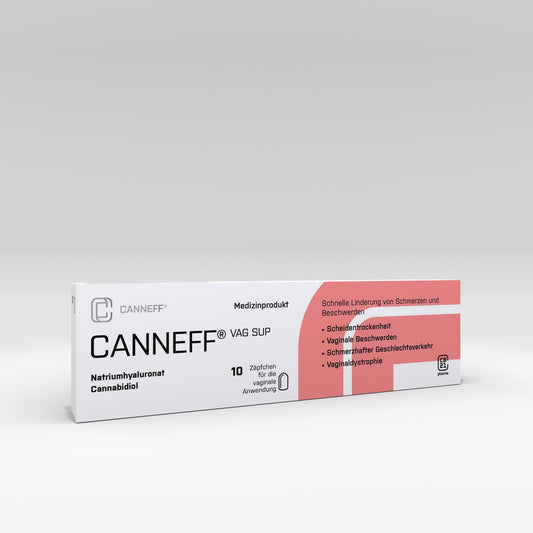
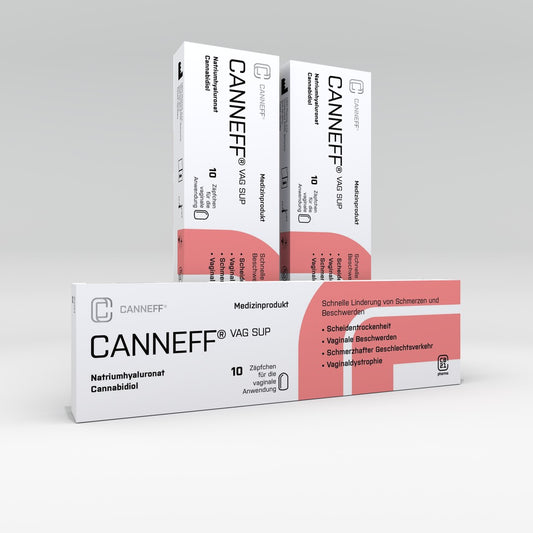
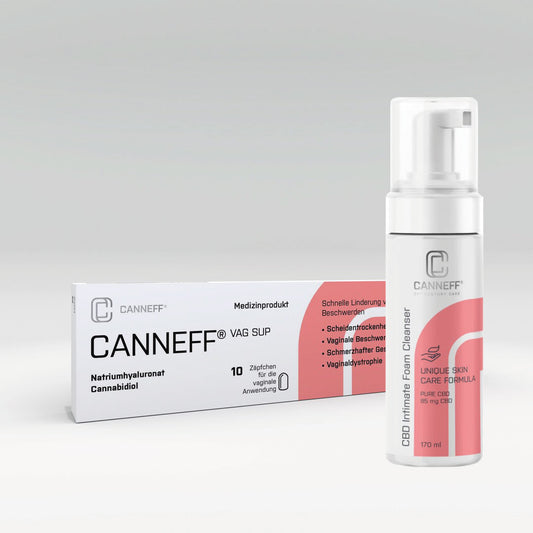
PMS bloating can be alleviated through targeted dietary adjustments and natural home remedies. A low-salt diet can reduce water retention, while high-fiber foods support digestion. Certain herbal teas like fennel or peppermint have a calming effect on the gut and help reduce bloating faster. Exercise stimulates bowel activity, so light walks or gentle stretching exercises are especially effective. Heat, such as a hot water bottle on the abdomen, can help relieve tension in the gastrointestinal tract. CANNEFF® Vaginal Suppositories with the patented combination of hyaluronic acid and CBD can provide support by relaxing the body and exerting anti-inflammatory effects on the intestinal muscles.
|
Measure |
Effect |
|
Low salt & sugar |
Reduces water retention |
|
High-fiber diet |
Promotes healthy bowel activity |
|
Fennel, chamomile, or peppermint tea |
Relieves bloating, soothes the stomach |
|
Exercise & stretching |
Activates the intestines, reduces pressure sensation |
|
Heat applications |
Relaxes the abdominal muscles |
|
Supports muscle relaxation |
Bloating before your period: Which foods worsen the symptoms?
Certain foods can increase bloating and should be reduced during PMS. These include gas-producing vegetables like cabbage, legumes, and onions, as they stimulate the fermentation process in the gut and promote gas formation. Dairy products can also cause digestive discomfort in women with lactose sensitivity. Highly processed foods with high sugar or salt content promote water retention and increase the feeling of fullness. Carbonated drinks and alcohol can also worsen bloating as they further irritate the gastrointestinal tract.
|
Foods |
Influence on PMS bloating |
|
Cabbage, legumes |
Promote gas formation in the intestines |
|
Dairy products |
Can worsen digestive problems |
|
Sugary foods |
Promote water retention |
|
Carbonated drinks |
Additionally bloat the stomach |
PMS or gastrointestinal problems? How to distinguish the symptoms
Bloating can be caused by both PMS and gastrointestinal problems. The difference often lies in the timing and accompanying symptoms. PMS bloating occurs a few days before the period and usually disappears with the start of bleeding. Gastrointestinal diseases, on the other hand, occur independently of the cycle and are often accompanied by symptoms such as diarrhea, nausea, or fever.
|
Feature |
PMS bloating |
Gastrointestinal problems |
|
Timing |
Before the period |
Independent of the cycle |
|
Accompanying symptoms |
Water retention, mood swings |
Diarrhea, nausea, fever |
|
Improvement with period |
Yes |
No |
Why does the belly feel bloated during PMS?
The feeling of a bloated belly due to PMS is caused by a combination of water retention and slowed digestion. The body stores more water in the second half of the cycle, which can slightly increase the waist circumference. At the same time, the relaxed intestinal muscles cause gases to accumulate in the digestive tract, which intensifies the feeling of fullness. Many women notice that their belly feels harder or more swollen during this phase. This condition only regulates itself again with the onset of menstruation.
What kind of exercise helps against PMS bloating?
Exercise can stimulate digestion and effectively reduce bloating. Gentle yoga poses like the "downward dog" or the "cobra" promote blood flow to the abdominal area and relax the intestinal muscles. Walking or light jogging supports intestinal peristalsis and helps break down gas more quickly.
|
Exercise |
Effect on bloating |
|
Yoga |
Relieves tension in the abdominal area |
|
Walking |
Stimulates bowel movement |
|
Light jogging |
Promotes digestion |
Chasteberry and herbal teas: Natural relief for PMS bloating
Chasteberry regulates hormone levels and can relieve PMS symptoms, including bloating, in the long term. Herbal teas like fennel, anise, or caraway tea relax the gastrointestinal muscles and help break down excess gas more quickly. Regular consumption of herbal tea can help prevent digestive discomfort.
Why can PMS cause both bloating and constipation at the same time?
Progesterone affects the digestive tract in two ways. On one hand, it slows down bowel movements and promotes constipation, while on the other hand, it can cause bloating due to water retention and altered gut bacteria. This interaction causes some women to experience alternating constipation and bloating during PMS.
PMS bloating and heartburn: Is there a connection?
Yes, hormonal changes before the period can also worsen heartburn. Progesterone not only relaxes the intestinal muscles but also the sphincter between the esophagus and stomach. This allows stomach acid to flow back more easily, which can cause a burning sensation behind the breastbone. A light, low-acid diet helps to relieve symptoms.