

What are the most common causes of a bladder infection?
The most common causes of a bladder infection (cystitis) can be divided into different categories, with bacterial infections making up the largest share:
Bacterial infections:
Escherichia coli (E. coli):
The most common cause of bladder infections. These intestinal bacteria enter the bladder through the urethra. Especially promoted by incorrect intimate hygiene or during sexual intercourse (“honeymoon cystitis”). Read more about bladder infection after sexual intercourse here.
Other bacteria:
Proteus, Klebsiella, or staphylococci can also cause infections but are less common.
Anatomical and physiological factors:
Short urethra in women:
Women are more frequently affected than men due to the shorter urethra and proximity to the anal region.
Urine outflow disorders:
Causes such as enlarged prostate, urethral strictures, or bladder stones obstruct drainage, promoting bacterial growth.
Lifestyle and external factors:
Sexual intercourse:
Mechanical friction can allow bacteria to enter the urinary tract. Read more about bladder infection after sexual intercourse here.
Insufficient fluid intake:
Low urine volume makes it harder to flush out bacteria.
Incorrect hygiene:
Wiping from back to front or aggressive intimate hygiene can disrupt the balance of the flora.
Hormonal and medical influences:
Menopause:
Hormonal changes such as a declining estrogen level lead to weakened mucous membranes and increased susceptibility.
Pregnancy:
The altered hormonal balance and dilation of the urinary tract increase the risk.
Medications:
Radiation or medications like cyclophosphamide can cause inflammatory cystitis.
Preventive tips:
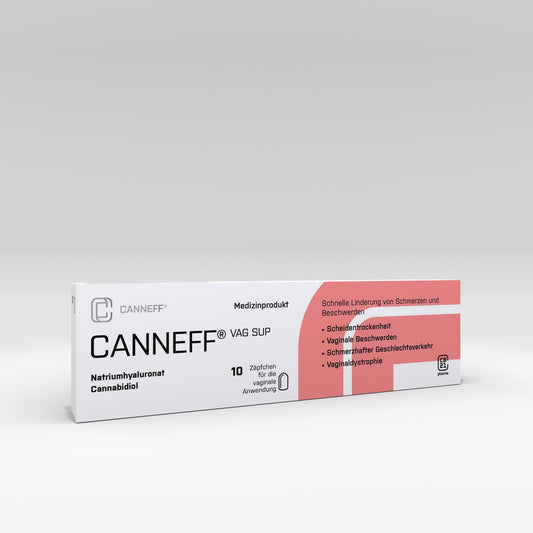
Products like CANNEFF VAG SUP with CBD and hyaluronic acid can help strengthen the mucous membrane and prevent infections, especially in cases of recurrent bladder infections.
How does sexual intercourse affect the risk of a bladder infection?
Sexual intercourse can significantly increase the risk of a urinary tract infection (cystitis), especially in women. This so-called "honeymoon cystitis" often occurs because mechanical friction during intercourse can transfer bacteria, especially Escherichia coli (E. coli), from the anal area into the urethra. From there, the germs migrate to the bladder and cause inflammation.
The anatomical conditions in women – a short urethra and the proximity of the urethral opening, vagina, and anus – promote this process. Additionally, the use of certain contraceptive methods, such as diaphragms or spermicide-containing gels, can further increase the risk of infection by disturbing the balance of the vaginal flora and facilitating the colonization of harmful bacteria.
To prevent a post-coital urinary tract infection, it is recommended to empty the bladder within 15 to 30 minutes after intercourse to flush out possible bacteria from the urethra. Adequate fluid intake, proper intimate hygiene, and avoiding irritating intimate products can further reduce the risk of infection.
Women who repeatedly suffer from post-coital urinary tract infections can benefit from preventive measures, such as using CANNEFF VAG SUP vaginal suppositories. These support the regeneration of the mucous membranes, strengthen the natural protective barrier, and can help reduce the frequency of infections. In severe or recurrent cases, medical advice should be sought to find individually tailored solutions.
Why are women more susceptible to urinary tract infections than men?
Women are more susceptible to urinary tract infections than men, mainly due to their anatomy. The female urethra is significantly shorter at about 4 cm compared to the male urethra (20–25 cm), allowing bacteria to reach the bladder more quickly. Additionally, the urethral opening in women is closer to the anus, which promotes the transfer of intestinal bacteria such as Escherichia coli. Factors like hormonal changes, especially during menopause, can make the mucous membrane more vulnerable. Frequent sexual intercourse and certain contraceptive methods, such as spermicide-containing gels or diaphragms, further increase the risk.
Can poor hygiene cause a bladder infection?
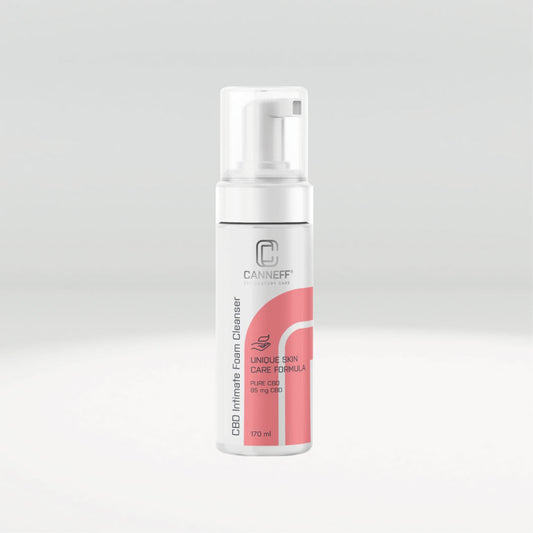
Yes, poor hygiene can promote a bladder infection. Improper cleaning after using the toilet, especially wiping from back to front, can transfer intestinal bacteria like Escherichia coli into the urethra and trigger an infection. Lack of intimate hygiene or the use of irritating products in the intimate area can also disrupt the natural microbiome and increase the risk of bladder infections. We therefore recommend that women use special care products such as CANNEFF intimate care foam.
What role does nutrition play in the development of bladder infections?
Nutrition can influence the development of bladder infections. Sugar- and acid-containing foods promote bacterial growth and irritate the bladder lining. An alkaline-rich diet with plenty of fruits, vegetables, and sufficient fluids, especially water or herbal teas, supports urinary tract health. Cranberry products can also help reduce bacteria adhering to the bladder wall.
|
Nutritional factor |
Effect on bladder infections |
Recommendation |
|
Sugary foods |
Promote bacterial growth and can encourage infections |
Reduce or avoid |
|
Acidic foods |
Irritate the bladder lining |
Limit (e.g., citrus fruits, vinegar) |
|
Water and herbal teas |
Flush the urinary tract and reduce bacteria |
Drink 2–3 liters daily |
|
Cranberry products |
Can make it harder for bacteria to stick to the bladder wall |
Use cranberry juice or capsules as a supplement |
|
Alkaline-rich diet |
Supports bladder health by reducing irritants |
Prefer fruits, vegetables, and whole grains |
|
Spicy seasonings |
Irritate the bladder lining and intensify symptoms |
Moderate or avoid |
|
Caffeine and alcohol |
Can irritate the bladder and worsen symptoms |
Limit or avoid |
|
Probiotic foods |
Support a healthy gut flora that indirectly prevents infections |
Include yogurt, kefir, and fermented foods |
This table summarizes the key connections between nutrition and bladder infections and offers practical recommendations for prevention.
How can anatomical peculiarities lead to bladder infections?
Anatomical peculiarities can increase the risk of bladder infections by making it easier for bacteria to access the bladder or by obstructing urine flow.
Short urethra in women: The proximity of the urethra, anus, and vagina facilitates the entry of intestinal bacteria.
Urine outflow disorders: Narrowings, bladder dysfunctions, or residual urine promote bacterial growth.
Bladder or uterine prolapse: Impairs complete bladder emptying and increases the risk of infection.
Bladder catheter: Creates a direct connection for germs to the bladder.
These factors promote the development of bladder infections and should be medically evaluated if necessary.
How does diabetes contribute to bladder infections?
Diabetes mellitus can increase the risk of bladder infections in several ways:
Weakened immune defense: Chronically elevated blood sugar impairs the immune system, making the body less effective at fighting infections.
Sugar in the urine: Poorly controlled diabetes can cause sugar in the urine (glucosuria). This provides an ideal food source for bacteria, promotes their growth, and increases the risk of infection.
Nerve disorders: Diabetes can impair nerve function in the bladder (diabetic neuropathy). This can lead to incomplete bladder emptying and residual urine, which serves as a breeding ground for bacteria.
Increased susceptibility to urinary tract infections: Long-term complications such as kidney damage can further increase the risk of urinary tract infections, including bladder infections.
Good blood sugar control and regular medical check-ups are essential to minimize the risk of bladder infections in diabetes.
How do urinary tract blockages influence the development of bladder infections?
Urinary tract blockages can significantly promote the development of bladder infections by disrupting the natural flow of urine and creating favorable conditions for bacterial growth. Here are the key connections:
Accumulation of residual urine: Blockages caused by kidney stones, enlarged prostate, or urethral strictures lead to incomplete bladder emptying. The remaining residual urine serves as a breeding ground for bacteria.
Reduced flushing function: Normally, urine flow helps flush bacteria out of the urinary tract. Blockages reduce this flushing effect, promoting the colonization and growth of germs.
Mechanical damage: Blockages can lead to increased pressure in the bladder, which irritates the mucous membrane and makes it more susceptible to infections.
Increased risk of recurrent infections: Chronic blockages can promote a persistent inflammatory readiness in the urinary system and increase the risk of recurrent urinary tract infections.
Treating the underlying blockage, for example through medication, catheterization, or surgery, is crucial to prevent the development of urinary tract infections in such cases.
Can stress cause or worsen a urinary tract infection?
Yes, stress can indirectly cause or worsen a urinary tract infection. Chronic stress weakens the immune system, making the body more susceptible to infections, including urinary tract infections. Additionally, stress can trigger hormonal changes that disrupt the balance of vaginal and urinary tract flora. In existing urinary tract infections, stress can intensify symptoms of a urinary tract infection, such as pain or urgency, as it increases muscle tension and the perception of discomfort. Stress management, such as relaxation techniques or sufficient sleep, can help reduce the risk.
What impact do hormonal changes, such as those during menopause, have on urinary tract infections?
Hormonal changes, such as those occurring during menopause, have a significant impact on the general susceptibility to urinary tract infections, especially on the development and worsening of interstitial cystitis (IC). During menopause, estrogen levels drop, leading to thinning and weakening of the mucous membranes in the intimate area and urinary tract. These changes reduce the natural barrier function of the mucous membranes, making them more vulnerable to inflammation and irritation.
In interstitial cystitis, a chronic, non-bacterial bladder infection, hormonal fluctuations can additionally worsen the symptoms of a bladder infection, such as pain, frequent urination, and irritation. The weakened bladder mucosa reacts more sensitively to stimuli, and healing is hindered by hormonally caused dryness and reduced blood flow.
Support through CANNEFF VAG SUP
Products like CANNEFF VAG SUP vaginal suppositories offer targeted support for these complaints. The included hyaluronic acid promotes regeneration and moisture of the mucous membranes, while CBD acts anti-inflammatory and soothing. This strengthens the mucous membranes, relieves irritations, and reduces the symptoms of interstitial cystitis. Read more here about the treatment of bladder infections or about the treatment of bladder infections with suppositories.
For women in menopause, such suppositories can be an effective complementary measure to promote mucous membrane health and minimize the risk of bladder infections and IC symptoms. Clinical studies with menopausal women who used CANNEFF VAG SUP daily also showed a significant improvement in physiological menopause symptoms, such as vaginal dryness, hot flashes, inner restlessness, joint pain, and sleep problems.