

Can itching be a symptom of a bladder infection?
Yes, itching can be a symptom of a bladder infection, but it is rather rare and usually occurs in combination with other complaints. In most cases, itching is not directly caused by the bladder infection itself but by accompanying factors such as an irritated urethra, vaginal infections, or a disturbed intimate flora.
A bladder infection usually arises from bacteria settling in the bladder and causing inflammation of the mucous membrane. While classic symptoms such as burning during urination, frequent urge to urinate, and lower abdominal pain are prominent, itching can also occur, especially if:
-
The infection irritates the urethra and triggers a local inflammatory reaction.
-
The natural vaginal flora is disturbed by the inflammation, which can promote a fungal infection or bacterial vaginosis.
-
An allergic reaction to medications, hygiene products, or panty liners used during the treatment of the bladder infection.
-
Dryness or over-irritation of the mucous membranes due to hormonal changes (e.g., during menopause).
If itching occurs as a symptom, it should be checked whether an additional infection is present or if irritating substances are being used in the intimate area. If the itching persists or occurs together with unusual discharge or redness, a medical examination is advisable to rule out other causes such as a fungal infection or sexually transmitted diseases.
Why does itching occur in the intimate area during a bladder infection?
Itching in the intimate area can occur with a bladder infection, although it is not one of the typical main symptoms. It usually arises due to accompanying factors related to the infection or its treatment. The most common causes of itching associated with a bladder infection are:
Irritation of the urethra and mucous membranes
The bladder infection itself leads to inflammation of the urethra, which can spread to the external genital area. This irritation can cause itching, especially if the urge to urinate is very frequent or the urethra is heavily irritated.
Imbalance of the vaginal flora
A bladder infection can affect the natural balance of the vaginal flora. Frequent trips to the toilet and increased excretion of bacteria can alter the vaginal flora, promoting fungal infections or bacterial vaginosis – both of which can cause severe itching.
Antibiotics as a trigger
When a bladder infection is treated with antibiotics, these can not only fight the harmful bacteria in the bladder but also destroy the "good" lactic acid bacteria of the vaginal flora. This creates an imbalance that promotes the development of fungal infections (e.g., by Candida), leading to itching and burning.
Allergic reactions or irritations
Many people with a bladder infection use intimate care products or panty liners to feel fresher. However, fragrances, harsh soaps, or scented liners can irritate the sensitive skin and trigger itching.
Hormonal changes
Especially during menopause, a bladder infection can be accompanied by dryness in the intimate area, as estrogen levels drop and the mucous membranes produce less moisture. This dryness can cause itching and increase the risk of infections.
Mechanical irritation
Frequent urination can lead to increased mechanical stress on the external intimate area. Constant wiping after using the toilet, especially with rough toilet paper, can irritate the skin and cause itching.
Fungal infections and bacterial co-infections
Due to the weakened immune system during a bladder infection, it is easier to develop a fungal infection (candidiasis) or bacterial vaginosis. These infections often cause additional discharge, burning, and itching in the intimate area.
How does itching from a bladder infection differ from that of a fungal infection?
Itching in the intimate area can occur both with a bladder infection and with a fungal infection, but the causes and accompanying symptoms differ significantly. While a bladder infection primarily affects the urinary tract, a fungal infection is a direct infection of the vaginal mucosa by fungi (mostly Candida albicans). Here are the main differences:
Causes of itching
Bladder infection: The itching usually arises from irritation of the urethra and mucous membranes due to the inflammation. Frequent urination or antibiotic therapy can also disrupt the natural vaginal environment, causing itching.
Fungal infection: Itching is the Key symptom of a vaginal fungal infection. The fungus Candida albicans multiplies and attacks the mucous membranes, causing severe itching, redness, and swelling.
Comparison of accompanying symptoms
|
Symptom |
Bladder infection |
Fungal infection |
|
Itching |
Mild to moderate, often caused by urethral irritation or antibiotics |
Severe, often unbearable and persistent |
|
Burning when urinating |
Common, due to urinary tract inflammation |
Rare, more due to irritated vulvar mucous membranes |
|
Discharge |
Usually none or only slight, clear discharge |
Thick, white crumbly discharge ("curd-like"), often with unpleasant odor |
|
Redness & swelling |
Occasionally, especially after frequent urination |
Very common, especially on the vulva and vaginal entrance |
|
Frequent urge to urinate |
Typical, even if only a small amount of urine is passed |
Not typical |
|
Lower abdominal pain |
Typical in advanced bladder infection |
Not typical |
|
Change in vaginal flora |
Possible due to antibiotics or irritation |
Always, as fungi disrupt the environment |
Course of symptoms
Bladder infection: Symptoms appear suddenly and often improve within a few days with treatment (e.g., antibiotics or herbal preparations).
Fungal infection: Often develops gradually over several days and usually persists longer if untreated. The itching can be so intense that scratching causes small skin injuries.
Which home remedies help against itching from a bladder infection?
Itching from a bladder infection can be very uncomfortable, but there are various home remedies that can help relieve the symptoms. These remedies soothe irritated skin and mucous membranes, support bladder health, and help restore the natural balance in the intimate area.
|
Home remedies |
Effect |
Application |
|
Sitz baths with chamomile, oak bark, or thyme |
Anti-inflammatory, soothing for the skin |
Soak in warm water for 10–15 minutes, 1–2 times daily |
|
Coconut oil (external use) |
Antibacterial, caring for irritated skin |
Apply thinly to the external intimate area |
|
Natural yogurt (with lactic acid bacteria) |
Supports the vaginal environment, soothes irritation |
Apply directly to the skin, leave on for a few minutes |
|
Aloe vera gel |
Cooling, moisturizing, anti-inflammatory |
Apply thinly to the affected skin several times a day |
|
Bladder and kidney tea (nettle, goldenrod, bearberry leaves) |
Diuretic, anti-inflammatory |
Drink 2–3 cups daily |
|
Cranberry juice or capsules |
Makes it harder for bacteria to adhere to the bladder wall |
Drink 200–300 ml unsweetened juice daily or take capsules |
|
D-mannose |
Binds bacteria and supports their elimination |
Drink 2 g daily dissolved in water |
|
Mild intimate care with water or pH-neutral products |
Protects the natural environment, prevents additional irritation |
Clean the intimate area only with water or gentle wash lotion |
|
Cotton underwear and loose clothing |
Prevents moisture buildup and skin irritation |
Avoid tight, synthetic clothing |
|
Heat (hot water bottle, sitz bath) |
Promotes blood circulation, relaxes muscles |
Place a hot water bottle on the lower abdomen for 15–20 minutes |
|
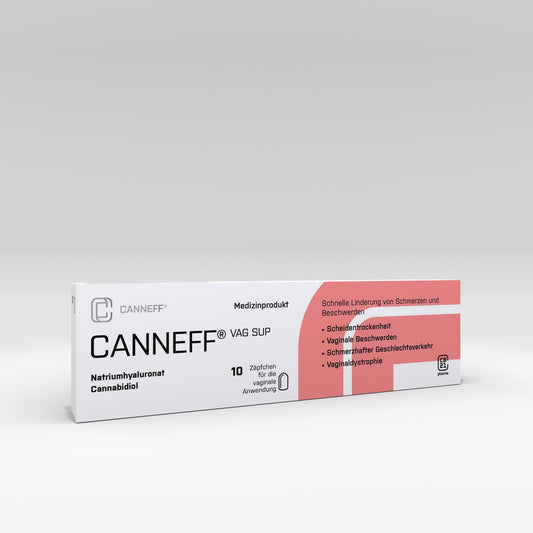
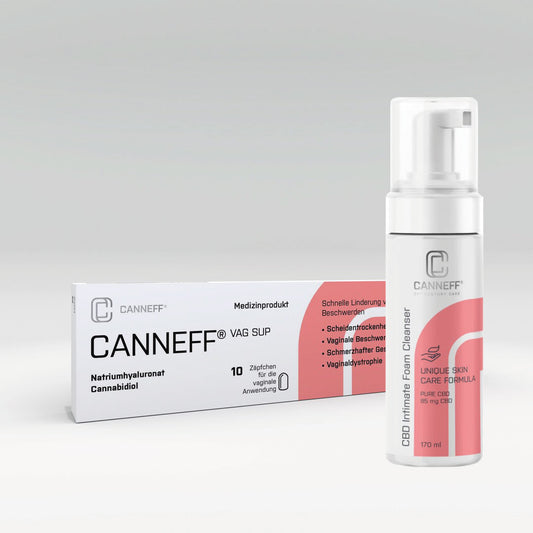
CANNEFF® suppositories with CBD and hyaluronic acid |
Soothes irritated mucous membranes, supports regeneration |
Insert 1 suppository vaginally or rectally daily |
If the itching does not subside despite home remedies or other symptoms such as unusual discharge, severe burning, or blood in the urine occur, a doctor should be consulted.
Is itching a sign of an allergic reaction?
Yes, itching can be a sign of an allergic reaction. It can be triggered by irritating hygiene products, medications (e.g., antibiotics), latex, or certain ingredients in intimate care products. If redness, swelling, or rash also occur, an allergic reaction should be considered and a doctor consulted.
When should you see a doctor for a bladder infection with itching?
You should see a doctor for a bladder infection with itching if:
-
If the itching is severe or lasts longer than a few days, as this may indicate an additional infection (e.g., fungal infection or bacterial vaginosis).
-
If additional symptoms such as redness, burning, or unusual discharge occur, as this could indicate a vaginal infection or skin irritation.
-
If itching occurs after taking medication, as this could indicate an allergic reaction, e.g., to antibiotics.
-
If the itching is very uncomfortable and does not improve despite home remedies, to clarify the exact cause and receive targeted treatment.
A doctor's visit is especially important if, in addition to itching, severe pain, fever, or blood in the urine occurs, as this could indicate a complicated bladder infection.
Which care products should be avoided when itching is caused by a bladder infection?
In case of itching in the intimate area due to a bladder infection, certain care products should be avoided as they can further irritate the mucous membranes and disturb the natural balance of the skin and vaginal flora.
|
Care product |
Why avoid? |
|
Intimate wash lotions with fragrances |
Can irritate sensitive skin and disturb the natural pH balance of the mucous membrane. |
|
Intimate sprays and deodorants |
Often contain alcohol or irritating substances that can worsen dryness and itching. |
|
Vaginal douches |
Can upset the natural vaginal flora and promote infections. |
|
Soaps and shower gels with perfume |
Disrupt the natural acid mantle of the skin and can promote itching and irritation. |
|
Wet wipes with alcohol or perfume |
May contain aggressive ingredients that irritate the skin. |
|
Synthetic or tight underwear |
Impairs air circulation and can trap moisture, which increases itching. |
|
Panty liners or pads with fragrances |
Can cause allergies or skin irritation. |
|
Lubricants based on glycerin or perfume |
Can disturb the vaginal flora and increase irritation. |
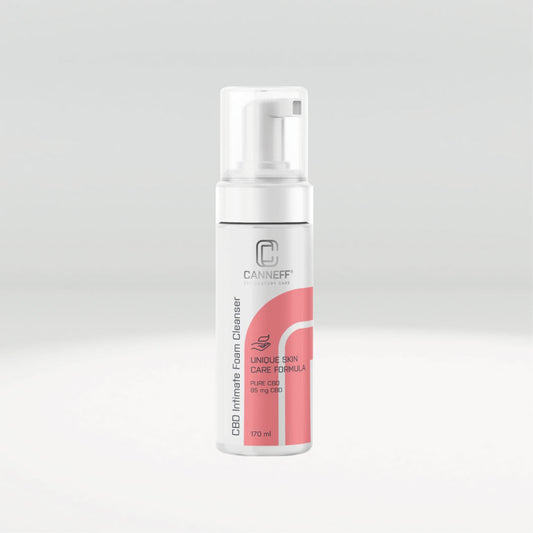
Recommendation: Instead, mild, pH-neutral, and fragrance-free care products like the CANNEFF Intimate Care Foam should be used, excessive intimate hygiene avoided, and breathable cotton underwear worn.
Can a bladder infection affect the vaginal flora?
Yes, a bladder infection can affect the vaginal flora. The close anatomical connection between the bladder, urethra, and vagina means that changes in one area can also affect the others. A disturbed vaginal flora can increase the risk of infection and lead to unpleasant side effects such as dryness, itching, or increased discharge.
|
Factor |
Impact on the vaginal flora |
|
Antibiotic therapy |
Destroys not only the infectious agents but also beneficial lactic acid bacteria in the vagina, which promotes the growth of fungi or unwanted bacteria. |
|
Frequent urination |
Changes the local moisture in the intimate area and can lead to dryness or irritation. |
|
Inflammatory reactions |
A bladder infection can weaken the immune system, allowing pathogenic germs to multiply more easily in the vaginal flora. |
|
pH value changes |
A bladder infection can disrupt the natural balance of the vaginal flora, which can lead to bacterial infections or vaginal yeast infections. |
|
Excessive intimate hygiene |
Women with bladder infections tend to clean the intimate area more frequently, which can weaken the natural protective barrier of the vagina. |
What can be done to protect the vaginal flora?
After antibiotic therapy: Lactic acid bacteria (e.g., in the form of suppositories or capsules) can help stabilize the vaginal flora.
Gentle intimate hygiene: Avoid irritating soaps and harsh intimate washes to not further disturb the natural microbiome.
Wear breathable underwear: Cotton underwear and avoiding synthetic materials prevent a moist-warm environment that can promote infections.
Moisturizing care: If vaginal dryness occurs due to bladder infection or antibiotic therapy, CANNEFF® suppositories with CBD and hyaluronic acid can help regenerate the mucosa and support moisture balance.
Targeted support of the vaginal flora can reduce the risk of recurrent bladder infections and vaginal infections.
What role do hormones play in itching and bladder infections?
Hormones have a significant impact on the health of the bladder and vaginal flora. Estrogen in particular plays a key role in protecting the urinary tract and intimate area. A deficiency or change in hormone levels can increase the risk of both bladder infections and itching.
How do hormones affect bladder infections and itching?
|
Hormonal change |
Impact on bladder and intimate area |
|
Estrogen deficiency (e.g., during menopause) |
Weakens the mucous membranes of the bladder and vagina, reduces the natural protective barrier against bacteria, and can lead to dryness, itching, and recurring bladder infections. |
|
Pregnancy |
Hormonal changes can alter the pH balance of the vaginal flora and promote bladder infections as well as itching. Additionally, progesterone relaxes the bladder muscles, which can make complete bladder emptying more difficult. |
|
Menstrual cycle |
During the period, the vaginal mucosa is more sensitive, estrogen levels fluctuate, and the risk of infection is increased. Many women report increased itching or bladder irritation during this time. |
|
Pill or hormonal contraception |
Some hormonal contraceptives can alter the vaginal flora, increasing the risk of bacterial and fungal infections, which in turn can cause itching. |
|
Menopause |
During menopause, less estrogen is produced, which dries out the mucous membranes and increases the risk of infection. Bladder infections occur more frequently, accompanied by itching or burning. |
Hormonal changes are often an underestimated factor in recurring bladder infections and itching. Targeted support of the mucous membranes can help relieve symptoms and reduce the risk of infection.
Can a bladder infection be treated without antibiotics and medication?
Yes, in many cases a bladder infection can heal without antibiotics, especially if it is a mild, uncomplicated infection. The body is often able to fight the bacteria itself when adequately supported. Early and consistent treatment with natural methods is crucial to promote healing and prevent worsening of the infection.
When is treatment without antibiotics possible?
-
If the symptoms are mild (no high fever, no severe pain).
-
If the bladder infection is detected early and countermeasures are taken immediately.
-
If there are no pre-existing conditions such as diabetes or immune deficiency.
-
If no blood in the urine is present.
When should you see a doctor after all?
-
If symptoms last longer than three days or worsen.
-
If blood in the urine is visible or severe pain occurs.
-
If fever over 38 °C occurs, as this may indicate a kidney infection.
-
If bladder infections recur regularly (more than 3 times a year).
CANNEFF® suppositories with CBD and hyaluronic acid can soothe and regenerate the mucous membrane. Especially for women with sensitive or irritated mucous membranes, they can be a meaningful support in treatment without antibiotics. A bladder infection can often heal without medication if natural measures are taken early. However, it is important to closely monitor the symptoms and seek medical advice if signs of worsening appear.