

When is surgery unavoidable for Grade IV hemorrhoids?
Surgery for Grade IV hemorrhoids is unavoidable when conservative and minimally invasive treatments no longer provide sufficient relief and the symptoms of hemorrhoids significantly impair daily life. In this advanced stage of hemorrhoids, the enlarged hemorrhoids remain permanently prolapsed and can no longer be manually pushed back. This leads to symptoms such as persistent pain, heavy bleeding, oozing, and a foreign body sensation that cannot be resolved without surgery. Find all further details here about the surgery for hemorrhoid treatment.
Surgical intervention is especially necessary when the following complications occur:
Strangulation of hemorrhoids: Strangulated hemorrhoids can interrupt blood flow and lead to tissue damage or necrosis (tissue death).
Chronic bleeding: Frequent or heavy bleeding can cause anemia, which needs to be treated.
Inflammations and infections: Permanently prolapsed tissue increases the risk of painful inflammations that can spread to surrounding tissue.
Severe impairment of quality of life: When everyday activities such as sitting, walking, or using the toilet are severely restricted, surgery is often the only way to relieve the symptoms.
Early medical evaluation is essential to determine the appropriate surgical method and avoid long-term damage. The choice of method—whether the Milligan-Morgan or Ferguson technique, stapled hemorrhoidopexy, or laser hemorrhoidoplasty—depends on the individual situation and the patient's health condition.

What surgical procedures are available for the treatment of Grade IV hemorrhoids?
For the treatment of grade IV hemorrhoids, several surgical procedures are available that aim to remove or reposition the prolapsed tissue and sustainably relieve symptoms. The choice of method depends on the individual patient's situation, the extent of symptoms, and the condition of the tissue. Here are the main procedures:
Milligan-Morgan method: The Milligan-Morgan method is a classic procedure for removing hemorrhoids. The enlarged hemorrhoidal nodes are completely removed, and the wounds are left open to allow the healing process from the inside out. This method is especially suitable for extensive and severely enlarged hemorrhoids, offers long-term results, and reduces the risk of recurrence.
Ferguson method: The Ferguson method is a variant of the Milligan-Morgan method, in which the wounds are sutured after the removal of hemorrhoids. The advantage of this procedure is faster wound healing, but there is a slightly increased risk of suture complications such as infections or bruising.
Stapler hemorrhoidopexy (Longo method): This minimally invasive procedure is particularly suitable for hemorrhoids with mucosal prolapse. A stapling device removes excess mucosa above the hemorrhoids and pulls the tissue back into the anal canal. At the same time, the blood supply to the hemorrhoids is reduced, causing them to shrink. This method is less painful and allows for faster recovery, but it is not suitable for all patients.
Laser hemorrhoidoplasty: In laser hemorrhoidoplasty, a laser is used to precisely cauterize and reduce the hemorrhoid tissue. This method is gentle, causes less pain, and leads to a quick recovery. It is especially suitable for patients seeking a minimally invasive alternative.
Hemorrhoidal Artery Ligation (HAL) with Recto-Anal Repair (RAR): This method combines tying off the arteries supplying blood to the hemorrhoids with fixing the prolapsed tissue. It is gentle and preserves the natural function of the anal canal. However, HAL-RAR is only limitedly suitable for Grade IV hemorrhoids and is mostly used as an adjunct for mucosal prolapse.
Thrombectomy: In acute cases where painful blood clots form in the hemorrhoids, a thrombectomy can be performed. However, this method only provides short-term relief and is often used as a complement to a later complete hemorrhoid removal.
Find more information here about hemorrhoid surgery.
Why is the Milligan-Morgan method a common choice for Grade IV hemorrhoids?
The Milligan-Morgan method is one of the most proven surgical procedures for treating Grade IV hemorrhoids and is a common choice in severe cases. This is due to its versatility and long-term effectiveness.
This procedure allows the complete removal of the enlarged hemorrhoidal nodes and their blood supply. This sustainably eliminates symptoms such as bleeding, pain, and discharge. The Milligan-Morgan method is especially suitable for advanced and complex cases where minimally invasive techniques like rubber band ligation or HAL-RAR are insufficient. Even with accompanying complications, such as mucosal prolapse or thrombosed hemorrhoids, this method shows a high success rate. A key advantage is the open wound treatment: after removal of the hemorrhoids, the wounds remain open, minimizing the risk of infections or suture problems. This allows natural healing from the inside out, even though it takes more time. The method has been tested over decades, is internationally recognized, and is performed by surgeons with extensive experience.
Although the healing time is longer and postoperative pain may occur, the Milligan-Morgan method offers long-term results and significant relief of symptoms. Therefore, it remains a preferred option for many patients with Grade IV hemorrhoids to sustainably improve quality of life and well-being. Find more information here about hemorrhoid surgery.
What advantages does the Ferguson method offer for Grade IV hemorrhoids?
The Ferguson method offers an effective alternative to the classic Milligan-Morgan technique in the treatment of Grade IV hemorrhoids. This procedure combines the complete removal of hemorrhoidal nodes with closed wound treatment, which brings some specific advantages.
A main advantage of the Ferguson method is faster wound healing. By suturing the wound edges, the healing time is shortened compared to open wound treatment because the mucosa is protected and irritation is reduced. This also leads to less exposure of the sensitive tissue, reducing the risk of infections and postoperative complications. Patients also benefit from greater comfort during recovery. The closed wound treatment generally results in less pain and a quicker return to normal daily activities. This makes the Ferguson method especially attractive for patients seeking the shortest possible recovery time.
Despite the mentioned advantages, it should be noted that wound closure can also present challenges, such as an increased risk of scarring or anal canal narrowing. The Ferguson method is particularly suitable for Grade IV hemorrhoids when surgery is necessary and a faster recovery is desired. The decision to use this method should be made individually in consultation with an experienced proctologist to ensure the best possible outcomes.
How does stapled hemorrhoidopexy (Longo method) work for Grade IV?
Stapled hemorrhoidopexy, also known as the Longo method, is a modern surgical technique for treating Grade IV hemorrhoids, especially in patients with pronounced mucosal prolapse. It fundamentally differs from other procedures as it aims to reposition the hemorrhoids rather than completely remove them.
Removal of excess mucosa: A specially designed stapling device (stapler) is used to remove a circular strip of excess mucosa above the hemorrhoids. This is done in the less sensitive area of the anal canal, making the procedure less painful.
Repositioning of hemorrhoids: The procedure pulls the prolapsed tissue back into the anal canal and fixes it in its original position. This restores anatomical normality and ensures that the hemorrhoid nodes no longer protrude outward.
Blocking the blood supply: By removing the mucosa and fixing it in place, the blood supply to the enlarged hemorrhoids is reduced. This causes the tissue to shrink and regress over time.
Since the procedure is performed above the pain-sensitive area, patients report less postoperative pain compared to traditional methods like the Milligan-Morgan technique. The hemorrhoids remain as important cushions to seal the anal canal because they are not completely removed. Patients can usually return to their daily activities more quickly since the method includes minimally invasive elements and causes less tissue damage. The Longo method is particularly suitable when there is also a mucosal prolapse, as it directly corrects this. The stapler hemorrhoidopexy is not suitable for all patients with grade IV. In cases of severely enlarged, inflamed, or thrombosed hemorrhoids, complete tissue removal, as in the Milligan-Morgan method, may be necessary. The Longo method also reaches its limits in cases of severe complications or irreversible tissue damage.
The Longo method offers an effective and gentle alternative to traditional hemorrhoid surgery. It is especially suitable for patients suffering from grade IV hemorrhoids with mucosal prolapse and who want to benefit from a shorter recovery time. However, the final choice of procedure should always be made individually and in consultation with an experienced proctologist. Find more information here about hemorrhoid surgery.
When is laser hemorrhoidoplasty used for Grade IV hemorrhoids?
Laser hemorrhoidoplasty is a modern, minimally invasive procedure used in specific cases for treating Grade IV hemorrhoids. It is particularly suitable when the hemorrhoids are significantly enlarged but not yet irreparably damaged. The procedure is often preferred when patients desire a less invasive treatment with a short recovery time.
Laser hemorrhoidoplasty uses a precise laser that targets the affected tissue. The laser heats the hemorrhoidal nodes, causing the tissue to shrink and the nodes to lose volume. At the same time, the laser energy seals the blood vessels supplying the hemorrhoids. This reduces blood flow to the nodes and accelerates their regression. A key advantage of this method is that the surrounding healthy tissue is preserved, which promotes healing and minimizes complications. Laser hemorrhoidoplasty is characterized by low pain levels since no cuts or open wounds are created. Patients can usually resume their normal daily activities within a few days. The risk of bleeding, infections, or other postoperative complications is also significantly lower with this procedure compared to conventional surgical interventions. Another benefit is the preservation of the natural function of the hemorrhoids as erectile tissue, which is important for sealing the anal canal.
However, laser hemorrhoidoplasty is not suitable for all cases of Grade IV hemorrhoids. In cases of extensive tissue damage, thrombosis, or severe mucosal prolapse, the method is often insufficient, and a classic surgery such as the Milligan-Morgan or Ferguson method is required. The decision for this procedure should always be made in consultation with an experienced proctologist who considers the patient’s individual circumstances. Overall, laser hemorrhoidoplasty offers a gentle and effective treatment option, especially for patients who value a quick recovery and minimal intervention.
What complications can occur after surgery, and how can they be avoided?
After surgery to treat Grade IV hemorrhoids, various complications can occur. These often depend on the chosen method, the patient’s overall health, and aftercare. Early detection and targeted measures can minimize the risk. The most common complications and their prevention include:
Postoperative pain: Pain often arises from wound healing, tissue damage, or irritation in the anal area. Painkillers as directed by a doctor, sitz baths with anti-inflammatory additives like chamomile or oak bark, and a soft stool consistency through a high-fiber diet and adequate fluid intake can relieve discomfort.
Bleeding: Bleeding can occur during healing, especially after bowel movements or strain on the wounds.
Prevention: Gentle toilet habits and avoiding straining reduce the risk. If bleeding is heavy or persistent, a doctor should be consulted.
Infections: Wounds in the anal area are prone to infections, especially with inadequate hygiene. Regular cleaning with lukewarm water, avoiding harsh soaps and scented toilet paper, and patting instead of rubbing promote healing and prevent infections. If signs such as fever or pus formation occur, immediate medical help is required.
Constipation: Fear of pain during bowel movements often leads to delayed toilet visits, which promotes constipation. A high-fiber diet, sufficient fluid intake, and possibly mild laxatives on medical advice help regulate digestion.
Urinary retention: Swelling in the surgical area can make urination difficult.
Avoidance: Drinking enough fluids and sitting relaxed during urination can help. If the problem persists, a doctor may consider catheterization.
Scar tissue and anal canal narrowing: Excessive scar tissue can narrow the anal canal and impair its function. Regular follow-up appointments and, if necessary, stretching exercises or the use of an anal dilator can help maintain the elasticity of the anal canal.
Recurrence (reappearance of hemorrhoids): Strains such as chronic constipation or excessive straining can cause new hemorrhoids. Preventive measures such as a high-fiber diet, regular exercise, and good anal hygiene reduce the risk of recurrence.
Thrombosis or tissue necrosis: Trapped or poorly perfused tissue can develop blood clots or tissue damage. Early medical check-up in case of pain or unusual symptoms such as severe swelling is crucial.
What role does follow-up care play after surgery for Grade IV hemorrhoids?
There are some follow-up recommendations that can be useful after surgery for Grade IV hemorrhoids:
Sitz baths: Regular sitz baths promote blood circulation and relieve discomfort.
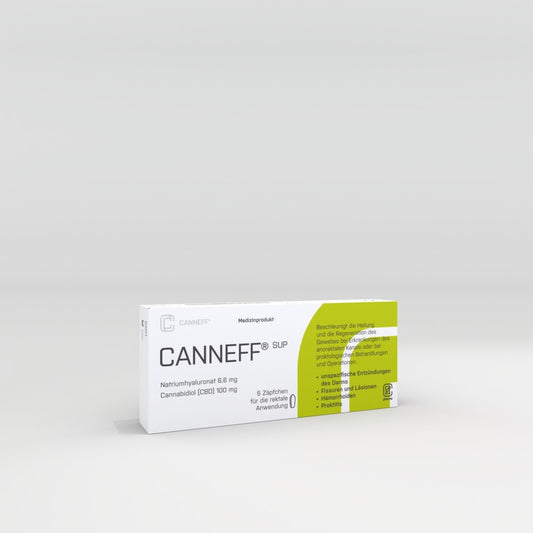
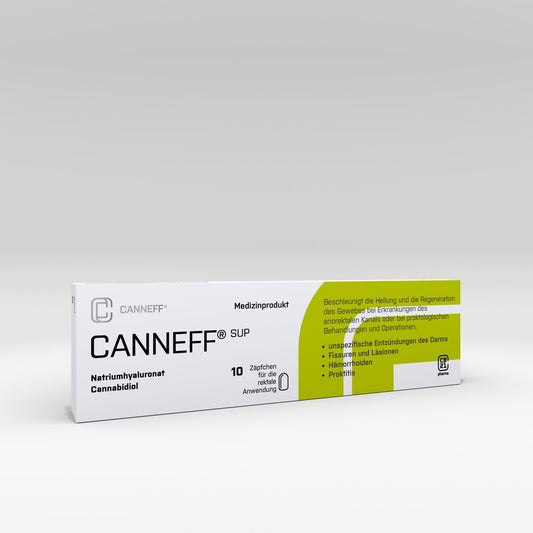
CANNEFF SUP suppositories: The suppositories with cannabidiol (CBD) and hyaluronic acid support regeneration, relieve pain, and have anti-inflammatory effects.
Follow-up appointments: Regular visits to the proctologist help to detect and treat complications early.
Avoidance of strain: Heavy physical activities or lifting loads should be avoided during the healing phase.
How can CANNEFF SUP suppositories support regeneration after a surgical procedure?
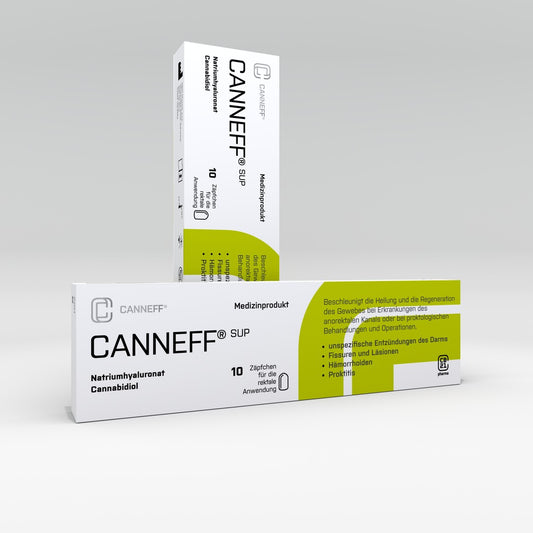
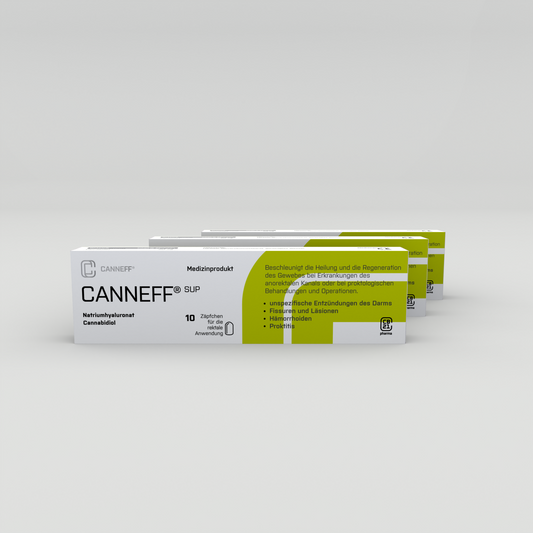
CANNEFF® SUP Suppositories are an effective support for regeneration after surgical procedures for Hemorrhoids Grade IV. The innovative combination of Cannabidiol (CBD) and Hyaluronic Acid aims to promote wound healing, relieve postoperative discomfort, and sustainably protect the mucous membrane.

CBD is characterized by its antioxidant properties, which reduce inflammation and swelling and support cell regeneration. This reduces irritation and accelerates the healing process. Hyaluronic acid is anti-inflammatory, provides intensive moisture to the mucous membrane, promotes its elasticity, and accelerates the formation of new tissue structures. This synergistic effect of the two ingredients effectively relieves pain, itching, and swelling in the anal area.
The application is straightforward, as one suppository is inserted rectally once daily, ideally in the evening before going to bed. Overnight, the active ingredients exert their targeted effect directly at the surgical site. The duration of use depends on the individual healing process and should be coordinated with the treating physician.
CANNEFF® SUP Suppositories offer a modern and proven solution to promote healing after surgery, relieve postoperative discomfort, and enable a quick return to quality of life. They are a valuable addition to aftercare for Hemorrhoids Grade IV.
How long does recovery take after surgery for Grade IV hemorrhoids?
The recovery time after surgery for Grade IV hemorrhoids depends on the chosen treatment method, the patient's individual health condition, and aftercare.
With classic surgical procedures, such as the Milligan-Morgan or Ferguson method, the healing time usually ranges from four to six weeks. Since these methods often involve open or stitched wounds, pain and discomfort during bowel movements can occur, which can be alleviated with painkillers or sitz baths. Stapler hemorrhoidopexy (Longo method) offers faster recovery as it causes less tissue damage. Patients can often resume their normal daily activities within two to three weeks. Recovery time is also generally shorter with laser hemorrhoidoplasty, a minimally invasive method, typically lasting one to two weeks.
Regardless of the method, careful aftercare is crucial. A diet rich in fiber, adequate fluid intake, and regular exercise promote rapid healing. Products like CANNEFF® SUP suppositories can accelerate regeneration by reducing inflammation and protecting the mucous membrane. Patients should avoid physical exertion and heavy lifting in the first few weeks to not impair healing. Regular check-ups with the doctor ensure that the healing process proceeds optimally and any complications are detected early. Find more information here about hemorrhoid surgery.