

What are Grade III hemorrhoids and how can you recognize them?
Grade III hemorrhoids are enlarged vascular cushions that protrude from the anal canal during bowel movements or physical strain and do not retract on their own. They must be manually repositioned. This clearly distinguishes them from the less advanced grades, Grade I hemorrhoids and Grade II hemorrhoids. Find more information here about the different stages of hemorrhoids.
Characteristics of Grade III hemorrhoids:
- Permanent protrusion from the anal canal.
- Need to manually push the vascular cushions back.
- Visible swelling, especially after strain.
- Increasingly bothersome complaints such as oozing, pain, and itching.

What symptoms occur with Grade III hemorrhoids?
The following table summarizes the most common symptoms clearly.
|
Symptom |
Description |
|
Permanent protrusion |
Hemorrhoids protrude under strain and do not retract on their own. |
|
Bleeding |
Dropwise or bright red blood traces on toilet paper or in the stool. Read more here about hemorrhoid bleeding. |
|
Itching and burning |
Irritation of the sensitive mucous membrane caused by friction or mucus secretion. Read more here about anal itching or anal burning. |
|
Pain |
Especially when sitting or during bowel movements. |
|
Foreign body sensation |
Constant pressure sensation in the anal area that feels unpleasant or bothersome. |
|
Oozing |
Discharge of mucus that can cause skin irritation and make anal hygiene difficult. |
Find more information here about the symptoms of hemorrhoids.
Why do grade III hemorrhoids develop?
Grade III hemorrhoids usually develop from untreated or chronically stressed grade I hemorrhoids or grade II hemorrhoids. The main causes include:
Chronic constipation: Frequent straining stresses the vascular cushions.
Low-fiber diet: Hard stool consistency increases pressure during bowel movements.
Lack of exercise: Lack of activity promotes poor blood circulation in the anal canal.
Pregnancy: Increased pressure on the pelvis during pregnancy.
Genetic predisposition: Weak connective tissue increases the risk.
Age: With increasing age, blood vessels and tissue lose elasticity.
How common are grade III hemorrhoids?
Grade III hemorrhoids occur less frequently than the less advanced stages. They mainly affect people who do not treat their symptoms in time. Find more information here about the different stages of hemorrhoids.
|
Hemorrhoid stage |
Frequency |
|
Grade I |
Very common, especially in the early stage. |
|
Grade II |
Common, in people over 40. |
|
Grade III |
Moderate, about 10–20% of those affected. |
|
Grade IV |
Rare, less than 5%. |
Are grade III hemorrhoids dangerous?
Grade III hemorrhoids are not immediately life-threatening but can lead to serious complications if untreated. Common risks include:
Inflammation: Irritation from mucus and friction can trigger infections.
Anemia: Repeated bleeding can lead to iron deficiency. Read more here about bleeding hemorrhoids.
Thrombosis: Blood clots can form in the vascular cushions and cause severe pain.
Transition to grade IV: Without treatment, grade III hemorrhoids can worsen and develop into grade IV hemorrhoids.
Can grade III hemorrhoids be treated on their own?
Yes, with early detection, some measures can alleviate the symptoms. However, these are not cures but only symptomatic treatments.
Self-help tips
Nutrition: A high-fiber diet (fruits, vegetables, whole grains) eases bowel movements.
Fluids: Drink at least 1.5–2 liters of water daily to prevent constipation.
Exercise: Regular physical activity stimulates blood circulation.
Toilet habits: Avoid prolonged sitting and heavy straining on the toilet.
Hygiene: Use warm water and gentle cleansers to avoid irritation.
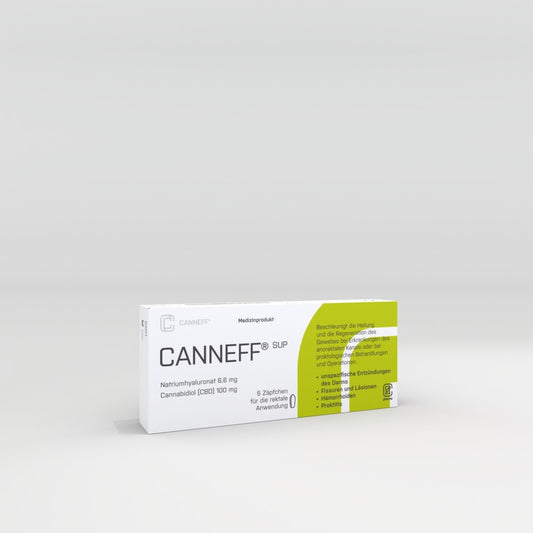
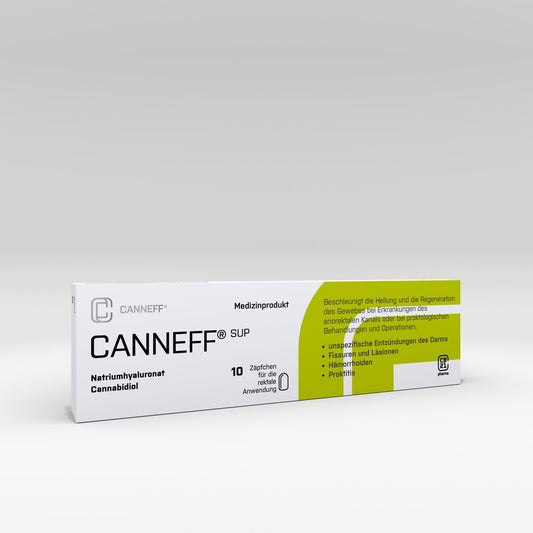
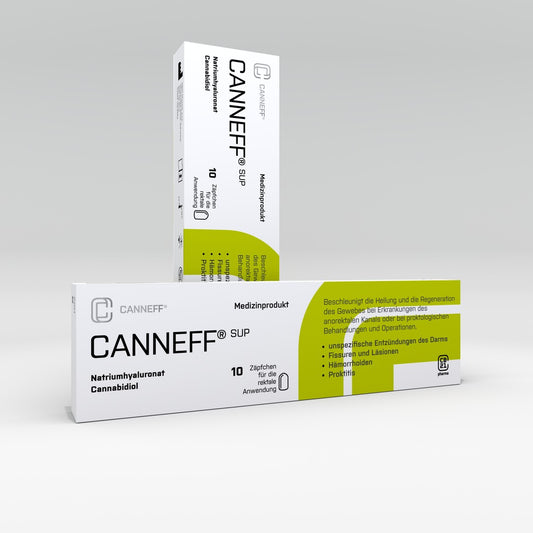
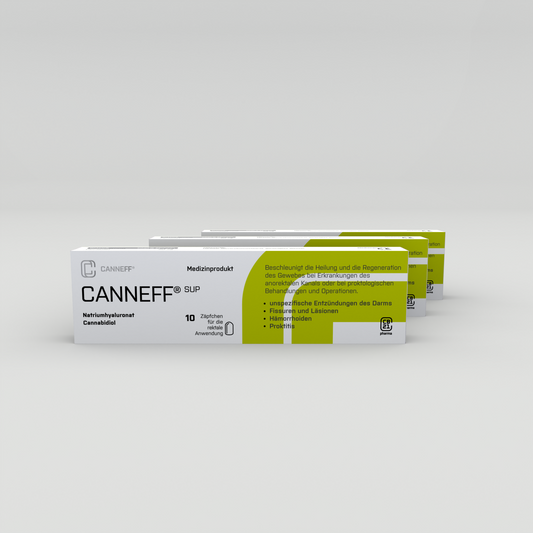
Products like CANNEFF® SUP suppositories
CANNEFF® SUP suppositories provide targeted support for Grade III hemorrhoids. The combination of cannabidiol (CBD) and hyaluronic acid relieves pain and itching, protects the mucous membrane, and promotes its regeneration.
When should you see a doctor for Grade III hemorrhoids?
A doctor’s visit is recommended if:
- Symptoms persist despite self-care measures.
- Bleeding is severe or frequent.
- Pain affects daily life.
- There is uncertainty about the diagnosis.
The doctor may recommend minimally invasive procedures such as rubber band ligation or sclerotherapy. In advanced cases, surgery may be necessary. Read more about hemorrhoid surgery here or learn more about the treatment of Grade III hemorrhoids.
How can you prevent Grade III hemorrhoids?
Preventive measures help stop the progression of symptoms.
|
Measure |
Benefit |
|
High-fiber diet |
Promotes soft stool and prevents constipation. |
|
Sufficient exercise |
Stimulates blood circulation and reduces pressure in the pelvis. |
|
Improved toilet habits |
Prevents excessive straining and prolonged sitting. |
|
CANNEFF® SUP suppositories |
Protects the mucous membrane and prevents irritation. Treat hemorrhoids with CANNEFF® SUP suppositories |