

How does an HPV infection lead to cervicitis?
A cervicitis – that is, inflammation of the cervix – can be triggered, among other causes, by an infection with human papillomaviruses (HPV). Unlike bacterial or fungal cervicitis, HPV cervicitis is usually not characterized by acute symptoms but often progresses asymptomatically or with subtle irritation signs. Nevertheless, from a medical perspective, it represents a special form of cervical inflammation because it is associated with a potentially higher risk of tissue changes.
Pathogenesis: How HPV infects the cervix
HPV primarily infects the epithelial cells of the cervix. Entry occurs through tiny micro-injuries of the mucosa – for example, through sexual intercourse or other mechanical stimuli. The so-called transformation or transition epithelium (squamocolumnar zone) at the cervix is particularly susceptible. In this area, two cell types meet that are especially receptive to viral integration.
After entering the cell, HPV viruses inject their genetic material. The viral DNA can be integrated into the cell nucleus, where it disrupts cellular regulation. Two viral oncoproteins (E6 and E7) inhibit key tumor suppressors of the cell (p53 and Rb), leading to increased cell division and disrupted apoptosis (cell death). These processes can – over years – promote chronic inflammation and eventually lead to dysplasia or even malignant transformation.
HPV infection as a trigger of a silent inflammation
In the early phase, the HPV infection usually goes unnoticed by the immune system. Only when infected cells are recognized by the body's immune system does the release of pro-inflammatory cytokines occur – that is, an immune-mediated reaction. This reaction manifests clinically in some patients as cervicitis:
-
Slight redness or edema of the cervix
-
Contact bleeding during gynecological examination or intercourse
-
Subjective irritation symptoms such as burning or discharge
Nevertheless, HPV cervicitis is not comparable to a classic bacterial inflammatory reaction in most cases – it often progresses insidiously, subclinically, and is only detected during cancer screening.
Special feature: Chronic progression possible
An acute HPV infection clears up on its own in most women within 12–24 months—especially if the immune system is intact. However, in about 10–20% of all affected individuals, the infection remains persistent. Such chronic courses are what ultimately can lead to permanent mucosal irritation and thus to the development of chronic cervicitis.
Importance for gynecological practice
HPV cervicitis is thus not a classic infectious disease with purulent discharge and fever but a locally limited, mostly symptom-poor inflammatory reaction to viral persistence. Its significance lies mainly in the risk of cellular changes and potential malignant transformation.
The following articles will therefore examine, among other things:
- which HPV types are typically involved
- which symptoms HPV cervicitis can cause
- how diagnosis and differentiation from dysplasia are performed
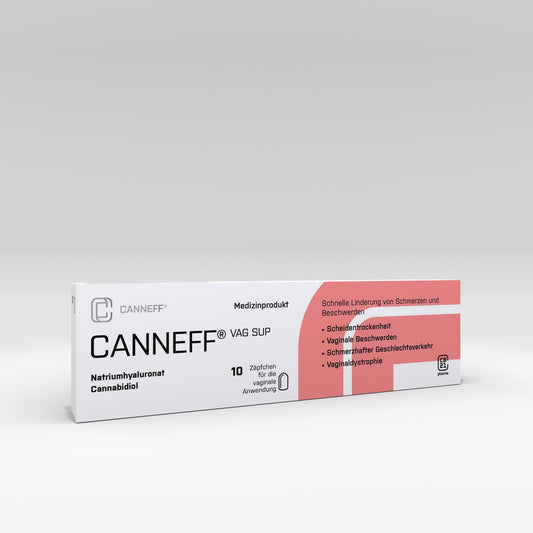
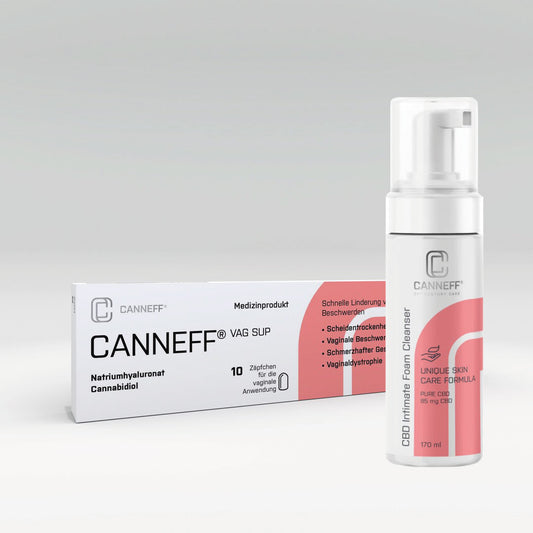
- which therapies and prevention strategies (e.g., HPV vaccination, CANNEFF® vaginal suppositories) are appropriate
Which HPV types are involved?
Human papillomaviruses (HPV) form a very heterogeneous virus group with over 200 known genotypes. About 40 of these types preferentially infect the genital epithelium. However, not all HPV types lead to cervicitis or pose a risk for tissue changes on the cervix. The distinction between low-risk HPV (low-risk) and high-risk HPV (high-risk) is crucial for assessing clinical relevance.
High-risk HPV types (cancer-causing)
These types are particularly relevant for the development of dysplasias, cervical cancers, and thus also for HPV-related cervicitis with increased oncological potential:
|
HPV type |
Relevance |
Note |
|
HPV 16 |
Very high |
Most common type in high-grade dysplasias and cancers |
|
HPV 18 |
High |
Second most common type in cervical cancers |
|
HPV 31, 33, 35, 45, 52, 58 |
High |
Less common but also carcinogenic |
|
HPV 68, 39, 51, 56, 59, 66 |
Moderately high |
Oncogenic potential present |
HPV 16 and 18 are responsible for about 70% of all cervical cancers worldwide. They more often lead to persistent infections and particularly efficiently disrupt cellular control mechanisms.
Low-risk HPV types (non-cancerous)
These types do not cause malignant cell changes but can also trigger inflammatory reactions on the cervix:
|
HPV type |
Relevance |
Note |
|
HPV 6 |
Low |
Causes genital warts (condylomata acuminata), rarely cervicitis |
|
HPV 11 |
Low |
Also condylomas, occasional mucosal irritation |
|
Others (e.g., 42, 43, 44) |
Very low |
Mostly without clinical relevance |
Important: Even low-risk HPV types can irritate the mucosa through their persistent presence and maintain a mild chronic cervicitis, especially if the vaginal environment is disturbed or an additional bacterial dysbiosis exists.
co-infections and mixed patterns
In clinical practice, Multiple infections with different HPV types is not uncommon. These can intensify the inflammatory reaction, disrupt immune defense, and increase the risk of persistent courses. Particularly problematic is the combination of high-risk HPV and bacterial co-infection—it raises the likelihood of cellular atypia.
Significance for diagnosis and therapy
Typing by means of HPV DNA test are often advisable, especially with abnormal Pap results or recurrent cervicitis without identifiable bacterial cause. High-risk types require closer monitoring and possibly additional diagnostics (e.g., colposcopy, biopsy).
Symptoms of HPV-related cervicitis
The symptoms of HPV-caused cervicitis are often nonspecific and hardly distinguishable from other forms of cervical inflammation. Moreover, an HPV infection is often asymptomatic—especially in early stages or with stable immune status. Nevertheless, certain complaints can indicate HPV-related cervical inflammation.
Common symptoms of HPV cervicitis
Changed vaginal discharge: The discharge can be mucous, clear to yellowish, or slightly bloody. It is often perceived as unpleasant but usually does not have a strong odor like bacterial infections.
Intermenstrual or contact bleeding: Bleeding after intercourse or during gynecological examination is a common warning sign. It results from the increased fragility of the inflamed mucosa.
Burning and irritation in the intimate area: Irritation, itching, or burning can be intensified by the immune-mediated inflammation—especially near the cervix.
Pain during intercourse (dyspareunia): With inflammatory involvement of the cervix, deep penetration can be uncomfortable or painful. This particularly affects women with mucosal atrophy (e.g., postmenopausal).
Nonspecific pressure sensation in the lower abdomen: A slight pulling or pressure sensation in the pelvic area can occur with chronic inflammatory irritation but is not a leading symptom.
Special feature: mild or asymptomatic courses
Especially with high-risk HPV types, the infection is often asymptomatic while cellular changes may occur simultaneously. This discrepancy between clinical inconspicuousness and possible precancerous conditions makes regular preventive examinations particularly important.

Differential diagnosis
The symptoms overlap with other gynecological conditions such as bacterial vaginosis, fungal infections, or mechanically irritative cervicitis. Accurate diagnostics – including HPV typing and cytological evaluation – are therefore essential.
How is HPV-related cervicitis diagnosed?
The diagnosis of HPV-related cervicitis requires targeted and multi-step evaluation, as the infection often occurs without noticeable symptoms and typical signs of inflammation are not always present. Therefore, the combination of clinical examination, cytological assessment, and molecular biological HPV diagnostics is crucial.
Gynecological examination
During the physical examination, initial signs of cervicitis become visible:
- reddened, edematous, or fragile-appearing cervical mucosa
- mild discharge or contact bleeding during speculum examination
- visible changes such as ectopy or atypical areas on the cervix
Abnormalities warrant further investigation by smear and, if necessary, colposcopy.
Cytological smear (Pap test)
The Pap test is a cellular smear from the cervix to assess cellular changes. In HPV-related cervicitis, the following findings may occur:
- Signs of inflammation (Pap II-w or III)
- atypical cells (ASC-US, LSIL, HSIL)
- Signs of dysplasia or precancerous conditions
An abnormal Pap result is not proof of an HPV infection – direct viral diagnostics are required for that.
HPV DNA test (PCR)
The HPV test detects the viral genome directly (usually by PCR) and allows determination of the HPV type. It distinguishes between:
- low-risk HPV types (e.g., HPV 6, 11): usually harmless but associated with cervicitis
- high-risk types (e.g., HPV 16, 18, 31, 33): potentially cancer-causing
The HPV test is especially important for:
- unclear Pap results
- Women over 30 years old as part of preventive care
- recurrent or chronic cervicitis
Colposcopy and biopsy
If abnormalities persist, a microscopic examination of the cervix (colposcopy) is performed. This can reveal:
- atypical vascular patterns
- whitish opaque areas (acetic acid test)
- focal or mosaic-like changes
are made visible. If dysplasia is suspected, a targeted biopsy is taken.
Exclusion of other causes
Since not every cervicitis is caused by HPV, microbiological diagnostics are also performed to exclude bacterial, fungal, or protozoal pathogens (e.g., chlamydia, Gardnerella, Candida, Trichomonas).
Pap test and HPV DNA test – what do they show?
Pap test and HPV DNA test are two central diagnostic methods for early detection and follow-up of HPV-related cervicitis. Both tests provide complementary information: the Pap test shows cellular changes, while the HPV DNA test detects the virus itself.
Pap test (cervical cytology)
The Pap test is used for microscopic evaluation of cells from the cervical canal. It detects cell changes that can result from chronic inflammation, an HPV infection, or a precancerous development.
|
Finding category |
Significance |
Relation to HPV |
|
Pap I |
Normal cell pattern |
No indication of inflammation or HPV |
|
Pap IIw |
Mild inflammation |
Indication of irritation/cervicitis |
|
Pap III |
Unclear cell changes |
Suspicion of HPV or dysplasia |
|
Pap IIID1/2 |
Mild to moderate dysplasia (LSIL) |
Mostly HPV low-risk or early high-risk changes |
|
Pap IVa |
Severe dysplasia (HSIL) |
Strongly suspicious for HPV high-risk |
|
Pap V |
Suspicion of malignancy |
Possible cervical carcinoma |
The Pap test alone does not allow typing of HPV. For that, the HPV DNA test is necessary.
HPV DNA test (PCR)
The HPV test detects viral DNA directly in the cell material – usually by PCR method (polymerase chain reaction)It is significantly more sensitive than the Pap test, especially for latent infections.
What does the HPV test do?
- Detection of a current infection with one or more HPV types
- Typing into low-risk (e.g., HPV 6, 11) and high-risk (e.g., HPV 16, 18, 31, 33, etc.)
- Early detection potentially cancer-causing virus types – even before cell changes occur
The HPV test is especially part of screening for women over 30 Cancer screening (Co-testing with Pap test) and crucial for unclear Pap results.
When are both tests useful?
|
Situation |
Test |
Goal |
|
Routine screening from age 30 |
Pap + HPV test |
Early detection of dysplastic processes |
|
Abnormal Pap result |
HPV test as a supplement |
Clarification of high-risk types |
|
HPV test |
Exclusion of a persistent HPV infection |
|
|
Follow-up after dysplasia |
Both tests |
Regression or persistence? |
Is there an increased cancer risk with HPV-related cervicitis?
Yes – especially with an infection by so-called high-risk HPV types there is an increased risk of developing cervical intraepithelial neoplasia (CIN) up to an cervical cancer. HPV-related cervicitis is not directly cancer-causing but can promote Early stage of carcinogenic development represent.
Why is HPV potentially dangerous?
Human papillomavirus (HPV) interferes with the cell cycle of mucosal cells – especially high-risk types such as HPV 16, 18, 31, 33, 45. These virus types can disrupt natural cell control through expression of oncogenes (E6 and E7):
- E6 deactivates the tumor suppressor gene p53
- E7 inhibits the retinoblastoma protein (pRB)
Both mechanisms promote a uncontrolled cell proliferation, which can lead in the long term to precancerous lesions (CIN 1–3) and in rare cases to invasive carcinoma.
How high is the risk actually?
|
HPV type |
Cancer risk |
Note |
|
HPV 16, 18 |
High |
Cause >70% of all cervical cancers |
|
HPV 31, 33, 45, 52, 58 |
Medium to high |
Depending on duration of infection |
|
HPV 6, 11 |
Low |
Cause genital warts, no cancer risk |
Not every infection leads to cancer – more than 90% of HPV infections heal spontaneously within 1–2 years especially with healthy immune defense.
Risk factors for progression to dysplasia or cancer
- Persistent infection with a high-risk type for more than 12–24 months
- Nicotine – impairs local immune defense
- Immunosuppression (e.g., HIV, organ transplantation)
- Long-term hormonal contraception
- Early age at first sexual intercourse
- Multiple sexual partners (increased risk of co-infections)
- Co-infections with chlamydia or herpes
Prevention and control
- HPV vaccination (e.g., Gardasil 9) effectively protects against most high-risk types
- Regular Pap and HPV tests detect precancerous changes early
- Colposcopy and if necessary Biopsy confirm diagnosis in suspicious findings
- Conization (surgical removal of affected tissue) in CIN 2/3 to prevent cancer
Treatment options for HPV cervicitis
Treatment of HPV-related cervicitis does not aim at direct elimination of the virus – because so far there is no specific antiviral therapy against HPV. Rather, the monitoring of mucosal changes, the reduction of inflammatory processes as well as the Strengthening the local immune defense in the foreground. Therapeutically relevant are therefore primarily regular check-ups, local measures, and – in advanced dysplasia – surgical procedures.
Overview of treatment approaches
|
Measure |
Objective |
Application |
|
Regular Pap/HPV screenings |
Monitoring of cellular changes |
every 6–12 months |
|
Local mucosal care |
Regeneration and protection of the cervical mucosa |
|
|
Immunomodulators |
Support of the antiviral immune response |
e.g., Isoprinosine (off-label) |
|
Phytotherapy |
Anti-inflammatory, antiviral supportive effect |
e.g., green tea polyphenols, echinacea |
|
Conization |
Removal of high-grade dysplasias (CIN 2/3) |
outpatient surgical |
|
Vaccination in HPV-negative women |
Primary or secondary prophylaxis |
Gardasil 9 (depending on age group) |
Local mucosal care with CANNEFF®
Women with HPV-associated cervicitis often benefit from accompanying local therapy for mucosal stabilization, especially if:
- no CIN finding is present, but symptoms such as irritation or contact bleeding are present
- the cervix atrophic and sensitive is, for example, in perimenopause
- after conization or biopsy Regeneration and protection are necessary
CANNEFF® VAG SUP vaginal suppositories have anti-inflammatory, antioxidant, immunomodulatory, moisturizing, and tissue-regenerating effects.
This combination strengthens the mucosal barrier, relieves irritation symptoms, and helps create an environment in the cervix unfavorable for viral persistence.
When is surgical therapy necessary?
In confirmed high-grade dysplasia (CIN 2 or CIN 3) – i.e., precursors of cervical cancer – is a Conization (Removal of the altered tissue in the form of a cone-shaped excision) is indicated. The goal is the complete elimination of the dysplastic areas. This measure is:
- diagnostic (histology)
- therapeutic (cancer prevention)
- usually outpatient and tissue-sparing
What should be considered in therapy?
- HPV clears up on its own in most cases – Patience and monitoring are crucial.
- There is currently no antiviral systemic therapy only for HSV, not for HPV.
- CANNEFF® cannot eliminate an infection, but reduce mucosal irritation and promote regeneration.
- The psychosocial burden due to an HPV diagnosis is high – education and counseling are essential.
Importance of the HPV vaccination
The HPV vaccination is considered one of the most effective preventive measures against HPV-related diseases – including cervicitis, cervical dysplasias, and cervical cancer. It primarily aims to prevent infection but can also be useful as part of secondary prevention, for example in women who have already had an HPV infection or mild cellular changes.
What does the HPV vaccination achieve?
The modern vaccines – especially Gardasil®9 – protect against the most important high-risk types (e.g., HPV 16, 18, 31, 33, 45, 52, 58) as well as against low-risk associated types (e.g., HPV 6, 11), which cause genital warts. These vaccines are not therapeutic , i.e., they cannot cure an existing infection, but:
- prevent new infection ,
- reduce persistence of additional types ,
- reduce the risk of recurrence after surgical removal of dysplasias (e.g., after conization).
Vaccination recommendations (STIKO / EMA)
- For girls and boys between between 9 and 14 years , ideally before the first sexual contact.
- Catch-up vaccination up to Age of 17 years , in individual cases, later.
- Also adult women can still benefit – especially if there has been no exposure to the vaccine types.
-
After conization or in chronic HPV cervicitis, vaccination can reduce the risk of Recurrence of dysplasias (CIN) reduce.
Vaccination schedule
|
Age at start |
Vaccination schedule |
Vaccination intervals |
|
9–14 years old |
2 doses |
0 and 6 months |
|
from 15 years old |
3 doses |
0, 2, and 6 months |
Full vaccination protection is achieved approximately 1–2 months after the last dose . The vaccine is well tolerated and is covered by statutory health insurance in Germany (up to the 18th birthday).
Significance for HPV cervicitis
Although the HPV vaccine has no therapeutic effect on existing cervicitis, it can be useful in the following cases:
- Prevention of additional HPV types in already infected women
- Reduction of progression risk in mild cytological changes
- Recurrence prevention after conization
- Long-term reduction of cancer risk
Important: Vaccination replaces does not replace regular gynecological check-ups (Pap test, HPV test), but complements them.
Can the infection persist permanently?
Yes – an HPV infection can persist permanently in certain cases. This is referred to as a so-called persistent infection during which the human papillomavirus persists over a period of more than 12 months is detectable. This persistent presence is particularly significant because it increases the risk of chronic cervicitis, cervical dysplasias, and in rare cases, cervical cancer.
Acute vs. persistent HPV infection
|
Characteristic |
Acute infection |
Persistent infection |
|
Duration |
Usually <12 months |
>12 months, sometimes over years |
|
Immune response |
Successful virus elimination |
Incomplete or ineffective immune defense |
|
Frequency |
Very common (80% of all sexually active individuals) |
Less common, especially with risk factors |
|
Risk of complications |
Low |
Increased risk of dysplasias and carcinomas |
Risk factors for persistent HPV infection
- Smoking : Weakens the local immune defense in the genital tract
- Immunosuppression (e.g., due to HIV, medications)
- Chronic cervicitis or mucosal atrophy
- Lack of vaccination
- Repeated infection with high-risk HPV types
- Long-term hormonal imbalance, e.g., during menopause
Intimate care and immune strengthening in HPV cervicitis
Targeted intimate care and strengthening the immune system play a central role in HPV-related cervicitis – both to relieve existing symptoms and to support the body's own defense against the virus. Although there is no medicinal cure for HPV itself, the mucosal barrier can be actively stabilized and the risk of relapse reduced.
Importance of intimate care
A healthy vaginal mucosa is the first line of defense against viral and bacterial pathogens. In HPV-related cervicitis, it is often irritated, sensitive, and prone to micro-injuries. Therefore, irritation-free, regenerating intimate care crucial.
Recommended measures:
- Avoid aggressive cleansing products (e.g., perfumed intimate wash lotions, rinses)
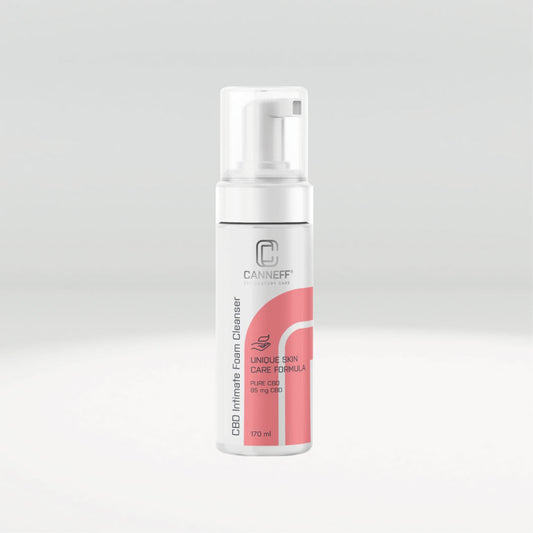
- Gentle cleansing with clear water or pH-neutral, fragrance-free products like CANNEFF intimate care foam
- Wear breathable cotton underwear
- Avoid intimate shaving during inflamed phases
- Avoid tampons during mucosal irritation
CANNEFF® VAG SUP – targeted mucosal care
CANNEFF® vaginal suppositories, consisting of cannabidiol (CBD) and hyaluronic acid, offer a hormone-free therapy approach for local mucosal regeneration in HPV cervicitis:
- CBD has anti-inflammatory, calming, and antioxidant effects – ideal for reducing viral mucosal irritation
- Hyaluronic acid provides moisture, supports mucosal healing
- Especially suitable during Postmenopause, in cases of mucosal atrophy or after conization
Application: 1 suppository daily for 20–30 days, preferably in the evening
Immune strengthening – key to virus elimination
Since the body eliminates HPV in most cases on its own, a strong immune system is essential. The following measures can support immune defense:
- Balanced diet with a focus on vitamin C, D, zinc, selenium, and antioxidants
- Adequate sleep and stress management
- Quitting smoking – Smoking weakens local immune defense and promotes HPV persistence
- Regular exercise for immune activation
- Probiotic support to stabilize the vaginal microbiome