

Why is frequent urge to urinate more common with vaginal dryness?
Women suffering from vaginal dryness often report an increased urge to urinate. The close anatomical proximity of the vagina and bladder explains this connection. When the vaginal mucosa dries out and loses elasticity, the surrounding tissue also becomes more sensitive. The mucosa at the urethral opening can also shrink and react irritably. This creates the feeling of constantly needing to go to the bathroom, even though the bladder is not full.
How is vaginal estrogen deficiency related to bladder problems?
Estrogen deficiency, as typically occurs during menopause or under antihormonal therapy, affects not only the vagina but also the mucous membranes of the lower urinary tract—especially the bladder and urethra. These tissues depend on estrogen. When hormone levels drop, the mucosal tissue becomes thinner, drier, and loses resilience. As a result, irritation symptoms such as frequent urination, burning during urination, or a constant feeling of pressure can occur, even if no bacterial infection is present. The mucous membranes are less protected, increasing the risk of irritative complaints or recurrent urinary tract infections. Therefore, a disturbed estrogen balance not only leads to vaginal dryness but also to functional changes in the lower urinary tract, which can manifest as an overactive or hypersensitive bladder.
Vaginal dryness and urge to urinate: What’s behind it?
The combination of vaginal dryness and frequent urge to urinate usually involves a complex interaction between estrogen deficiency, mucosal changes, and a disturbed local defense. The dried-out tissue offers germs an easier entry point. The balance of the microbiota, i.e., the healthy vaginal flora, can also be disrupted. Together, these factors can cause irritation symptoms that feel like a urinary tract infection, even though no bacterial pathogens are detectable.
What to do with constant urge to urinate and dry vagina?
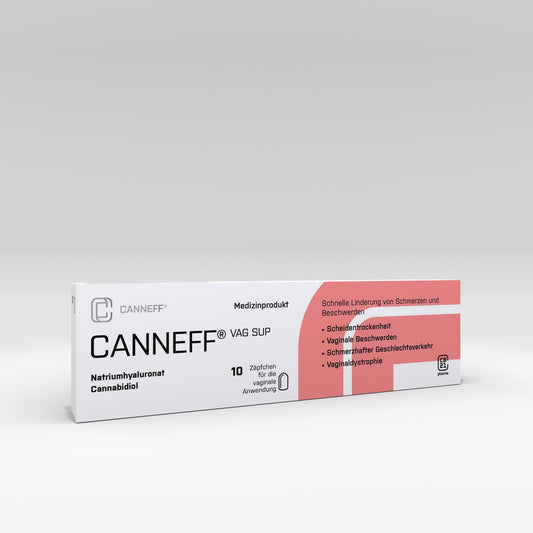
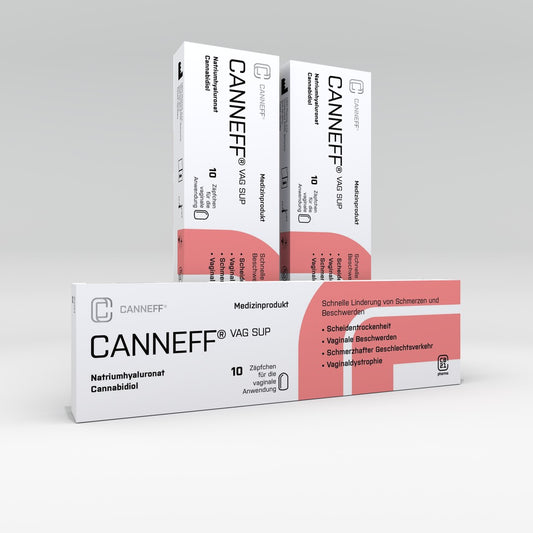
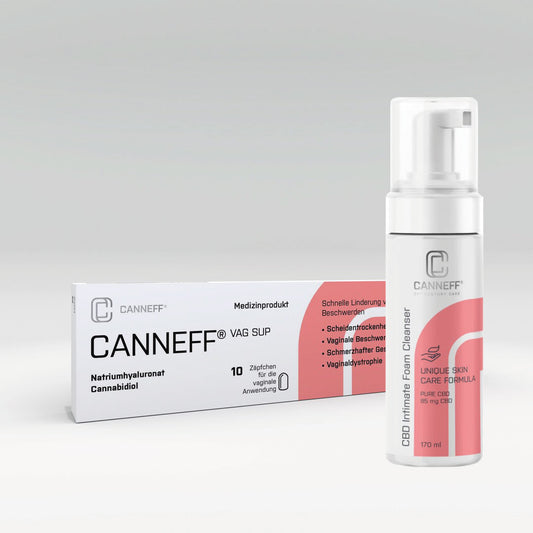
Targeted treatment of both symptoms is important. In addition to a gynecological examination, urine diagnostics should be performed to rule out infections or a bladder infection. If the urge to urinate is a sign of local irritation, using non-hormonal vaginal suppositories with hyaluronic acid and cannabidiol such as CANNEFF® VAG SUP can help soothe the mucous membranes and regenerate the tissue. In cases of confirmed estrogen deficiency, local hormone therapy can also be effective.
Can urinary tract infections be promoted by vaginal dryness?
Yes, a dry vaginal mucosa loses its protective function against germs. This allows bacteria to more easily enter the urethra and cause infections. Especially women after menopause often report recurring bladder infections closely linked to vaginal dryness. Restoring the vaginal environment is therefore central to preventing urinary tract infections.
What does frequent urge to urinate indicate about the condition of the vaginal mucosa?
An increased urge to urinate without evidence of infection can be an indirect sign of weakened vaginal mucosa. Especially when symptoms like itching, burning, or pain during sex occur simultaneously, estrogen deficiency or mucosal atrophy is likely. In such cases, the mucosa should be rebuilt with moisturizing or hormonal therapies to relieve irritation symptoms.

How can urge to urinate and vaginal dryness be treated together?
Combined treatment is especially effective. Locally acting suppositories like CANNEFF® VAG SUP with hyaluronic acid and CBD can both regenerate the vaginal mucosa and soothe the surrounding mucous membranes. The following table summarizes proven therapy options for vaginal dryness with urge to urinate:
|
Therapy Option |
Effect |
|
Moisturizing, regeneration, anti-inflammatory |
|
|
Local estrogen therapy |
Mucosal rebuilding, strengthening of bladder wall |
|
Probiotics for vaginal flora |
Stabilization of environment, protection against germs |
|
Bladder-soothing phytotherapeutics |
Relaxation of bladder muscles, reduction of urge to urinate |
What helps against urge to urinate during menopause?
During menopause, a holistic approach is advisable. In addition to estrogen therapy, herbal remedies such as nettle or pumpkin seed extracts can soothe the bladder. Changing drinking habits, targeted pelvic floor training, and strengthening the vaginal flora with probiotics are also part of the therapy.
What does urge to urinate without bladder infection mean with vaginal dryness?
If the urge to urinate occurs without germs being detected in the urine, it is usually a so-called irritated bladder. This can be caused by irritated vaginal mucosa, estrogen deficiency, or chronic micro-damage. The urge to urinate then reflects an overactive bladder that overreacts to stimuli.
When is a urologist advisable for vaginal dryness with urge to urinate?
If no improvement occurs despite treatment or additional symptoms such as blood in the urine, flank pain, or incontinence appear, a urologist should be consulted for clarification. In cases of recurrent urinary tract infections, interdisciplinary evaluation can also be useful to rule out organic causes or functional disorders.