

When should you see a doctor for vaginal dryness?
One should in case of vaginal dryness see a doctor, if the symptoms persist over a longer period, worsen, or noticeably affect quality of life. Especially if additional symptoms like burning, itching, pain during intercourse, bleeding or recurring urinary tract infection occur, a gynecological evaluation is definitely advisable.
Also in younger women, where hormonal causes like menopause would not normally be expected, a medical examination is advisable – because diseases such as endometriosis, diabetes, or thyroid disorders can also play a role. Additionally, medical advice should be sought, if non-hormonal remedies or home remedies do not bring improvement or there is uncertainty about the correct treatment.
|
Situation |
Medical evaluation recommended |
|
Pain during sex or tampon insertion |
✔ |
|
Recurring infections (e.g., yeast, bladder) |
✔ |
|
Bleeding without an obvious cause |
✔ |
|
Dryness despite the use of lubricants or care products |
✔ |
|
Start of hormonal therapy or anti-estrogen therapy |
✔ |
|
Desire to have children or pregnancy |
✔ |
|
Vaginal dryness after cancer therapy |
✔ |
|
Suspected hormonal disorders or menopausal symptoms |
✔ |
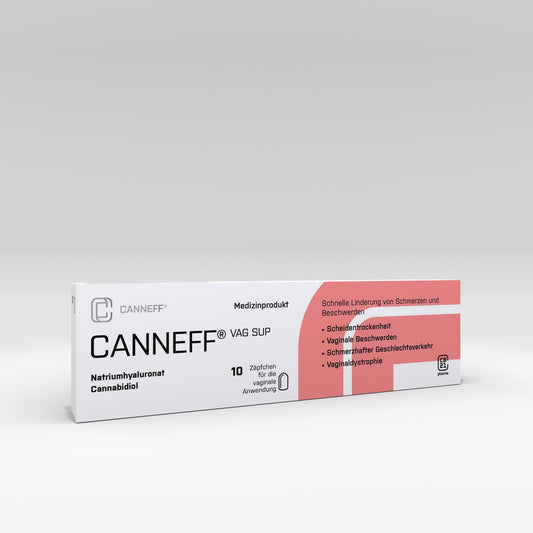
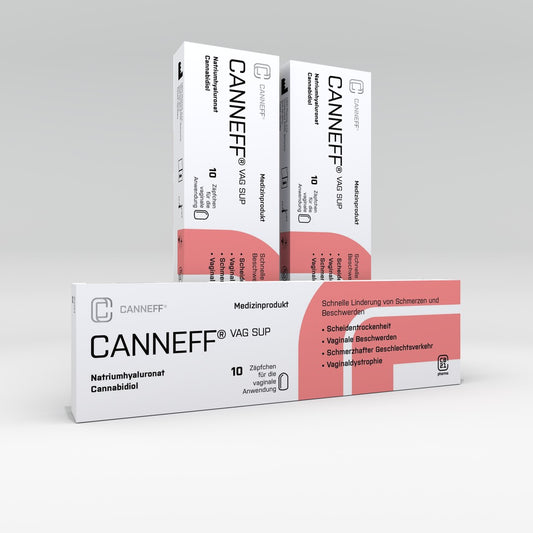
An early visit to the doctor can help Complications such as infections, tissue damage, or psychological stress should be avoided. Additionally, a targeted treatment with local preparations like CANNEFF® CBD suppositories with hyaluronic acid are applied.
What examinations does the gynecologist perform for vaginal dryness?
In cases of vaginal dryness, the gynecologist first conducts a detailed medical history interview followed by a targeted gynecological examination to determine the cause of the symptoms as precisely as possible. Hormonal, infectious, mechanical, and medication-related triggers are all taken into account. The goal is to establish a well-founded diagnosis to initiate an individualized therapy based on it.
Medical history (doctor's consultation): First, the doctor asks about the type, duration, and intensity of symptoms, the time of occurrence (e.g., during the menopause or after childbirth), possible accompanying symptoms such as itching, pain during sex, discharge or bleeding, as well as pre-existing conditions, medication use (e.g., antihormone therapies, antidepressants), or hormonal contraception. Psychological stress or stress factors are also considered.
Gynecological examination: During the physical examination, the gynecologist assesses the condition of the vulva and vaginal mucosa. Typical findings in vaginal dryness are a pale, thin, sometimes slightly fragile mucosa with a lack of elasticity and reduced moisture film. The doctor also checks for tenderness, for example through speculum examination or vaginal palpation.
Measurement of the pH value of the vaginal flora: A too high pH value can indicate a disturbed vaginal flora or estrogen deficiency. Healthy vaginal mucosa normally has a pH value of 3.8–4.5. Values above 5.0 are a typical sign of atrophic vaginitis or bacterial overgrowth.
Smear and microscopic examination: If infections or dysbiosis are suspected, a smear of the vaginal mucosa is taken and examined under a microscope. This can detect bacteria, fungi, or signs of inflammation. In some cases, the smear is sent to the lab for further diagnostics (e.g., culture, PCR).
Hormone status (blood test): If the cause is unclear – especially in young women or suspected hormonal dysregulation – a blood test of hormone status can be useful. Values such as estradiol, FSH, LH, and possibly progesterone and androgens are determined. A low estrogen level usually confirms the diagnosis of atrophic colpitis.
Sonography (ultrasound): In some cases, especially with unclear symptoms, a vaginal ultrasound examination can be useful. It provides information about the condition of the uterine lining, possible cysts, fibroids, or changes in the ovaries.
|
Examination method |
Purpose of diagnostics |
|
Medical history |
Recording of symptoms, risk factors, and pre-existing conditions |
|
Gynecological palpation/visual examination |
Evaluation of mucous membrane, elasticity, moisture level |
|
pH measurement |
Assessment of the vaginal environment |
|
Vaginal smear |
Detection of infections, dysbiosis, or inflammation |
|
Hormone testing (blood) |
Clarification of hormonal causes, e.g., estrogen deficiency |
|
Vaginal ultrasound |
Exclusion of other organic causes |
What does an increased pH value mean in vaginal dryness?
An elevated vaginal pH in cases of vaginal dryness indicates an imbalanced vaginal environment. Normally, the pH is in the acidic range between 3.8 and 4.5, maintained by the activity of lactic acid-producing lactobacilli. These bacteria are essential for protection against pathogenic germs, as they inhibit the growth of harmful microorganisms by creating an acidic environment.
When estrogen levels drop – for example during menopause, after childbirth, or under hormone-blocking therapy – the supply of glycogen, the nutrient for lactobacilli, to the mucosa is also reduced. As a result, their number decreases, less lactic acid is produced, and the pH level rises into the alkaline range.
An elevated pH level promotes the colonization of bacteria or fungi and can lead to infections, irritations, and further deterioration of the vaginal mucosa. Symptoms such as itching, burning, discharge, or recurring urinary tract infections also occur more frequently with a high pH level. Therefore, measuring the vaginal pH is an important diagnostic step for the gynecologist to better identify the cause of vaginal dryness and provide targeted treatment.
What diagnostic options are available for vaginal atrophy?
If vaginal atrophy is suspected – a hormonally induced thinning of the vaginal mucosa – the gynecologist has several diagnostic methods available to objectively assess the mucosal changes and initiate appropriate therapy. Diagnosis usually begins with a detailed medical history interview, during which typical symptoms such as vaginal dryness, itching, pain during intercourse, or frequent urination are discussed. Hormonal changes (e.g., menopause, breastfeeding, medication therapies) also play a central role.
This is followed by the gynecological examination. Here, the doctor can detect visible signs of mucosal atrophy: the vaginal lining often appears pale, parchment-like, dry, or reddened and is sensitive or fragile to the touch. Tiny cracks or pinpoint bleeding are also typical indicators.
A pH measurement is a simple and effective way to assess the vaginal environment. In vaginal atrophy, the pH value is usually above 4.5, indicating a disturbed lactobacillus flora. Additionally, a vaginal smear can be taken to exclude bacterial overgrowth, fungal infections, or inflammatory processes. The so-called Cytology findings The smear also provides information about the cell structure of the mucosa – in atrophy, typically altered, immature cell patterns are seen here.
In certain cases, hormone level measurement in the blood is performed. Especially the estrogen level (particularly estradiol) is important to confirm a hormonal deficiency as the cause of the symptoms.
Optionally, a transvaginal ultrasound examination (vaginal sonography) can be performed. It provides information about the thickness of the vaginal wall and the endometrium (uterine lining) and helps exclude other gynecological diseases such as fibroids, polyps, or urogenital prolapse symptoms.
In summary, the following diagnostic methods are suitable for vaginal atrophy:
|
Diagnostic methods |
Purpose of the examination |
|
Medical history |
Collection of typical symptoms and possible triggers |
|
Gynecological palpation and visual examination |
Detection of mucosal changes and sensitivity |
|
pH measurement |
Assessment of the vaginal environment |
|
Vaginal smear (cytology) |
Analysis of cell maturation and detection of dysbiosis |
|
Hormone status (estrogen levels) |
Confirmation of estrogen deficiency |
|
Vaginal ultrasound |
Assessment of mucosal thickness and exclusion of other causes |
What does the doctor ask about symptoms caused by dryness in the intimate area?
If you seek medical advice for vaginal dryness, the gynecologist will first conduct a detailed medical history interview to better understand the causes and context of the symptoms. This focuses on both current symptoms and possible hormonal, medicinal, or psychological influencing factors.
Typical questions asked during the medical history include:
-
Since when have the symptoms been present? The duration provides clues as to whether it is an acute or chronic problem.
-
How exactly does the dryness manifest? The doctor asks about specific symptoms such as burning, itching, pain during intercourse (dyspareunia), cracks, discharge, or bleeding.
-
Do the symptoms occur cyclically or constantly? This helps narrow down hormonal fluctuations as a cause.
-
Are the symptoms new or have they developed gradually? A sudden change can indicate specific triggers.
-
Are there other urogenital symptoms? These include frequent urination, burning when urinating, bladder infections, or incontinence.
-
Are you currently taking any medications? Especially relevant are hormone preparations, antidepressants, antihistamines, cancer medications, or contraceptives.
-
Has there been a recent birth, surgery, or chemotherapy? Such events can change the vaginal environment.
-
Are you in the menopause or postmenopause? Estrogen deficiency is a common cause here.
-
How is your intimate hygiene? The doctor asks whether vaginal rinses, perfumed intimate products, or tampons are used regularly.
-
How do you experience your sexuality? Questions about libido, arousal, pain during intercourse, and partnership can help identify functional causes.
Questions about previous gynecological diseases, cycle changes, family history of hormonal issues, or pre-existing conditions like diabetes mellitus or thyroid disorders may also be part of the discussion. The goal is to understand the symptoms holistically and, if necessary, initiate targeted further examinations.
When is a hormone test useful for vaginal dryness?
A hormone test is useful in vaginal dryness when there is suspicion that the symptoms hormonal causes – especially due to estrogen deficiency. This mainly affects women in menopause, in postmenopause, during lactation or under anti-hormonal therapy (e.g., in hormone-dependent breast cancer). Also in younger women with irregular cycles, missed cycles, or premature menopause a hormone status can help clarify the cause.
The test measures the concentrations of relevant hormones in the blood, especially:
|
Hormone |
Significance in vaginal dryness |
|
Estradiol (E2) |
Central estrogen for maintaining the vaginal mucosa – deficiency increases the risk of dryness, atrophy, and irritation |
|
FSH (Follicle-Stimulating Hormone) |
An elevated level indicates reduced ovarian function or menopause |
|
LH (Luteinizing Hormone) |
Used in combination with FSH to assess hormonal transition |
|
Progesterone |
Important for cycle assessment, can influence mucosal structure in case of relative dominance |
|
DHEA / Testosterone |
Also relevant in cases of severe loss of libido or vulvar atrophy |
A hormone test helps atrophic vaginitis (senile colpitis) or to detect and specifically treat a hormonal imbalance. This is especially important if local or systemic hormone therapy is considered – or to rule out contraindications.
What therapy does the gynecologist recommend for vaginal dryness?
In cases of vaginal dryness, the gynecologist’s therapy recommendation depends on the individual symptoms, the patient’s age, hormonal status, and possible comorbidities. In many cases, attempts are first made to relieve symptoms through local, non-hormonal measures before considering hormone therapy. A central goal of any therapy is to regenerate the vaginal mucosa, restore its moisture, and stabilize the vaginal environment.
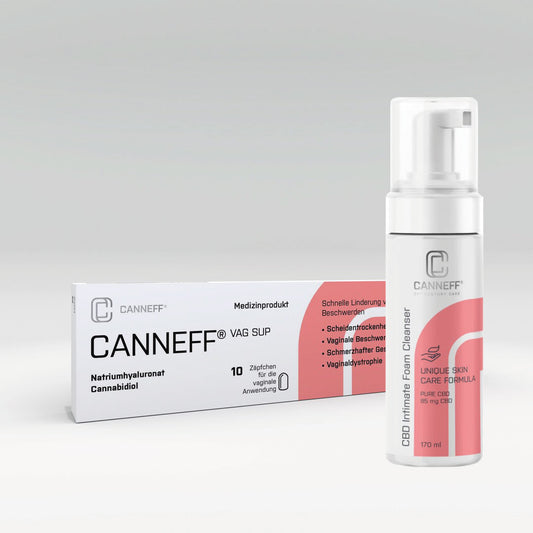
CANNEFF® vaginal suppositories with CBD and hyaluronic acid are increasingly recommended by gynecologists as an effective and well-tolerated non-hormonal therapy option – especially for women who prefer hormone-free treatment or for whom estrogen therapy is not an option (e.g., after breast cancer or with endometriosis).
The contained Hyaluronic acid intensively moisturizes and supports the natural regeneration of the vaginal mucosa. It improves tissue elasticity, relieves irritation, and prevents micro-injuries as well as infections. The added Cannabidiol (CBD) exerts its anti-inflammatory, antioxidant, and cell-protective effects directly on the mucous membrane. Particularly noteworthy is the patented emulsion matrix of CANNEFF®, which ensures rapid and complete release of the active ingredients in the vagina.
Gynecologists recommend CANNEFF® VAG SUP suppositories, for example:
-
to relieve vaginal dryness, itching, and irritation, especially during menopause or after hormonal changes,
-
to support mucosal healing after an infection, surgery, or radiation therapy,
-
for pain during sexual intercourse (dyspareunia) due to lack of lubrication,
-
as adjunct therapy for atrophic vaginitis or vaginal dystrophy,
-
for complaints after childbirth or after conizations.
The application usually takes place over a period of 20 to 30 days, daily before bedtime, depending on the indication also in cycles or for long-term stabilization of the mucosa. CANNEFF® is available over the counter in pharmacies and can thus be used easily for self-treatment – but always in consultation with the treating physician to ensure safe and effective use.
Can the general practitioner help with vaginal dryness?
Yes, the general practitioner can be a first point of contact for vaginal dryness, especially if the symptoms are new or no gynecological care exists yet. Many women initially discuss symptoms such as itching, burning, or a pressure sensation in the intimate area with their general practitioner, especially if they do not immediately associate these with hormonal changes or vaginal dryness.
The general practitioner can already conduct an initial anamnesis, considering possible underlying conditions such as diabetes, thyroid disorders, or autoimmune diseases pay attention to and provide initial recommendations for local intimate care or general lifestyle optimization can be given – for example, regarding nutrition, stress reduction, or medications that can promote mucosal dryness (e.g., antihistamines or psychotropic drugs).
However, the general practitioner cannot perform the gynecological examination necessary for diagnosis and targeted therapy. Therefore, a referral to a gynecologist, who conducts a thorough inspection of the vaginal mucosa, a pH measurement, a smear test, or, if necessary, a hormone determination in the blood.
If a preparation for symptomatic treatment is to be recommended, the general practitioner can, for example, suggest non-hormonal products like CANNEFF® vaginal suppositories with CBD and hyaluronic acid These are available over the counter, effectively relieve dryness, irritation, and pressure sensation, and are considered very well tolerated – even for patients who want to avoid hormone-containing preparations.