

What causes lichen sclerosus?
The exact cause of lichen sclerosus is still unknown. Experts assume that several factors contribute to its development. These include:
|
Factor |
Possible effects on lichen sclerosus |
|
Autoimmune processes |
The immune system mistakenly attacks the body's own skin cells. |
|
Hormonal changes |
A declining estrogen level can affect skin structure. |
|
Genetic predisposition |
Increased occurrence within families suggests a hereditary component. |
|
Chronic irritation or injury |
Mechanical stress can worsen or trigger lichen sclerosus. |
|
Infections |
Certain viruses or bacteria could play a role. |
|
Stress |
Can influence the immune system and trigger disease flare-ups. |
|
Nutrition |
Imbalance in the gut flora could exacerbate inflammatory processes. |
Since lichen sclerosus is not caused by bacteria, viruses, or fungi, the disease is not contagious.
Is lichen sclerosus an autoimmune disease?
Many experts suspect that lichen sclerosus is an autoimmune disease. This is supported by the following observations:
-
Patients with lichen sclerosus more often have other autoimmune diseases such as Hashimoto's thyroiditis, vitiligo, or lupus.
-
Autoantibodies against skin and connective tissue structures have been detected in studies.
-
The disease occurs more frequently in women – a pattern typical of autoimmune diseases.
Although it has not yet been conclusively proven that lichen sclerosus is a classic autoimmune disease, a misdirected immune system is discussed as the main cause.
What role do hormones play in lichen sclerosus?
Hormonal factors seem to play a central role, as lichen sclerosus occurs particularly frequently during hormonal transition phases – for example, after menopause or in women who use hormonal contraceptives. The connection is likely due to:
|
Hormonal influence |
Possible effects |
|
Estrogen deficiency |
Skin becomes thinner, drier, and more prone to inflammation. |
|
Progesterone changes |
Can influence the immune response. |
|
Hormonal contraceptives (the pill) |
Discussed as a possible risk factor. |
Studies show that estrogen therapy alone is not sufficient to treat lichen sclerosus. Instead, a combination of anti-inflammatory creams, moisturizers, and targeted symptomatic treatment is necessary.
Can stress trigger lichen sclerosus?
Whether stress directly causes lichen sclerosus is unclear, but many affected individuals report that psychological stress can worsen flare-ups. Stress can influence the immune system and thereby intensify inflammatory processes, which can lead to a worsening of the symptoms.
Relaxation techniques such as Yoga, meditation, or breathing exercises can help stabilize the immune system and reduce possible disease flare-ups.
Is there a genetic predisposition for lichen sclerosus?
There is evidence that lichen sclerosus occurs more frequently in families. Studies show that about 10% of those affected have relatives who are also affected. Genetic markers, especially certain HLA genes, have been linked to an increased risk of lichen sclerosus.
Since genetic predisposition alone is not enough to trigger the disease, an interaction with Environmental and immune factors.
Can infections trigger lichen sclerosus?
Some researchers discuss whether infections play a role in the development of lichen sclerosus. Possible suspects are:
|
Pathogen |
Possible connection with lichen sclerosus |
|
Borrelia burgdorferi (Pathogen of Lyme disease) |
Antibodies were detected in some patients. |
|
HPV (human papillomaviruses) |
Possible risk for mucosal changes. |
|
Epstein-Barr virus (EBV) |
Involved in other autoimmune diseases. |
However, a direct connection could not provenwhy infections not a primary cause represent lichen sclerosus.
Does diet influence lichen sclerosus?
Some affected individuals report improvement of symptoms through targeted dietary changes. Possible connections:
-
Gluten-free diet: Some patients with lichen sclerosus also have celiac disease.
-
Gut flora and inflammation: A healthy gut can influence autoimmune processes.
-
Omega-3 fatty acids: Anti-inflammatory properties could be beneficial.
While no specific diet is recommended for the treatment of lichen sclerosus, an anti-inflammatory diet rich in vegetables, healthy fats, and low in sugar can be supportive.
Are there risk factors for lichen sclerosus?
Besides autoimmunity and hormonal influences, there are some Risk factorsthat can increase the risk of disease:
|
Risk factor |
Possible connection |
|
Female sex |
Women are significantly more affected. |
|
Hormonal fluctuations |
Especially after menopause. |
|
Genetic predisposition |
In some families, clustered occurrence. |
|
Chronic irritation |
Mechanical stress from tight clothing, cycling, or horseback riding. |
|
Certain conditions |
Association with autoimmune diseases. |
Can lichen sclerosus develop from irritations or injuries?
Yes, mechanical irritation or injuries can make the skin more sensitive and trigger disease flare-ups. The so-called Koebner phenomenon describes that new lesions can form from scratching or friction.
Recommended:
-
Loose cotton underwear instead of synthetic fabrics.
-
Avoidance of intimate shavingto prevent micro-injuries.
-
Gentle intimate hygiene with soap-free products.
Why does lichen sclerosus often occur after menopause?
After menopause, estrogen levels drop, causing the skin to become thinner, drier, and less resilient. These changes make the genital area more susceptible to inflammatory processes and skin changes, increasing the risk of lichen sclerosus.
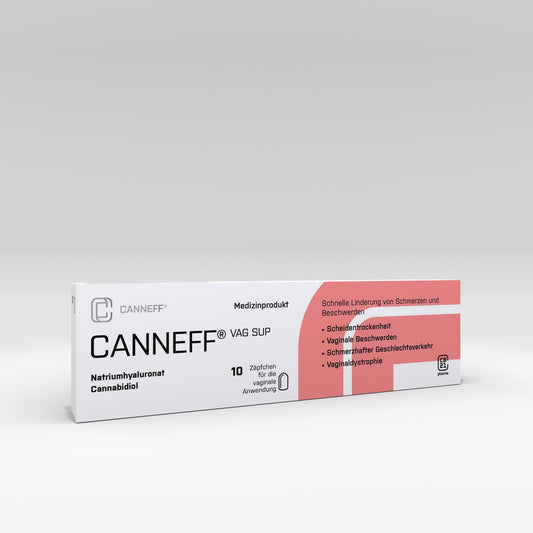
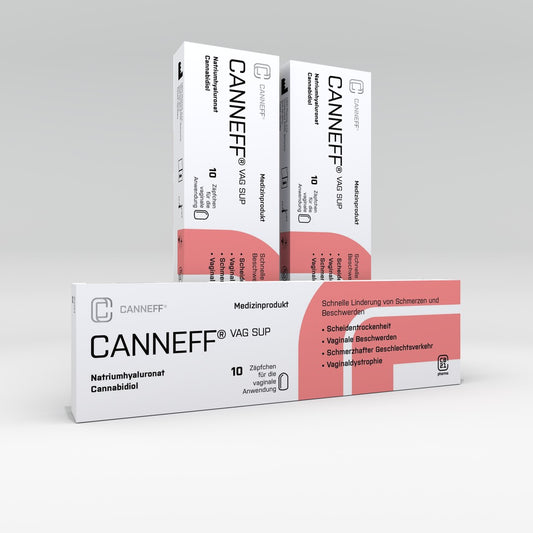
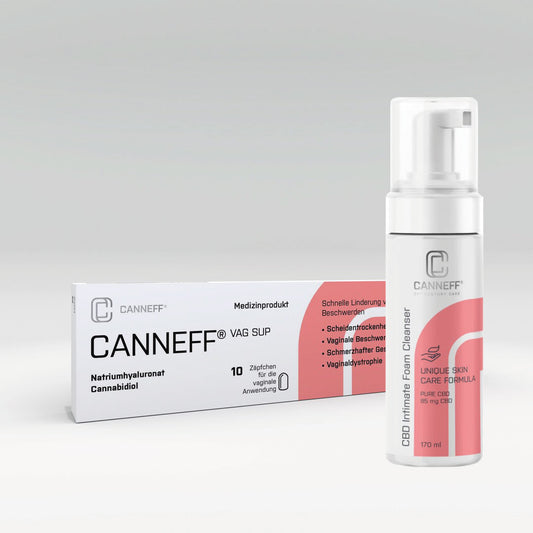
Products like CANNEFF® VAG SUP, which Hyaluronic acid and cannabidiol (CBD) contained, can help, To retain moisture, reduce inflammation, and protect the skin.