

What symptoms occur with a bladder infection in men?
The typical symptoms resemble the symptoms in women, but additional complaints often occur, especially if the prostate is affected. Bladder infections in men can manifest in various ways. The most common symptoms are:
|
Symptom |
Description |
|
Burning and pain during urination (dysuria) |
The urethra is irritated, making urination uncomfortable. |
|
Frequent urge to urinate (pollakiuria) |
The man feels the need to constantly go to the toilet, although often only a small amount of urine is passed. |
|
Pain in the lower abdomen or pelvic area |
These can be dull or stabbing and worsen during urination. |
|
Difficulty urinating |
Often a weak urine stream or delayed urination occurs. |
|
Blood in the urine (hematuria) |
In severe cases, the urine may turn reddish or cloudy. |
|
Cloudy, unpleasant-smelling urine |
A sign of bacteria and inflammatory substances in the urine. |
|
General feeling of illness |
Men with bladder infections often feel tired and exhausted. |
|
Pain in the groin or perineal area |
This may indicate involvement of the prostate. |
Why are bladder infections less common in men?
Bladder infections (cystitis) occur significantly less often in men than in women. While women are particularly susceptible to urinary tract infections due to their anatomy, the male body has several natural protective mechanisms that significantly reduce the risk of bladder infections.
The main reason for the lower frequency of bladder infections in men lies in the anatomical structure of the urinary tract.
|
Anatomical feature |
Protective effect against infections |
|
Longer urethra (approx. 20-25 cm) |
Makes it harder for bacteria to ascend into the bladder. |
|
Greater distance between anus and urethra |
Reduces the risk of bacterial transmission. |
|
Prostate secretion with antibacterial properties |
Inhibits the growth of pathogens and protects the urinary tract. |
In women, the urethral opening is closer to the anus and vaginal opening, making it easier for intestinal bacteria (e.g., Escherichia coli) to enter the urethra. Since the male urethra is farther away, the risk of infection is lower. Additionally, men are less susceptible to hormonal fluctuations that affect the vaginal and bladder mucosa. In women, hormonal changes, especially after the menopause, can weaken the bladder’s protective barrier.
What role does the prostate play in a bladder infection?
The prostate plays a crucial role in protecting the male urinary tract. It produces an antibacterial fluid that inhibits the entry of pathogens. Additionally, it surrounds the urethra, making direct bacterial access to the bladder more difficult.
However, an enlarged or inflamed prostate (prostatitis) can increase the risk of bladder infection because it can obstruct urine flow and lead to residual urine – an ideal breeding ground for bacteria.
Women usually develop ascending bladder infections: bacteria enter the bladder from outside through the urethra.
In men, bladder infections are often secondary: they usually occur as a result of prostatitis, urinary retention, or urethral stricture.
Can a bladder infection be dangerous for men?
If the infection is not treated promptly or spreads to the upper urinary tract or prostate, more serious symptoms can occur:
-
Fever and chills – An indication that the infection is spreading.
-
Flank pain – Pain in the lower back or sides may indicate that the infection has reached the kidneys (pyelonephritis).
-
Severe pain in the perineum and pelvic area – This can be a sign of prostatitis, which requires targeted medical treatment.
How can you recognize a complicated bladder infection in men?
A bladder infection in men is generally considered complicated because it often does not occur in isolation but is associated with other urinary tract or prostate diseases. A complicated bladder infection can have serious consequences if not detected and treated early.
|
Characteristic |
Uncomplicated bladder infection |
Complicated bladder infection |
|
Cause |
Usually an ascending infection with bacteria (e.g., E. coli) |
Often caused by anatomical problems, urinary retention, or prostate diseases |
|
Symptoms |
Burning during urination, frequent urge to urinate, cloudy urine |
Fever, back pain, blood in urine, urinary retention |
|
Course |
Usually heals quickly with antibiotics |
Can lead to kidney infections, prostatitis, or sepsis |
|
Affected individuals |
Rarely occurs, mostly in younger men |
Common in older men or patients with pre-existing conditions |
|
Therapy |
Short-term antibiotic therapy (3-5 days) |
Long-term antibiotic therapy (at least 7-14 days) with precise identification of the cause |
Men usually develop bladder infections not in isolation but as a result of another condition. Possible causes include:
-
Enlarged prostate (benign prostatic hyperplasia, BPH) → Residual urine in the bladder promotes bacterial infections
-
Prostatitis (inflammation of the prostate) → Often leads to chronic urinary tract infections
-
Urinary stones → Can obstruct bladder emptying and serve as a focus of infection
-
Urethral stricture → Makes urine flow difficult, promotes bacterial growth
-
Bladder emptying disorders (e.g., due to diabetes, multiple sclerosis) → Increases the risk of infection
-
Long-term catheter or invasive urological procedures → Bacteria can more easily enter the bladder
Is lower abdominal pain a typical symptom?
Yes, lower abdominal pain is a common symptom of a bladder infection in men. It results from the inflammatory reaction of the bladder lining and can range from an unpleasant pressure sensation to cramp-like pains. However, lower abdominal pain in men is rarely the only symptom – it usually occurs together with burning during urination, frequent urge to urinate, or cloudy urine.
The pain can vary in intensity and depends on the severity of the infection. Typical characteristics include:
|
Type of pain |
Description |
|
Dull pressure or pulling sensation |
A constant discomfort in the bladder area |
|
Cramp-like pains |
Especially during or after urination |
|
Stabbing pain |
May indicate an advanced infection |
|
Radiating pain |
Sometimes the pain radiates to the groin area or lower back |
Especially noticeable: The pain often worsens with a full bladder and subsides as soon as urine is passed. Not all lower abdominal pain automatically means a bladder infection. Other possible causes are:
|
Condition |
Typical symptoms |
|
Pain in the perineal area, fever, discomfort when sitting |
|
|
Urinary stones |
Sudden, stabbing pain radiating to the groin |
|
Irritable bladder |
Urgency to urinate frequently but passing little urine |
|
Appendicitis |
Severe pain in the right lower abdomen, often with nausea |
|
Digestive problems (e.g., irritable bowel syndrome) |
Cramps, bloating, alternating bowel movements |
When should a man with a bladder infection see a doctor?
Men should always see a doctor early if a bladder infection is suspected, as urinary tract infections in men are considered complicated and often have an underlying condition. While women can sometimes recover from an uncomplicated bladder infection on their own, men have an increased risk of serious complications such as kidney pelvis infection or prostatitis. A doctor’s visit is urgently necessary if one or more of the following symptoms occur:
|
Symptom |
Possible cause |
|
Fever over 38°C and chills |
Indication of a kidney pelvis infection (pyelonephritis) or an infection spreading in the body |
|
Back pain or flank pain |
Possible indication that the infection has spread to the kidneys |
|
Blood in the urine (hematuria) |
May indicate a severe inflammation or another condition such as bladder stones or tumors |
|
Urinary retention or difficulty urinating |
Indication of prostate inflammation or narrowing of the urinary tract |
|
Severe pain in the lower abdomen or perineal area |
Typical for prostatitis or involvement of the urethra |
|
Frequently recurring bladder infections (more than 3 times per year) |
Possible indication of an anatomical change, prostate enlargement, or immune deficiency |
If symptoms do not improve after three days or worsen despite home remedies and plenty of fluids, medical help should also be sought.
Can a bladder infection in men heal on its own?
Bladder infections in men are always considered complicated, so spontaneous healing without medical treatment is rare. In most cases, a bladder infection (cystitis) in men indicates an underlying condition such as prostate enlargement, urinary obstruction, or weakened immune defense. This increases the risk of severe courses and complications compared to women.
In very rare cases, a bladder infection in men can resolve on its own if:
-
The infection is very mild, without fever or severe symptoms.
-
The immune system is strong enough to fight the bacteria.
-
Sufficient fluid intake to flush the bladder well.
-
No underlying disease such as diabetes, prostate hyperplasia, or urinary stones is present.
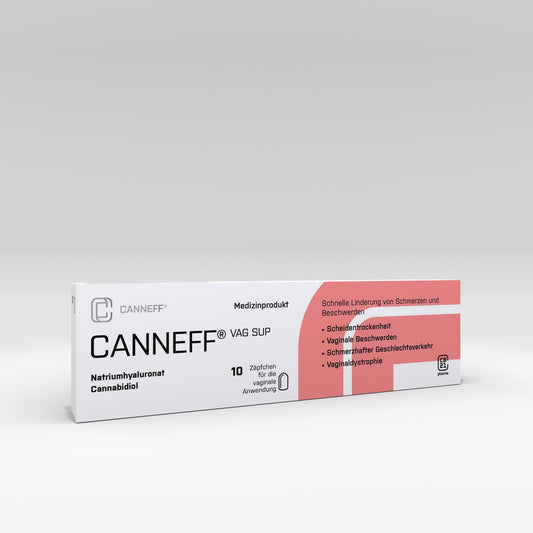
But even with mild symptoms, medical advice should be sought, as an untreated infection can ascend to the deeper urinary tract or the prostate. CANNEFF SUP suppositories were able to relieve symptoms of non-bacterial, mostly chronic prostatitis in a pilot study.
How does a bladder infection differ from a prostate infection?
Although bladder infections (cystitis) and prostate inflammations (prostatitis) can have similar symptoms, they are different diseases with specific causes.
|
Characteristic |
Urinary tract infection (cystitis) |
Prostatitis (prostate inflammation) |
|
Common cause |
Bacterial infection by intestinal bacteria (E. coli) |
Infection by bacteria or chronic inflammation without pathogens |
|
Contributing factors |
Urine retention, bladder catheter, weakened immune system |
Urine reflux into the prostate, urinary tract infections, stress |
|
Affected structure |
Bladder and urethra |
Prostate (inflamed glandular tissue) |
|
Course |
Usually acute, can ascend if untreated |
Can be acute or chronic |
While a urinary tract infection usually remains limited to the lower urinary tract and is characterized by burning during urination and urgency, prostatitis affects the glandular tissue of the prostate and is often accompanied by severe pelvic pain, discomfort when sitting, and in severe cases, fever. Men with persistent symptoms, pain during ejaculation, or pain in the perineal area should consider prostatitis and seek urological evaluation. CANNEFF SUP suppositories were able to relieve symptoms of non-bacterial, mostly chronic prostatitis in a pilot study.

|
Symptom |
Urinary tract infection (cystitis) |
Prostatitis (prostate inflammation) |
|
Pain when urinating |
Common symptom |
Also possible, often more intense |
|
Frequent urge to urinate |
Yes, often with only a few drops of urine |
Yes, but usually with strong pressure sensation |
|
Lower abdominal pain |
Yes, usually above the bladder |
Yes, often also in the perineal and pelvic region |
|
Pain when sitting |
No |
Yes, often pressure or tension in the perineal area |
|
Fever and chills |
Rare, only in severe cases |
Common in acute prostatitis |
|
Blood in urine |
Possible |
Rare |
|
Back pain |
Possible |
Common, often deep in the lower back |
|
Erection problems |
No |
Common, especially with chronic prostatitis |
|
Pain during or after ejaculation |
No |
Common symptom |
What measures help prevent urinary tract infections in men?
Urinary tract infections are less common in men than in women but can have more severe courses. To minimize the risk of infection, targeted preventive measures help. These involve daily hygiene as well as certain lifestyle habits and medical precautions.
- Drink enough fluids – At least 1.5 to 2 liters of water or tea daily to flush out bacteria.
- Regular urination – Don’t hold urine unnecessarily long to prevent bacterial growth.
- Good intimate hygiene – Daily cleaning with water, avoid harsh soaps.
- Avoid getting chilled – Change wet clothes, keep feet and lower abdomen warm.
- Pay attention to sexual intercourse – Urinate after sex to flush out germs.
- Have the prostate checked – Regular check-ups for enlargement or symptoms.
- Strengthen the immune system – Healthy diet, exercise, stress reduction.
- Medical prevention – For frequent infections, seek medical evaluation, possibly use herbal remedies or preventive medications.