

Are there alternative treatment options for vaginal dryness?
Yes, there are numerous alternative treatment options for vaginal dryness, especially considered when hormone therapy is not desired or contraindicated. These methods aim to naturally stabilize the vaginal environment, promote mucosal regeneration, and relieve symptoms such as itching, burning, or dryness. These include lactic acid treatments, herbal preparations, probiotics, homeopathic remedies, acupuncture, and targeted nutritional therapies. Pelvic floor training can also support vaginal complaints.
How do lactic acid treatments help against vaginal dryness?
Lactic acid treatments help restore the natural acidic environment of the vagina. A disturbed pH value promotes drying of the vaginal mucosa and makes it more susceptible to infections. Lactic acid products—available as suppositories, gels, or rinses—stabilize the vaginal environment by lowering the pH and promoting the growth of healthy lactobacilli. When used regularly, they can soothe the mucosa, improve its protective function, and noticeably relieve symptoms like burning or itching.
Can probiotics improve the vaginal flora?
Probiotics are live microorganisms that—when used correctly—can promote the balance of the vaginal flora. Lactobacilli play a central role here. They colonize the vaginal mucosa, produce lactic acid, and thus lower the pH. Probiotic products are available as oral capsules or vaginal suppositories. A combination of both forms can be especially effective. The following table shows typical probiotic strains and their effects:
|
Probiotic Strain |
Effect on Vaginal Flora |
|
Lactobacillus crispatus |
Restoration of acidic pH |
|
Lactobacillus rhamnosus |
Inhibition of pathogenic germs |
|
Lactobacillus reuteri |
Support of the mucosal barrier |
|
Lactobacillus gasseri |
Promotion of natural moisture |
Which homeopathic remedies are common for vaginal dryness?
In homeopathy, remedies are selected individually based on symptoms and the patient's constitution. Typical preparations used for vaginal dryness include Sepia officinalis, especially for women in menopause with irritability and loss of libido. Lycopodium clavatum or Natrium muriaticum may also be prescribed for hormonally induced dryness. The choice of remedy should always be made in consultation with an experienced homeopath, as the effect strongly depends on the overall symptom picture.
How does acupuncture work for vaginal dryness?
Acupuncture can be helpful as a complementary therapy for vaginal dryness, especially when hormonal fluctuations are the cause. By targeted stimulation of specific acupuncture points, energetic blockages can be released, blood circulation improved, and hormonal feedback loops stimulated. Studies show that acupuncture can moderately influence estrogen levels and thereby improve lubrication. It also has stress-reducing and sleep-promoting effects—two factors that can indirectly improve vaginal symptoms.
What benefits does pelvic floor training have for vaginal complaints?
Targeted pelvic floor training strengthens the muscles in the lower pelvic area, positively affecting blood circulation and the function of the vaginal region. Improved muscle activity also promotes mucosal supply, which can counteract dryness. Additionally, a trained pelvic floor contributes to better body awareness, increased sexual sensitivity, and prevention of prolapse complaints.
Can alternative methods replace hormones?
Alternative methods can be effective for mild to moderate symptoms, but in many cases do not replace medically indicated hormone therapy, especially in pronounced vaginal atrophy. Herbal preparations with phytoestrogens, such as from soy, red clover, or flaxseed, can show hormone-like effects. However, their effect is usually milder and delayed. For severe symptoms or complications, a combination of alternative and conventional medical measures is often the best approach.
How does nutrition affect alternative therapies?
Nutrition plays an important role in regulating hormone balance and supporting mucosal health. A balanced diet rich in omega-3 fatty acids, plant-based protein, whole grains, as well as fresh fruits and vegetables can have anti-inflammatory effects and promote microbiome balance. Avoiding sugar and highly processed products can also reduce the risk of vaginal infections and disturbed vaginal flora.
What combination of naturopathy and conventional medicine is sensible?
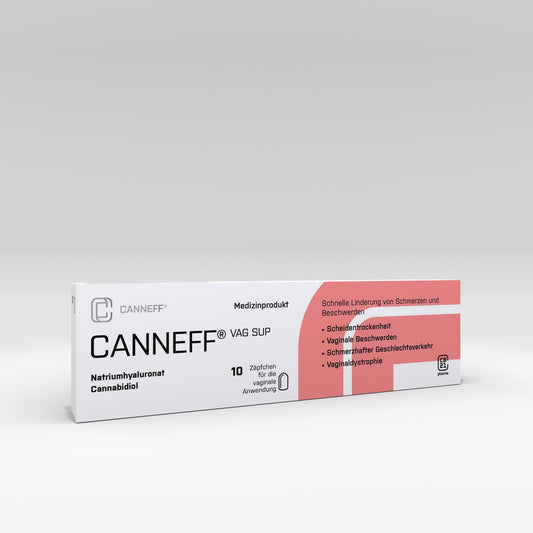
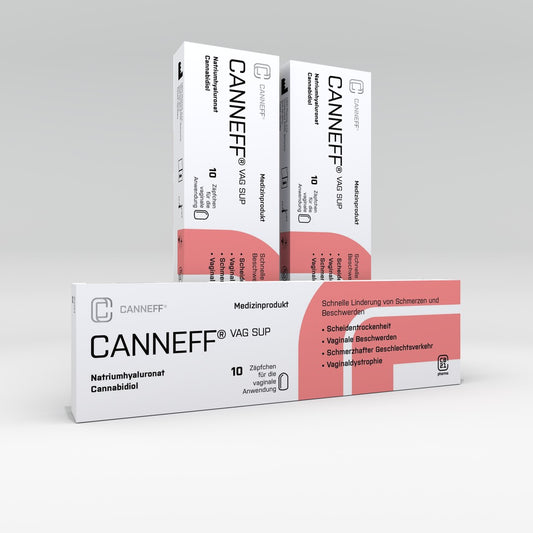
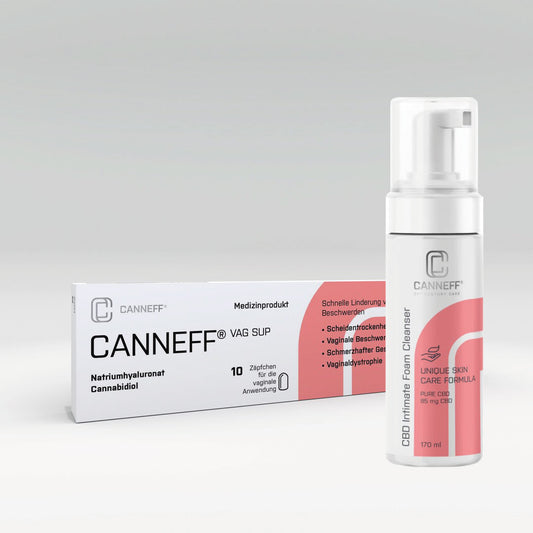
An integrative therapy combining conventional approaches like local estrogens with naturopathic methods has proven effective in many cases. Hormone-free products for moisture supply can be usefully complemented with lactic acid treatments, probiotics, or herbal vaginal suppositories. This combination allows individualized treatment with the best possible therapeutic success. Especially CANNEFF® VAG SUP vaginal suppositories with CBD and hyaluronic acid offer a complementary, non-hormonal therapy option to soothe the mucosa.
When are alternatives not sufficient?
If symptoms persist despite alternative measures, worsen, or additional symptoms such as bleeding, pain, or frequent urination occur, gynecological evaluation should be done. In severe atrophic colpitis or comorbidities, purely alternative treatment is usually not sufficient. Patients with high distress often benefit more from combination therapy. The following overview shows when complementary medical treatment is necessary:
|
Situation |
Recommendation |
|
Persistent symptoms despite alternative therapy |
Gynecological evaluation necessary |
|
Occurrence of additional symptoms (bleeding, pain) |
Specialist consultation required |
|
Pre-existing conditions such as breast cancer or hormonal disorders |
Coordination with medical team |
|
Desire to have children or unclear cycle disorders |
Diagnostics and targeted therapy |
|
Uncertainty about remedies and dosage |
Consultation with gynecologist or naturopath |