

Why can PMS cause heartburn?
During the second half of the cycle, hormone levels fluctuate greatly, affecting not only mood and pain perception but also digestion. Progesterone, which rises after ovulation, relaxes smooth muscle—including the esophageal sphincter. This relaxation can allow stomach acid to more easily rise into the esophagus, causing heartburn. At the same time, high progesterone levels can slow digestion, causing the stomach to empty more slowly and increasing pressure on the diaphragm. Combined with water retention and bloating, this intensifies the unpleasant burning behind the breastbone that many women feel before their period.
|
Hormone |
Effect on the stomach |
Changes before the period |
|
Progesterone |
Relaxes the esophageal sphincter |
Drops abruptly, which can worsen heartburn |
|
Estrogen |
Regulates digestion and stomach acid production |
Fluctuates greatly, influences stomach acid |
|
Cortisol |
Increases stress sensitivity and can promote heartburn |
Increases due to PMS-related stress |
Hormonal changes and digestion: How PMS triggers heartburn
In addition to affecting the esophageal sphincter, hormonal fluctuations also influence stomach acid production. An imbalance between estrogen and progesterone can cause either too much or too little stomach acid to be produced. Paradoxically, a lack of stomach acid can also lead to heartburn because the stomach contents are not properly digested, producing fermentation gases that increase pressure on the stomach. This can intensify the unpleasant burning sensation behind the breastbone.
Stress also plays a crucial role. The body releases more cortisol in the second half of the cycle, which further stimulates stomach acid production and slows digestion. Women with PMS often experience increased sensitivity to stressors, making heartburn feel more intense.
PMS or reflux disease? How to tell the difference
Heartburn can be both a typical PMS symptom and an indication of chronic reflux disease (GERD). Duration, frequency, and accompanying symptoms are crucial for differentiation.
|
Feature |
PMS heartburn |
Reflux disease (GERD) |
|
Timing |
Shortly before the period, disappears afterwards |
Occurs regardless of the cycle |
|
Duration |
Usually only for a few days |
Often lasts for weeks or months |
|
Accompanying symptoms |
Bloating, water retention, nausea |
Cough, chronic irritating cough, hoarseness |
|
Triggers |
Hormonal fluctuations |
Fatty food, alcohol, smoking |
If heartburn occurs regularly regardless of the cycle or is associated with nighttime reflux, chronic cough, or hoarseness, medical evaluation should be sought.
What helps against heartburn before the period?
There are various measures to relieve PMS-related heartburn:
- Eat smaller meals: Prevents overloading the stomach.
- Avoid carbonated drinks: Reduces pressure on the stomach.
- Light exercise after eating: Promotes stomach emptying.
- Pay attention to posture: Sleep with the upper body slightly elevated to prevent stomach reflux
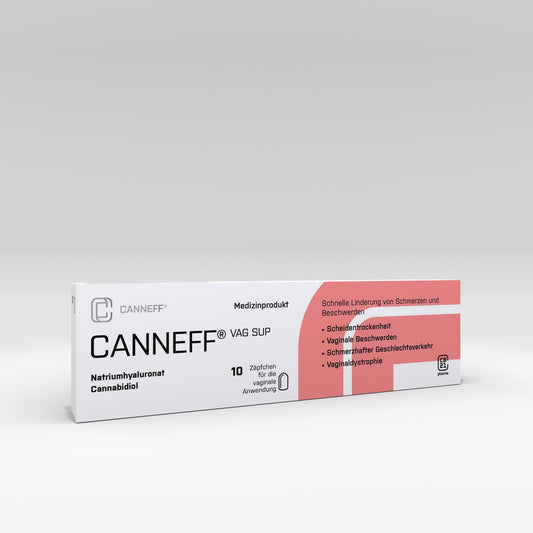
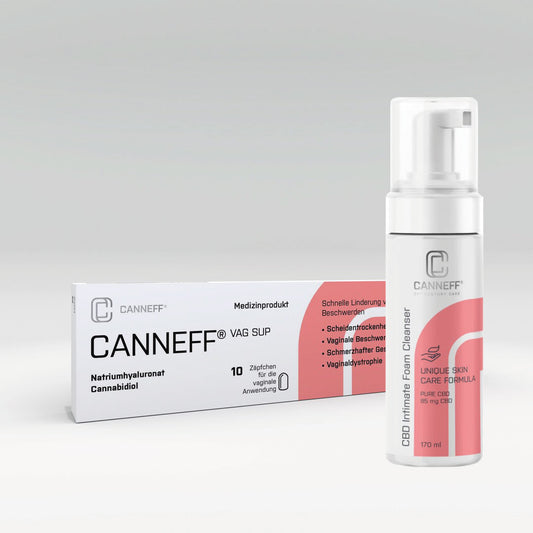
- Use CANNEFF® vaginal suppositories: Supports muscle relaxation and can improve overall well-being during PMS.
Which foods worsen PMS-related heartburn?
Some foods promote stomach acid production or relax the esophageal sphincter, which can worsen heartburn.
|
Foods |
Effect on heartburn |
|
Coffee & alcohol |
Irritate the stomach lining and increase acid production |
|
Fatty foods |
Delay stomach emptying and increase pressure |
|
Citrus fruits |
Increase stomach acid production due to their acidity |
|
Chocolate |
Relax the esophageal sphincter |
|
Carbonated drinks |
Promote bloating and increase stomach pressure |
A stomach-friendly diet with high-fiber foods, plenty of vegetables, and alkaline foods can help.
Why do PMS-related heartburn and bloating often occur together?
During the second half of the cycle, progesterone can slow down digestion, which not only promotes heartburn but also bloating and a feeling of fullness. Due to the slowed intestinal movement, food remains longer in the digestive tract, causing gas to accumulate. At the same time, water retention in the tissues can make the abdomen feel swollen and uncomfortably full. This combination can increase pressure on the stomach and worsen heartburn.
Naturally relieve PMS heartburn: tips and home remedies
There are various natural methods to reduce PMS heartburn:
-
Ginger tea: Soothes the stomach and promotes digestion.
-
Fennel or chamomile tea: Has anti-inflammatory effects and relaxes the stomach lining.
-
Healing clay: Bind excess stomach acid.
-
Flaxseed or psyllium husks: Protect the stomach lining and regulate digestion.
-
CANNEFF® vaginal suppositories: Support overall well-being and can relieve PMS symptoms.
Are there medications for PMS-related heartburn?
If natural measures are not enough, the following medications can help:
|
Medication group |
Effect |
|
Antacids |
Neutralize stomach acid (e.g., Rennie, Maaloxan) |
|
H2 blockers |
Reduce acid production (e.g., ranitidine) |
|
Proton pump inhibitors (PPIs) |
Inhibit stomach acid production long-term (e.g., pantoprazole) |
Occasional heartburn can often be treated with antacids, while chronic symptoms should be treated with PPIs.
How does stress affect heartburn during PMS?
Stress is a common trigger for PMS symptoms and can increase stomach acid production. Cortisol, the stress hormone, promotes increased acid secretion and can make the stomach lining more sensitive. Additionally, stress often leads to unhealthy eating habits such as fatty foods or excessive coffee consumption, which further worsen heartburn. Relaxation techniques like yoga or mindfulness exercises can help reduce PMS stress and thus heartburn.
Can dietary changes reduce PMS heartburn?
A targeted diet can help reduce PMS-related heartburn. Alkaline foods that balance stomach acid production, as well as easily digestible meals that do not burden digestion, are recommended.
|
Recommended foods |
Effect |
|
Oatmeal |
Sooth the stomach |
|
Bananas |
Neutralize stomach acid |
|
Almonds |
Can bind acid |
|
Fennel |
Has antispasmodic effects and soothes the stomach |
Conscious nutrition can often significantly reduce symptoms.