

What are the first signs of hemorrhoids?
The first signs of hemorrhoidal disease are usually nonspecific and often recognized late by those affected as symptoms. Typical early symptoms include itching or a slight burning sensation in the anal area. Those affected often report a diffuse, sometimes tingling discomfort that initially occurs only occasionally and especially after bowel movements.
Another early sign can be the appearance of bright red blood on toilet paper or in the stool. These bleedings are usually painless and caused by small injuries to the sensitive mucous membrane of the hemorrhoids. Especially harder stools or strong straining can trigger these minor bleedings.
In some people, slight moisture in the anal area also occurs. This moisture can irritate the skin around the anus and often leads to additional itching or skin irritations.
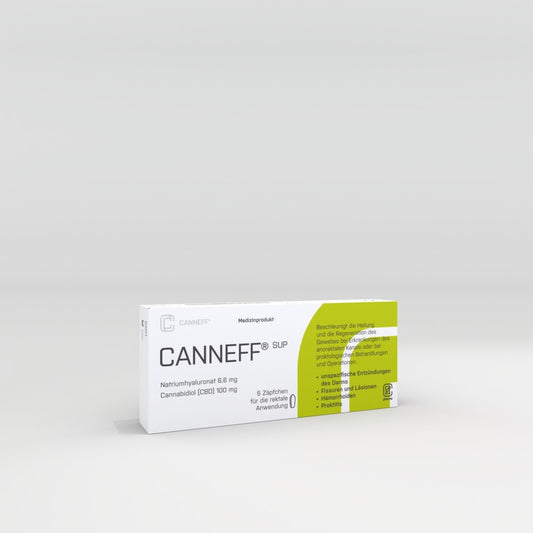
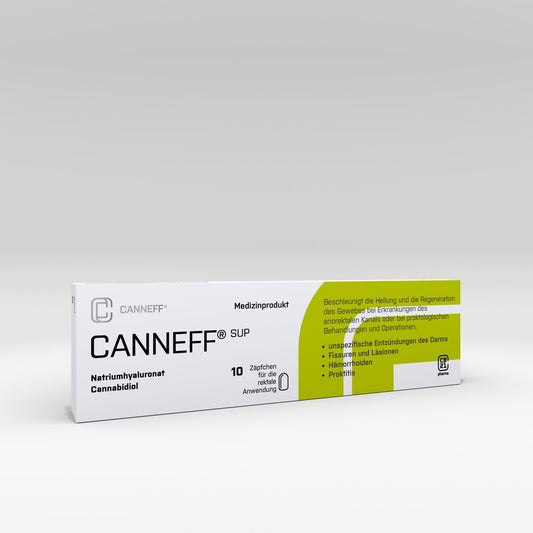
Since early symptoms are often mild and hardly noticeable in daily life, treatment is often started only at a later stage when symptoms worsen. To specifically relieve early symptoms, CANNEFF SUP suppositories with CBD and hyaluronic acid offer a soothing effect on the irritated anal region and support healing through the moisturizing properties of hyaluronic acid.
What typical symptoms occur with hemorrhoids?
Typical symptoms of hemorrhoids mainly include uncomfortable sensations in the anal area, which can vary in intensity depending on the stage of the condition.
Itching and burning: One of the first and most common signs is itching and a slight burning sensation around the anus. These symptoms often arise from mucus discharge that irritates the sensitive skin around the anus.
Moisture and dampness: Enlarged hemorrhoids can lead to increased moisture, which manifests as a damp feeling in the anal area. The mucus discharge can also irritate the skin and cause redness.
Bleeding during bowel movements: Another typical symptom is bright red blood traces on toilet paper or blood in the stool. Bleeding usually occurs due to pressure during bowel movements, which injures the sensitive vascular cushions. In the early stages, these bleedings are often painless.
Foreign body or pressure sensation: Many affected individuals describe a constant feeling of pressure or even a "foreign body" in the anus. This occurs especially in advanced stages when the hemorrhoids protrude and swell.
Incomplete bowel emptying: The feeling of pressure can create the impression that the bowel is not completely emptied despite bowel movements, which can lead to more frequent trips to the toilet.
Pain in advanced stages: Pain usually occurs only in later stages when the hemorrhoids are inflamed or significantly enlarged. This can greatly affect sitting and bowel movements.
These symptoms should be taken seriously and, especially in cases of bleeding or pain, should be medically examined, as they can worsen without treatment.
How do the symptoms differ depending on the stage of hemorrhoids?
The symptoms of hemorrhoids increase in intensity depending on the stage of the disease and vary in their manifestation. The stages are divided into four grades, with grade 1 being the initial stage and grade 4 the most advanced stage.
Grade 1: Mild swelling and no external signs
Often with few symptoms. When symptoms occur, they are usually mild bleeding after bowel movements or swelling. This bleeding appears as bright red streaks on toilet paper or in the stool. At this stage, the hemorrhoids are not visible and are located inside the anal canal. Pain usually does not occur.
Grade 2: Protrusion during strain
Itching, burning, and oozing become increasingly severe, and bleeding may occur more frequently. Many affected individuals also experience a slight pressure or foreign body sensation in the anal area. The hemorrhoids protrude during bowel movements but retract on their own afterward.
Grade 3: Permanent prolapse
All previous symptoms such as bleeding, itching, and oozing worsen. Additionally, affected individuals often feel a sensation of incomplete bowel emptying. The hemorrhoids protrude during bowel movements or physical strain and no longer retract on their own. However, they can be manually pushed back into the anal canal.
Grade 4: Permanent prolapse and possible complications
Severe pain that worsens especially when sitting or during bowel movements. Inflammations and possibly thromboses (blood clots) may occur, further intensifying the symptoms. The hemorrhoids remain permanently outside the anal canal and can no longer be pushed back. A complete closure of the anus is often no longer possible, which can lead to fecal incontinence and additional hygiene problems.
For fourth-degree hemorrhoids grade 4, when the tissue permanently protrudes outside the anus and causes significant discomfort, a surgical intervention is usually necessary. A common method is hemorrhoidectomy, where the hemorrhoidal tissue is completely removed. This treatment is especially effective in severe cases but requires a longer healing period. Alternatively, stapled hemorrhoidopexy is an option, where the tissue is repositioned and fixed using a surgical stapler. This procedure often allows for a shorter recovery time. Another option is Doppler-guided ligation, where the supplying blood vessels are tied off to reduce the hemorrhoids. The choice of method is made individually, based on the condition and specific symptoms of the affected person.
After proctological procedures, such as the removal of hemorrhoids or the treatment of anal fissures, targeted aftercare is essential for the healing process. Here, CANNEFF SUP rectal suppositories, which contain a combination of cannabidiol (CBD) and hyaluronic acid, can provide supportive effects. CBD contributes to modulating inflammation with its antioxidant properties, promoting healing. The included hyaluronic acid moisturizes the mucous membranes and supports tissue regeneration.
For use, it is recommended to insert one suppository rectally daily before bedtime. The exact duration of the treatment depends on the individual healing process and should be coordinated with the treating physician. Targeted application allows the ingredients to act directly on the affected area, increasing effectiveness. The combination of natural active ingredients offers gentle yet effective support to optimally promote the healing process after proctological procedures.
Is itching a typical symptom of hemorrhoids?
Yes, itching is a typical symptom of hemorrhoids and occurs especially frequently in the early stages of the condition. The itching is often caused by moisture in the anal area due to incomplete sealing of the bowel. This moist mucous membrane can irritate the surrounding skin, leading to intense itching.
Additionally, frequent cleaning or wiping with toilet paper contributes to skin irritation, which can further increase the itching. The moisture and friction in the affected area further promote the itching, making it a distressing symptom for those affected.
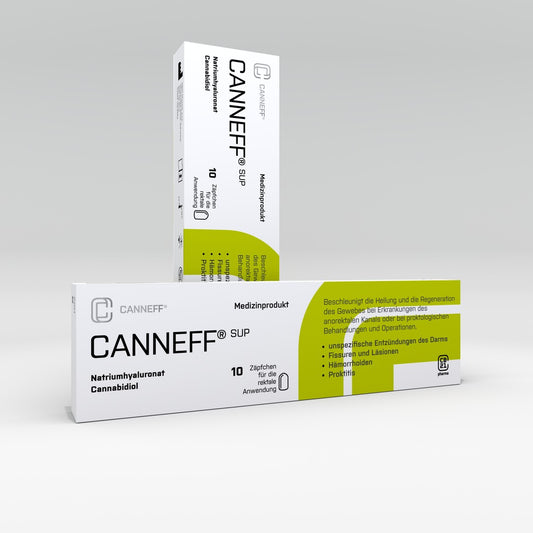
CANNEFF SUP suppositories can provide effective relief from itching, a typical symptom of hemorrhoids and other anal area conditions. The active ingredient cannabidiol (CBD) helps modulate inflammatory processes through its antioxidant properties, which can have a soothing effect on the affected tissue. Additionally, the included hyaluronic acid supports moisture supply to the mucous membranes and promotes healing, thereby relieving the unpleasant itching and calming irritated skin.
Especially with conditions such as hemorrhoids, anal fissures, anal fistulas, and proctitis, which often come with itching and irritation, CANNEFF SUP suppositories can be a valuable aid by caring for the tissue and helping to relieve symptoms.
What symptoms does a hemorrhoidal condition cause in everyday life?
A hemorrhoidal condition affects daily life through various often distressing symptoms. A common companion is an unpleasant itching in the anal area, which can be particularly bothersome during prolonged sitting and often intensifies with burning. These complaints are hard to ignore and cause distraction and discomfort for many affected individuals, impacting quality of life.
Bleeding during bowel movements is another typical symptom. It usually appears as bright red traces on toilet paper or in the stool and can cause concern. Often, the occurrence of bleeding is accompanied by an annoying pressure or foreign body sensation in the anal area. This feeling, sometimes described as a kind of "heaviness," can make sitting and wearing tight clothing difficult and lead to additional restrictions in everyday life.
In some cases, there is also oozing in the anal area caused by incomplete sealing of the bowel. This oozing can in turn cause skin irritation and a feeling of uncleanliness, making care and hygiene more complicated. Especially with significantly enlarged hemorrhoids, pain often occurs, which further impairs sitting and movement. In everyday life, those affected often feel restricted during normal activities such as bowel movements or physical activity.
Those affected often also complain of a constant feeling of incomplete bowel emptying, which leads them to sit longer on the toilet and strain more. These distressing symptoms can cause simple everyday activities and social contacts to be avoided, significantly reducing quality of life and well-being.
CANNEFF SUP suppositories contain cannabidiol (CBD) and hyaluronic acid and can relieve symptoms of hemorrhoidal disease. The antioxidant properties of CBD help to capture reactive oxygen species and contribute to maintaining redox homeostasis, which is associated with the modulation of inflammatory processes in the body. In combination with hyaluronic acid, CBD supports the moisture supply of the mucous membrane, promoting the healing process and relieving pain from hemorrhoids and other inflammatory complaints in the anal area.
When should you see a doctor for hemorrhoid symptoms?
You should seek medical advice for hemorrhoid symptoms if complaints such as itching, burning, or bleeding last longer than a week or increase in intensity. Especially with bleeding in the anal area, medical evaluation is important, as this can also indicate other diseases, including inflammatory bowel diseases or, in rare cases, colon cancer.
Additionally, a visit to the doctor is advisable if there is a feeling of pressure or a foreign body in the anal area or the sensation of not being able to fully empty the bowel. It is also sensible to seek medical help if hemorrhoids protrude from the anus after bowel movements and do not retract on their own.
An early visit to the doctor can prevent the progression of hemorrhoidal disease and helps to relieve symptoms with targeted measures, often before invasive treatments become necessary.
Which symptoms indicate advanced hemorrhoid disease?
Symptoms of advanced hemorrhoid disease are more intense and often more disruptive in daily life than in early stages. The following signs indicate advanced hemorrhoid disease:
Permanent prolapse of hemorrhoids: In advanced hemorrhoid conditions (Stage III and IV), the hemorrhoids protrude clearly from the anus during bowel movements or physical strain. In Stage IV, they can no longer be manually pushed back and remain permanently outside.
Severe bleeding: While early stages usually only cause slight bleeding, more severe and frequent bleeding can occur in advanced stages. Bright red blood may be visible on toilet paper or in the stool, often caused by injuries to the heavily filled vessels.
Pain and pressure sensation: The symptoms can be aggravated by the hemorrhoids being pinched in the anus, causing painful pressure or a foreign body sensation. Pain mainly occurs when sitting or during bowel movements and can become very uncomfortable.
Itching and burning: These symptoms often worsen due to moisture at the affected area. Constant secretions and contact with mucous membrane parts or stool can cause the skin around the anus to become sore and irritated.
Uncontrolled mucus or stool leakage: In particularly advanced cases where the sphincter tissue is strained, fecal incontinence can occur. In this situation, the bowel cannot fully close during rest or light strain, leading to smearing blood, mucus discharge, and in severe cases, uncontrolled stool leakage.
A doctor's visit is highly recommended in these cases, as early treatment in advanced stages can prevent further complications and significantly improve the quality of life for those affected.
How can you tell the difference between hemorrhoids and anal fissures?
Hemorrhoids and anal fissures have different causes and symptoms that can help distinguish them from each other:
Pain:
Hemorrhoids often cause only mild symptoms such as itching and moisture. Pain usually only occurs in advanced stages (Grade III or Grade IV) and is then felt as pressure or a foreign body sensation. Anal fissures, on the other hand, are typically very painful, especially during and after bowel movements. The pain can be stabbing or burning and often lasts for hours after the bowel movement.
Bleeding:
Hemorrhoids usually bleed bright red, and the bleeding typically occurs during bowel movements, often as blood traces on toilet paper or drops in the toilet water. Anal fissures also cause bright red bleeding, but usually in smaller amounts. The bleeding is directly related to the tearing of the skin and usually also appears on the toilet paper.
Location of symptoms:
Hemorrhoids are located inside the anal canal and only protrude outward in advanced stages. The sensation of "prolapsed lumps" or a bulge at the anus is a sign of enlarged hemorrhoids. Anal fissures are small, painful tears in the skin or mucous membrane at the anal margin and can often be localized as a pain point directly at the outer anus.
Additional symptoms:
Hemorrhoids are often accompanied by itching, moisture, and, in advanced cases, a feeling of incomplete evacuation. Anal fissures often lead to a reflex spasm of the sphincter muscle, which increases pain during bowel movements and hinders healing.
In summary, hemorrhoids often begin painlessly or with only mild discomfort and only appear as painful protrusions in advanced stages. Anal fissures, on the other hand, typically cause severe pain from the start and appear as clearly localized, sharp tears in the tissue. To ensure an accurate diagnosis and differentiation, a visit to a doctor is recommended.
CANNEFF SUP suppositories, enriched with cannabidiol (CBD) and hyaluronic acid, provide targeted relief for various complaints in the anal and rectal area. They are used not only as supportive treatment for hemorrhoids but also for the care and healing of anal fissures, proctitis, cryptitis, and anal fistulas. Thanks to the antioxidant effect of CBD, the suppositories help neutralize reactive oxygen species and support redox homeostasis. The hyaluronic acid in the CANNEFF SUP suppositories contributes to moisture regulation of the mucous membrane, promoting the healing process and relieving inflammation and pain.
This comprehensive effect is also beneficial after colorectal surgeries or in cases of nonspecific inflammation in the intestinal area, as the suppositories accelerate the regeneration of sensitive tissues and thus support the healing process. CANNEFF SUP suppositories are therefore a versatile addition to the symptomatic treatment and promotion of healing in the anorectal region.
Can pain when sitting indicate hemorrhoids?
Yes, pain when sitting can indicate advanced hemorrhoidal disease. In the early stages, hemorrhoids usually cause little pain and are more likely to manifest as itching, moisture, or bleeding. Pain often only occurs when the hemorrhoids have grown so large that they permanently protrude from the anus (stage 3 and 4) and may be further irritated by sitting. Such pain can also be accompanied by a feeling of pressure or a foreign body sensation in the anal area.
However, it is important to note that other conditions, such as anal fissures or anal thromboses, can cause similar pain when sitting. Therefore, a visit to the doctor to clarify the cause is advisable.
Why do hemorrhoids cause blood in the stool?
Hemorrhoids can cause blood in stool because the enlarged vascular cushions at the end of the rectum are easily injured, especially during hard bowel movements or strong straining. The surface of the hemorrhoids is covered by sensitive mucous membrane that can easily tear due to mechanical pressure or friction. This can cause bright red blood, which typically appears on the stool or toilet paper.
Bleeding occurs especially frequently in hemorrhoids in advanced stages because the tissue in these stages protrudes more outward and is therefore more stressed. In most cases, this bleeding is minor and painless, but blood in stool should always be medically examined to rule out serious diseases.
How does bleeding from hemorrhoids differ from other bleeding in the intestinal area?
Bleeding from hemorrhoids is usually bright red because the blood comes from superficial vessels near the anus and has little time to oxidize. The bright red blood often appears as fresh traces on toilet paper or stool and occasionally drips into the toilet. In contrast, bleeding from other parts of the digestive tract usually has a darker color. Dark red or chestnut brown blood often originates from deeper sections of the intestine such as the colon or rectum and may indicate other conditions like diverticular bleeding or inflammation. Very dark, almost black blood (so-called tarry stool) usually indicates bleeding in the upper digestive tract, such as from the esophagus, stomach, or duodenum. This color results from the blood’s contact with stomach acid, leading to oxidation and blackening. A doctor’s visit is advisable to determine the exact cause and ensure that no serious diseases underlie the symptom blood in stool.
How do internal and external hemorrhoids differ in their symptoms?
Internal and external hemorrhoids differ significantly in their symptoms because they are located in different areas of the anal canal and affect tissues with varying sensitivity:
Internal hemorrhoids:
Painless: Since they lie above the so-called "pain line" in the anal canal, their enlargement initially causes no pain.
Bleeding: The most common symptom is bright red blood on toilet paper or in the stool, which can result from injuries to the sensitive mucosa during bowel movements.
Bulging or prolapse: In advanced stages, internal hemorrhoids can protrude during straining and appear as soft lumps. They usually retract on their own in early stages but not in later stages.
Pressure or foreign body sensation: Since they swell internally, there can be a sensation that the bowel is not completely emptied after a bowel movement.
External hemorrhoids:
Pain: Because external hemorrhoids lie below the pain line, where the tissue is more sensitive, they often cause burning or pulling pain when irritated, which can intensify especially when sitting or during bowel movements.
Itching and irritation: Since they are located in the external anal region, external hemorrhoids often cause skin irritation, itching, and discharge.
Palpable lumps: External hemorrhoids are often felt as firm, painful nodules around the anal margin, especially when they are thrombosed (blood clots in the hemorrhoidal tissue).
Overall, internal hemorrhoids tend to cause non-bloody discomfort and a feeling of pressure, while external hemorrhoids often stand out due to painful irritation and palpable lumps.
What does it mean when hemorrhoids discharge or burn?
When hemorrhoids discharge or burn, this usually indicates irritation or inflammation of the affected area. Here are some causes and meanings of these symptoms:
Discharge:
Moisture often occurs because enlarged hemorrhoids impair the complete sealing of the anal canal. As a result, a small amount of mucus or even stool can escape from the anus, leading to a moist feeling in the anal area. This moisture can soften the surrounding skin and promote the development of anal eczema, where the skin is irritated and reddened.
Burning:
The burning often occurs as a reaction to friction and irritation of the skin in the anal area, especially when the skin is already softened by moisture. Inflammations in the region or small tears in the mucous membrane can also cause a burning sensation, which becomes particularly intense during bowel movements or when touched. Overall, moisture and burning are typical signs of irritation or inflammation caused by enlarged hemorrhoids and indicate that proper care and treatment are necessary to relieve symptoms and contain the inflammation.
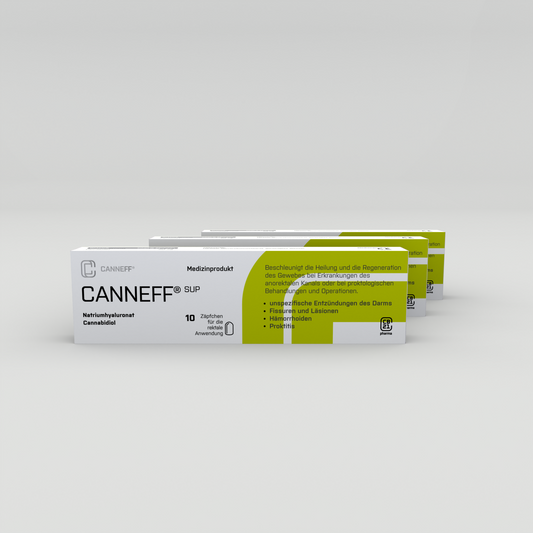
CANNEFF SUP suppositories with cannabidiol (CBD) and hyaluronic acid support relief for hemorrhoids, anal fissures, proctitis, and anal fistulas by reducing inflammation and promoting healing. CBD has antioxidant properties, while the anti-inflammatory hyaluronic acid keeps the mucous membrane moist and has a regenerative effect. These suppositories are especially suitable after colorectal surgeries or for nonspecific inflammations of the rectal area and provide targeted relief to soothe irritated tissue. They therefore offer targeted treatment, particularly for burning and itching.