

What are suppositories for the treatment of anal thrombosis?
Rectal suppositories with anti-inflammatory and pain-relieving ingredients are an effective treatment method for alleviating the symptoms of certain anal diseases, as well as supporting tissue healing after rectal surgeries. Suppositories are also considered a proven approach for relieving certain symptoms of anal vein thrombosis and supporting the healing process of ulcers in the rectal area in the treatment of anal thrombosis. Rectal suppositories act directly in the affected anal area and can thus support the healing and regeneration of tissue after incision and excision of perianal vein thrombosis, shortening the healing time after surgery. In most cases, decongestant measures for anal vein thrombosis, such as suppositories and sitz baths, can already provide effective relief of the blood clot at the anus, allowing the bluish, violet, and cherry pit- to plum-sized bluish nodules at the anal margin to regress as quickly as possible.
However, if surgical removal is necessary for larger anal vein thromboses or ulcers on the anus, suppositories can be used after the surgical procedure or in combination with other therapies to relieve the symptoms of a perianal thrombosis and support the healing process after surgery. A doctor should be consulted to find the best possible treatment for perianal thrombosis for your individual situation. Especially if the thrombosis on the anus does not heal and has been present for several weeks, or if the anal thrombosis keeps recurring, a medical diagnosis and more detailed examination are definitely recommended. Read more here in the blog post about diagnosis and examinations of anal vein thromboses by a doctor.
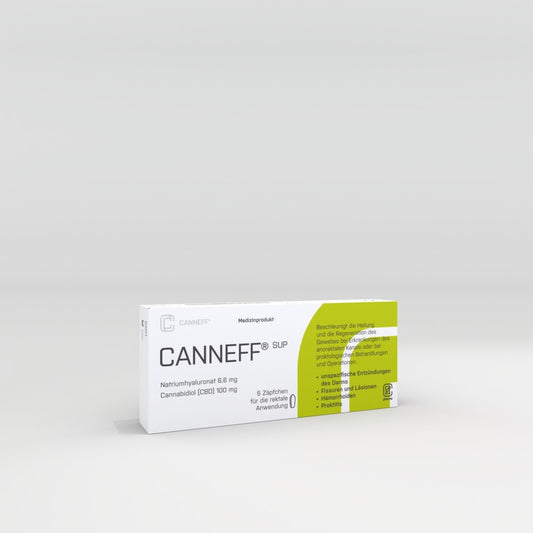
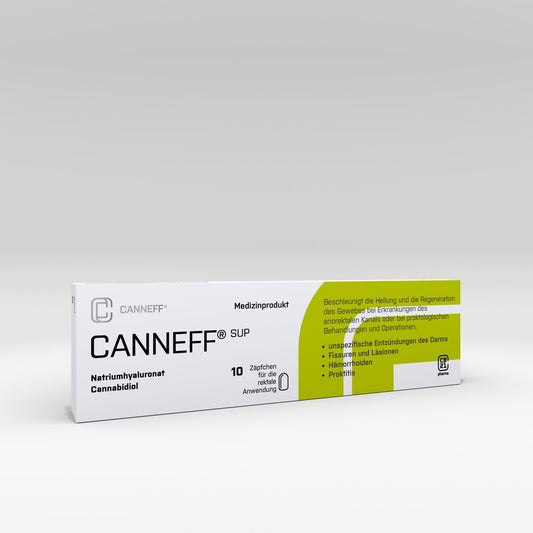
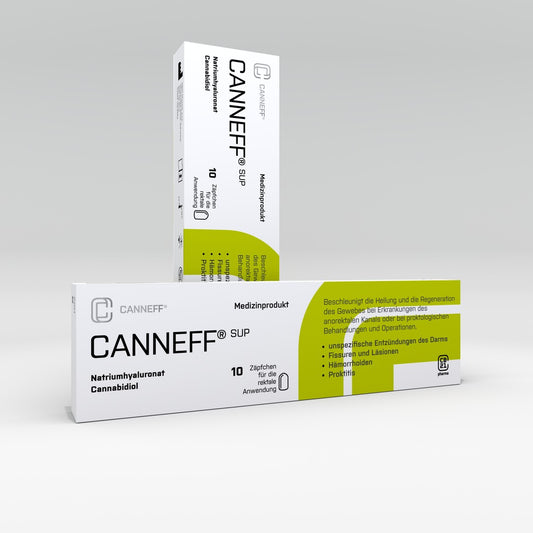
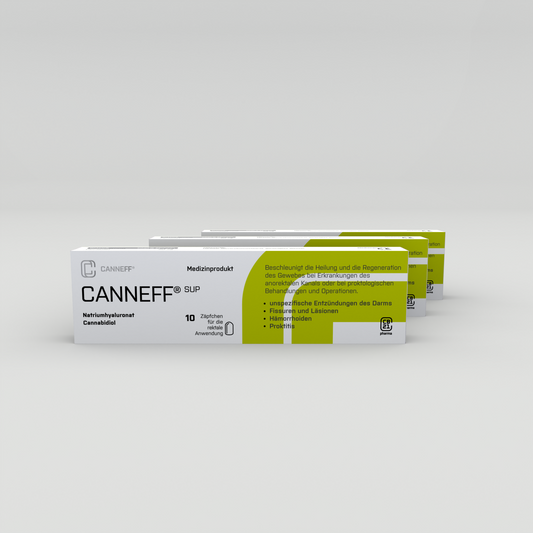
CANNEFF® SUP suppositories contain a combination of hyaluronic acid and medical CBD (cannabidiol). This patented emulsion matrix with the combination of active ingredients plays an important role in modulating inflammatory processes and has a cell-protective effect. Hyaluronic acid, a natural polysaccharide in the human body, plays a crucial role in regulating moisture in the skin and connective tissue. It can bind enormous amounts of water, thereby supporting the stability and elasticity of tissues and mucous membranes in the anal canal. This unique combination of active ingredients in the CANNEFF® SUP rectal suppositories shows a synergistic effect.
Medical CBD optimizes the environment for the effect of hyaluronic acid, while hyaluronic acid maintains the moisture of the mucous membrane, thereby supporting healing and pain relief in injuries or inflammations in the rectal area, as well as after colorectal surgeries. Read more about the unique combination of hyaluronic acid and CBD.
Which suppositories are used for anal venous thrombosis?
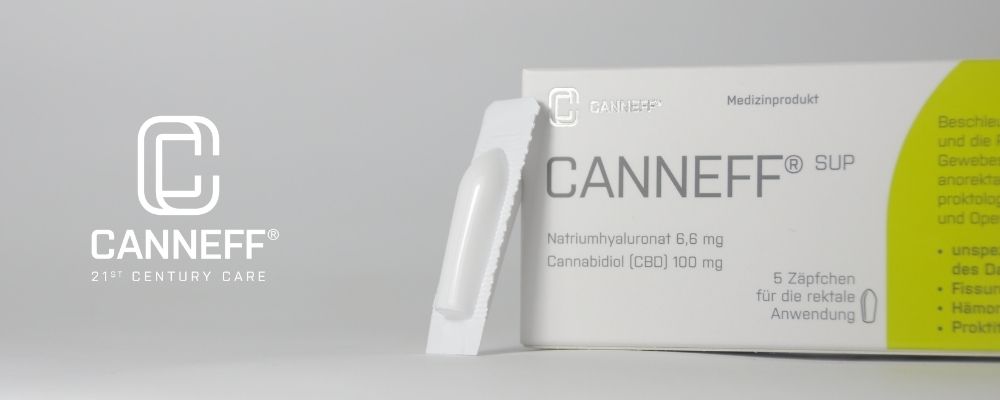
CANNEFF® SUP suppositories are an innovative medical product that contains not only hyaluronic acid but also medical CBD (cannabidiol). CANNEFF® SUP rectal suppositories can relieve symptoms of nonspecific inflammation in the bowel and also accelerate and support tissue healing after rectal surgeries, such as incision or excision of a perianal thrombosis. These rectally applied suppositories contain a unique combination of hyaluronic acid and CBD, which can contribute to faster regeneration and healing of tissue in the anal canal and rectum. Due to the emulsion matrix, the delivery of hyaluronic acid is increased fivefold (5x) compared to conventional rectal suppositories. Additionally, it contains cannabidiol (CBD) of medical quality. Read more here about the effects of CBD and its medical applications.
What are the benefits of suppositories for anal venous thrombosis?
Suppositories offer several benefits to support the healing of anal ulcers and for treatment after surgical procedures on the rectum to promote tissue healing around the anus. Due to their rectal application, they act locally directly at the site of the wound or inflammation. Suppositories generally work faster because the mucous membranes absorb the active ingredients quickly and very effectively. They can contain pain-relieving substances that reduce intense pain in the anal area, as well as anal itching or anal burning. Some suppositories, such as CANNEFF® SUP rectal suppositories, even support the regeneration of damaged or inflamed tissue in the anal canal, which can accelerate the healing process after surgeries for incision or removal of anal venous thrombosis. When anal venous thrombosis does not go away, suppositories are a valid treatment option. Suppositories are also considered a good alternative to tablets and capsules, especially if you have difficulty swallowing larger pills. They can be easily administered even with a reduced general condition. In cases of nausea or vomiting, they are a good choice because the active ingredient enters the body directly and no side effects occur in the digestive tract.
How do suppositories differ from other treatments for anal thrombosis?
Compared to other topical treatments (creams, ointments, or gels), suppositories offer several significant advantages for anorectal or proctological diseases in general, making them particularly suitable for faster tissue regeneration after colorectal surgery, as well as for accelerating the healing process of ulcers in the rectum.
The greatest advantage of suppositories lies in their mode of action. Rectal suppositories are inserted directly into the anus, allowing the active ingredients to take effect in the affected anal canal. This form of administration ensures a steady release of the ingredients over a longer period, which can be especially beneficial for hard-to-reach wounds in the anal canal after surgery for perianal venous thrombosis. In contrast, creams or ointments are applied externally and primarily act on the surface of the skin on the buttocks.
Another difference is the comfort of use. While suppositories can sometimes be uncomfortable, especially for people who have difficulty inserting them, creams and ointments are generally easier to apply. Lidocaine ointments can be easily applied to the affected area and often provide immediate pain relief, but they only moderately speed up the healing process.
In summary, suppositories are particularly beneficial in supporting healing after colorectal surgery, including after incision or removal of perianal vein thrombosis. In some cases, combining suppositories with ointments or other medications can be useful to promote comprehensive and rapid healing. Medical follow-up care in the treatment of perianal thrombosis is equally important. Be sure to discuss your treatment options with your attending physician. Your doctor can also advise you on additional measures to accelerate the healing of tissue in the anal canal and the skin around the anus, even after surgery for anal thrombosis.
How do I properly use suppositories to treat anal thrombosis?
The use of suppositories to treat anal vein thrombosis is straightforward but still requires a certain level of care. To do this, separate a suppository at the perforated spot on the strip. Tear open the packaging by gently pulling it apart and remove the suppository. Insert the suppository, in a comfortable position, with the rounded end first into the rectum. It is recommended to wash your hands before and after insertion for hygiene reasons. Many patients prefer to insert the suppository lying on their side with bent legs. However, you can choose any position that is comfortable for you. Gently insert the suppository into the anal canal, with the rounded end first. Be careful not to insert the suppository too deeply, only up to the internal sphincter. Hold the position for a few minutes so the suppository stays in place and can dissolve. Splitting suppositories is also not recommended. Suppositories usually do not have break lines. Improper handling can cause them to break and become contaminated. After inserting the suppository, wash your hands thoroughly again to remove any bacterial residues from the anus. The effect of the suppository usually begins within about an hour.
When using suppositories as part of the treatment of a perianal thrombosis or during follow-up care after anal thrombosis surgery, be sure to follow your doctor's instructions or the recommendations on the packaging or leaflet exactly. Do not exceed the recommended dosage of CANNEFF® SUP. If you have further questions about usage, it is best to consult your doctor or pharmacist.
What alternatives to suppositories are there for the treatment of anal vein thromboses?
Basically, depending on the stage of the anal vein thrombosis, there are different methods to treat a perianal thrombosis. The chosen treatment of an anal thrombosis mainly depends on the size of the thrombus, as well as the swelling and thus the intensity of the pain. For smaller anal thromboses, local pain-relieving ointments with local anesthetics or suppositories are often sufficient.
In addition to suppositories, there are other treatment options for perianal thromboses. These include certain ointments, creams, and special home remedies such as chamomile sitz baths. In most cases, decongestant measures for anal vein thromboses in the form of suppositories and sitz baths can provide effective relief.
Only very rarely does a small surgical procedure occur with anal vein thromboses, such as incision or excision of the perianal thrombosis. In this procedure, the thrombus is cut open and drained or completely removed. Ointments and creams can work similarly to suppositories by locally relieving pain and inflammation in the anal region. Often, locally anesthetic ointments based on lidocaine or corticosteroid-containing ointments are used to suppress painful swelling and the inflammatory reaction around the anus. There are also healing ointments and oils of plant-based origin that care for the mucous membrane of the anal area. A combination of different treatment methods is also possible and should be discussed with your doctor to best promote healing and cleansing of the anal area affected by the perianal thrombosis according to your situation.
Read more here about alternative, as well as herbal, therapeutic approaches for anal thrombosis in the blog post on treatment of anal vein thrombosis.
How can I support the healing of an anal vein thrombosis besides using suppositories?
In addition to treating anal thrombosis with suppositories or sitz baths, you can also take other measures to support the healing process. Besides locally anesthetic ointments based on the local anesthetic lidocaine, corticosteroid ointments are also used to suppress painful swelling and inflammatory reactions. There are also healing ointments and oils based on plants that care for the mucous membrane of the anal area. A fiber-rich diet combined with adequate fluid intake also ensures soft stools, thereby reducing strain on the anus. Sitz baths with chamomile or oak bark can promote blood circulation, which can also accelerate the healing process after anorectal surgeries, such as the excision of a perianal vein thrombosis. Since the wound at the anus remains open after surgery, pay special attention to very gentle and thorough anal hygiene to avoid further irritation or even uncontrolled rupture of the perianal thrombosis. Avoid activities that cause pressure buildup in the lower abdomen. These mainly include heavy lifting and strong straining during bowel movements. Regular exercise and sufficient fluid intake can also help keep your bowels moving and prevent constipation. Your doctor can also give you further specific tips on how to promote healing and prevent relapses such as recurrent anal vein thrombosis.
What experiences are there with the use of suppositories for the treatment of anal vein thrombosis?
Patient reports on the use of suppositories after anorectal surgeries provide valuable insights into individual healing processes. When the anal vein thrombosis has burst or become inflamed, causing a wound at the anus, some users of CANNEFF® SUP suppositories report rapid relief of symptoms of anal thrombosis such as pain in the anal area and anal itching, as well as quick healing of the tissue in the anal region after surgery to open or remove the thrombosis. Thus, especially after surgical procedures, some patients report a significant and rapid improvement in their symptoms at the anus following the operation. CANNEFF® SUP suppositories can also be used directly to support the healing process of ulcers in the rectal area. Patient experiences with CANNEFF® suppositories in the context of treatment of anal vein thrombosis demonstrate that suppositories are a promising treatment to support the healing process and promote the regeneration of mucous membranes and anal tissue after surgery.
How should I properly store suppositories for the treatment of anal vein thrombosis?
CANNEFF® SUP suppositories should be stored in their original packaging at room temperature, protected from sunlight, between 2°C and 25°C. Also keep the suppositories out of reach of children. High temperatures can cause the suppositories to melt. If this happens during hot summer conditions, you can store the suppositories in the refrigerator during these periods. The shelf life of the suppositories is 2 years from the date of manufacture, and the expiration date is indicated on the medical product packaging.
What should be considered when dosing suppositories for the treatment of anal vein thrombosis?
To support the healing process after colorectal surgeries, such as an incision or excision of an anal vein thrombosis, use 1 suppository daily before bedtime. Depending on the indication to be treated and the type of suppository, the frequency of use may vary. Normally, rectal suppositories should be used once daily. Your doctor will provide you with more detailed information. To support healing after colorectal surgery, take 1 CANNEFF® SUP rectal suppository daily before bedtime for 20 - 30 days. The duration of use depends on the progress of the treated condition of the anal vein thrombosis or the wound healing after surgery. However, the duration of use should not exceed 30 days. The suppositories should be inserted into the anus before bedtime. Here you can find further information on the dosage of CANNEFF® SUP rectal suppositories.
How long does it take for the suppositories to take effect?
The effect of suppositories usually begins after 15 to 60 minutes. However, the long-term healing of the tissue mainly depends on the severity of the surgical procedure and the prior condition of the nodule or ulcer at the anus, the perianal thrombosis. In cases of severe symptoms, the doctor can surgically remove or incise the anal vein thrombosis under local anesthesia and drain or remove the thrombus. Even with regular use of suppositories, healing at the anus after an anal thrombosis operation can take some time. It may also be advisable to combine different treatment options to accelerate the healing of the tissue in the anal canal or at the anus after surgery.
Can I combine suppositories with other treatments for anal thrombosis?
Your doctor can recommend CANNEFF® SUP rectal suppositories as supportive treatment for anorectal diseases, as well as to accelerate the healing process of ulcers in the rectum, and can also combine them with other therapeutic approaches. CANNEFF® SUP rectal suppositories are often used after colorectal surgery to support wound healing post-operation. Suppositories can additionally help promote and thus accelerate the healing process of tissue in the anal canal in general. By combining various treatment methods, you can more effectively relieve the symptoms of anal thrombosis, but above all accelerate healing after surgery to relieve the tissue. However, you should always consider combining medications, drugs, medical devices, and household remedies for the treatment of anal thrombosis only after consulting your doctor or pharmacist. This way, you can ensure that there are no unwanted interactions or side effects from the treatment. That means, clarify any interactions with other medications with your doctor at the start of the treatment of anal thrombosis.
Are suppositories suitable for women during pregnancy as part of the treatment of anal thrombosis?
Whether suppositories are suitable during the treatment of anal thrombosis during pregnancy depends on the active ingredients contained in the suppositories. Many over-the-counter suppositories can generally also be used by pregnant women, especially those with natural or mild ingredients. However, there are suppositories that contain active ingredients not recommended during pregnancy, such as certain anti-inflammatory or anesthetic substances and agents.
There is no evidence yet for the safety of CANNEFF® SUP suppositories during pregnancy and breastfeeding, which is why this product is not recommended for use by pregnant or breastfeeding women. Suppositories with CBD should therefore not be used during pregnancy, as there is not yet sufficient research on this.
It is important that pregnant or breastfeeding women always consult their treating gynecologist or doctor before using medications, drugs, or medical devices for complaints such as anal venous thrombosis. Your doctor can best assess which treatment method is suitable for your individual situation and whether the use of suppositories is the ideal treatment method in your case.
Are suppositories also suitable for preventing anal venous thrombosis?
Suppositories are generally used to support the healing process of ulcers or after surgery. For prevention, a high-fiber diet, adequate fluid intake, and gentle anal hygiene are recommended. These measures and many others can help keep your stool soft and reduce the likelihood of perianal thrombosis, as well as anal fistulas or anal fissures in the anal canal.
Can I buy suppositories for the treatment of anal venous thrombosis over the counter at the pharmacy?
In the pharmacy, you will find both prescription suppositories and over-the-counter medical devices for the treatment of anal venous thrombosis. CANNEFF® SUP suppositories are available without a prescription in Austria, and you can order them directly from the webshop.
In Germany, a prescription and pharmacy requirement applies because CANNEFF® SUP rectal suppositories, as a Class 2a medical device, also contain medical CBD (cannabidiol). In Germany, the suppositories are therefore considered prescription medical devices, and your general practitioner or specialist must prescribe CANNEFF® SUP suppositories in Germany by prescription. Consequently, you can only order CANNEFF® SUP suppositories with a prescription through your pharmacy in Germany.
Can I speed up wound healing after anal thrombosis surgery with suppositories?
Yes, suppositories can support tissue healing after colorectal surgeries, especially when they contain special active ingredients like hyaluronic acid and CBD. CANNEFF® SUP rectal suppositories provide targeted local treatment that supports the healing process of damaged tissue in the anal area. With CANNEFF® SUP suppositories, you can accelerate the healing and regeneration of tissue in anorectal canal diseases or also support the healing process of ulcers in the rectal area.
CANNEFF® SUP suppositories use the unique combination of hyaluronic acid and CBD. Hyaluronic acid is a natural component of the body that plays a key role in regulating moisture in the skin and mucous membranes. After surgery for anal vein thrombosis, hyaluronic acid can help moisturize the damaged mucosa in the anal canal or skin around the anus by binding water and keeping the tissue elastic and stable. This facilitates healing and regeneration in anorectal diseases, as the anal skin can regenerate better and there is less tension on the injured tissue after surgery. Additionally, hyaluronic acid has anti-inflammatory effects, which can further accelerate healing. CBD is valued in the medical field for its versatile pharmacological properties and complements the effect of hyaluronic acid. CBD influences the body's endocannabinoid system, which plays a role in regulating inflammation, and can thus speed up the healing process by reducing the inflammatory response in the affected tissue.
The combination of hyaluronic acid and CBD in CANNEFF® SUP suppositories produces a synergistic effect. The emulsion matrix in CANNEFF® SUP suppositories increases the release of hyaluronic acid fivefold compared to conventional suppositories, which can contribute to faster and more effective healing in anorectal canal diseases.
How do CANNEFF® SUP rectal suppositories promote tissue healing in anal vein thrombosis?
CANNEFF® SUP rectal suppositories, with the combination of hyaluronic acid and CBD, offer an innovative and effective solution to support tissue healing after colorectal surgeries, as well as excision or complete removal of anal thromboses. The targeted local effect of the suppositories in the anal canal, combined with the anti-inflammatory and healing-promoting properties of the active ingredient matrix, can help the affected area regenerate faster and sustainably and effectively relieve discomfort after surgery.
Relief of symptoms in anorectal diseases
Due to the local effect of the suppositories, symptoms of anal vein thrombosis such as pain, anal itching or anal burning, as well as possible secondary diseases such as anal abscesses or anal fistulas, which often occur, are effectively alleviated. If the anal vein thrombosis bursts uncontrollably or becomes inflamed, causing a wound in the anus, there is naturally an increased risk of infection due to the high bacterial load in the anal region. Wounds in the anal area, or anal fissures, can subsequently lead to anal abscesses and also anal fistulas as proctological diseases and complications in the further course.
Promotion of regeneration and wound healing in rectal ulcers
The wound remains open after an anal thrombosis surgery and usually heals without problems after the operation. However, aftercare must be carried out very carefully. The suppositories not only support the healing process of ulcers in the rectum but also generally promote faster regeneration of the tissue in the anal canal through their combination of active ingredients. Thus, CANNEFF® SUP rectal suppositories are ideal for supporting the healing and regeneration of tissue even after an anal thrombosis operation on the rectum.
Improvement of tissue elasticity in the anal canal
Hyaluronic acid improves the elasticity of the tissue in the anal canal, ensuring it remains flexible. This not only promotes the healing of the wound at the anus after surgery but also reduces the risk of recurring proctological diseases. Anal venous thromboses often tend to recur. When an anal thrombosis recurs after successful healing, it is medically referred to as a recurrence. Read more here about the cause of anal venous thromboses, or find information on everyday measures to prevent repeated anal venous thrombosis.