

Why are my hemorrhoids swollen?
Swollen hemorrhoids occur due to increased blood accumulation in the vascular cushions. This happens when venous outflow is impaired and pressure builds up in the anal area. Causes of hemorrhoids often include straining during bowel movements, a low-fiber diet, lack of exercise, or pregnancy. Persistent diarrhea, overweight, or prolonged sitting also promote swelling. In many cases, swelling is a sign that the hemorrhoids have become inflamed, which can be accompanied by other hemorrhoid symptoms such as pain and irritation.
What helps against swollen hemorrhoids?
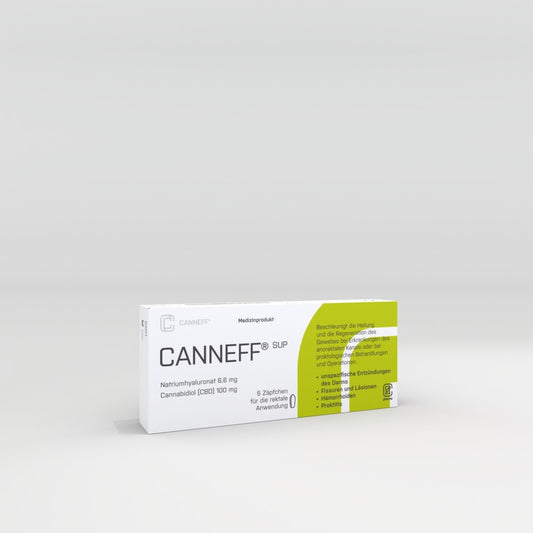
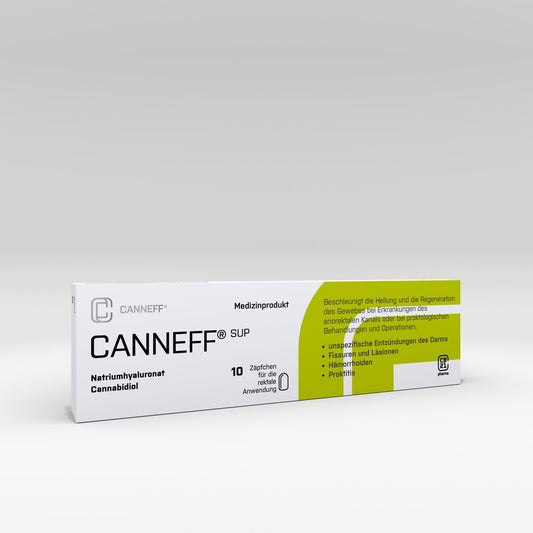
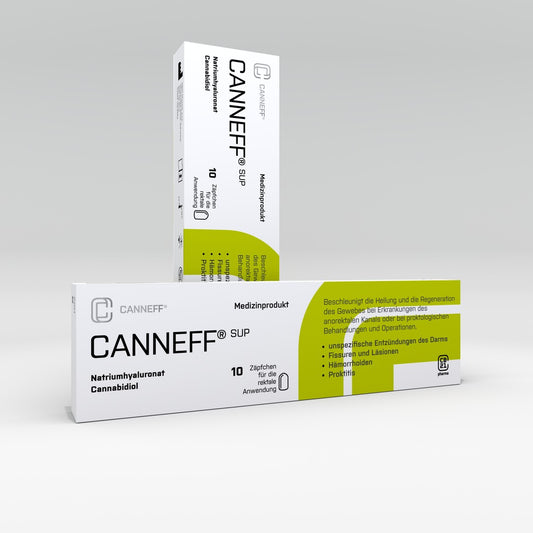
The treatment of hemorrhoids depends on the severity of the hemorrhoid symptoms. Mild swelling can be relieved with cooling sitz baths or anti-inflammatory ointments. Herbal ingredients like witch hazel or horse chestnut support healing. CANNEFF® suppositories, which contain soothing ingredients, can reduce swelling and relieve itching. It also helps to change your diet and drink enough fluids to ease bowel movements.
What causes swollen hemorrhoids?
The most common causes of swollen hemorrhoids are:
|
Cause |
Impact on hemorrhoids |
|
Constipation & straining |
Increased pressure on the vascular cushions disrupts blood outflow. |
|
Prolonged sitting |
Reduced venous return promotes congestion. |
|
Pregnancy |
Hormonal changes and increased pressure in the pelvic area promote swelling. |
|
Overweight |
More weight means greater strain on the anal area. |
|
Chronic diarrhea |
Repeated irritation from chronic diarrhea leads to inflammation. |
|
Lack of exercise |
Does not support healthy bowel function, which promotes constipation. |
Are swollen hemorrhoids dangerous?
In most cases, swollen hemorrhoids are uncomfortable but not dangerous. However, if severe pain, persistent bleeding, or even strangulation occurs, medical evaluation may be advisable. In advanced cases, an anal thrombosis can develop, where a blood clot forms. This can be very painful and should be treated medically.
How long does it take for swelling from hemorrhoids to go down?
The duration of healing depends on the cause of the hemorrhoids and the form of treatment. Minor swelling can subside within a few days if appropriate measures are taken. However, with ongoing strain or untreated inflammation, healing can take several weeks. Read more here about hemorrhoid treatment.
Can swollen hemorrhoids heal on their own?
Mild swelling can subside on its own if the trigger is eliminated. Dietary changes, exercise, and improved toilet hygiene support the healing process. However, untreated hemorrhoids can enlarge and progress to later stages, which are then more difficult to treat. Read more here about hemorrhoid treatment or about hemorrhoid stages.
Which home remedies help with swollen hemorrhoids?
Some home remedies have proven effective for swollen hemorrhoids:
|
Home remedies |
Effect |
|
Sitz baths with chamomile or oak bark |
Anti-inflammatory, relieves itching. |
|
Cold compresses with witch hazel |
Has a decongestant and soothing effect. |
|
Aloe vera gel |
Moisturizing, reduces skin irritation. |
|
High-fiber diet |
Promotes soft stools, reduces straining. |
|
Fluid intake (at least 2 liters/day) |
Supports healthy digestion. |
When should I see a doctor for swollen hemorrhoids?
Swollen hemorrhoids are uncomfortable but usually harmless. With the right treatment for hemorrhoids – from home remedies to medication to targeted exercise – the symptoms of hemorrhoids can be alleviated. Early adjustment of lifestyle habits can help prevent hemorrhoids from developing or worsening. Read more here about preventing hemorrhoids. If pain or even bleeding occurs, medical evaluation is advisable to avoid complications. A doctor visit for hemorrhoids is recommended if:
-
The swelling is very painful or does not go down.
-
Bleeding occurs regularly or is very severe.
-
There is a hemorrhoid prolapse that no longer retracts on its own.
-
Additional symptoms such as fever or pus formation occur.
Are there medications for swollen hemorrhoids?
There are various over-the-counter and prescription medications for treating swollen hemorrhoids. Ointments with anti-inflammatory ingredients (e.g., hydrocortisone) can relieve symptoms. Local anesthetics like lidocaine help against pain and itching. CANNEFF® suppositories are a natural alternative to reduce swelling and irritation. In advanced cases, sclerotherapy or rubber band ligation may be necessary. Read more here about the treatment of hemorrhoids or about hemorrhoid surgery.
Can exercise help reduce swollen hemorrhoids?
Regular exercise promotes circulation and supports digestion, which positively affects hemorrhoids. Especially suitable are:
|
Exercise |
Benefits for hemorrhoids |
|
Walking |
Promotes bowel activity, reduces pressure in the pelvic area. |
|
Swimming |
Gentle on the joints, improves circulation. |
|
Yoga & pelvic floor training |
Strengthens the muscles and prevents straining during bowel movements. |
Heavy physical exertion or intense strength training can increase the pressure on hemorrhoids and worsen the swelling.