

Which herbal remedies help with marisken?
Herbal remedies can help alleviate the symptoms of marisken, reduce inflammation, and promote skin regeneration. Particularly effective are anti-inflammatory, wound-healing, and soothing plant extracts that can be used as sitz baths, ointments, or teas.
Proven herbal remedies for marisken
Chamomile (Matricaria chamomilla)
Effect: Anti-inflammatory, antibacterial, soothing
Application: Sitz baths with chamomile tea or chamomile extract help relieve itching and irritation. Chamomile ointments soothe irritated skin.
Oak bark (Quercus robur)
Effect: Astringent (contracting), anti-inflammatory, antibacterial
Application: Sitz baths with oak bark extract can reduce swelling and strengthen the skin.
Witch hazel (Hamamelis virginiana)
Effect: Itch-relieving, anti-inflammatory, hemostatic
Application: Witch hazel ointments or tinctures can help with itching and mild bleeding.
Aloe Vera
Effect: Moisturizing, wound-healing, cooling
Application: Direct application of aloe vera gel soothes the skin and promotes healing.
Calendula (Calendula officinalis)
Effect: Wound-healing promoting, anti-inflammatory
Application: Calendula ointments help reduce irritation and mild inflammation.
St. John's Wort oil (Hypericum perforatum)
Effect: Pain-relieving, wound-healing, anti-inflammatory
Application: Gentle application to irritated skin areas promotes regeneration.
Tea tree oil (Melaleuca alternifolia)
Effect: Antiseptic, anti-inflammatory, itch-relieving
Application: Applied diluted (with carrier oil), it can help against bacterial colonization and inflammation.
Herbal sitz baths to support healing
Regular sitz baths with chamomile, oak bark, or witch hazel help relieve symptoms such as itching, irritation, or mild inflammation. The recommended duration is about 10–15 minutes with lukewarm water.
Natural supplements for care
Soft toilet paper or cleaning with water: Prevents mechanical irritation.
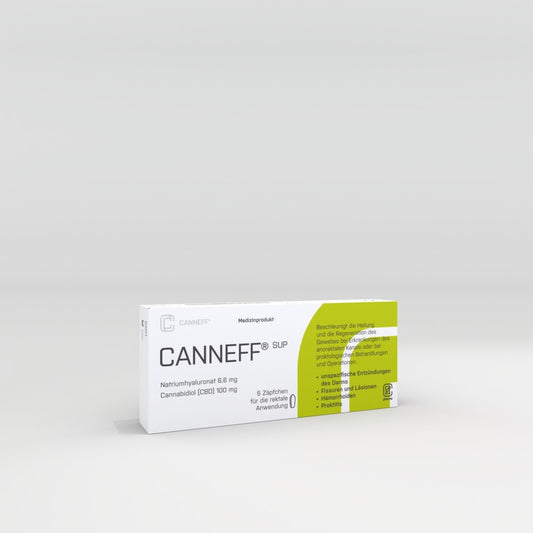
CANNEFF® SUP rectal suppositories with CBD & hyaluronic acid: CANNEFF® SUP supports healing and has anti-inflammatory effects. Read more here about the treatment of skin tags with suppositories.
Fiber-rich diet & adequate hydration: Promotes soft stools and prevents mechanical strain from straining.
Herbal remedies can be a useful complement to the symptomatic treatment of skin tags. Those suffering from persistent symptoms should consider a proctological examination to rule out other causes of skin tags.
Are herbal ointments an alternative to medical treatment?
Herbal ointments can be a useful addition to the medical treatment of skin tags, especially for relieving itching, inflammation, and skin irritation. Ingredients like witch hazel, chamomile, or calendula have soothing and wound-healing effects. For mild symptoms, they can help alleviate skin tag symptoms. However, if symptoms persist or are severe, if there are repeated inflammations or bleeding, a proctological examination should be conducted, as in some cases medical therapy or surgery may be necessary. Read more here about the skin tag surgery, or about alternative treatments for skin tags.
Which herbs are suitable for sitz baths for skin tags?
For sitz baths for skin tags, anti-inflammatory and skin-soothing herbs such as chamomile, oak bark, witch hazel, marigold, and sage are suitable. Chamomile and marigold have wound-healing and soothing effects, while oak bark and witch hazel have astringent properties that reduce swelling. Sage acts as an antibacterial and can relieve skin irritation. A sitz bath with these herbs promotes healing and alleviates symptoms such as itching or anal burning.
How effective is chamomile in treating skin tags?
Chamomile is a proven remedy for supportive treatment of skin tags, as it has anti-inflammatory, wound-healing, and soothing effects on irritated skin. Its essential oils, especially bisabolol and flavonoids, reduce irritation, inhibit bacterial growth, and promote skin regeneration.
Forms of chamomile application for skin tags
Sitz baths: A 10–15 minute sitz bath with chamomile extract or chamomile flowers can relieve inflammation and reduce itching.
Chamomile tea compresses: A cloth soaked in cooled chamomile tea can be gently applied to the affected area to soothe the skin.
Chamomile ointments or creams: These help to keep the skin moist and reduce irritation.
Chamomile can noticeably relieve Marisken symptoms such as itching, swelling, or irritation. However, it does not replace medical treatment for severe or inflamed Marisken. In combination with gentle anal hygiene, a fiber-rich diet, and moisturizing care products like CANNEFF® SUP suppositories, chamomile can support healing and help prevent discomfort.
Can plant oils help soothe Marisken?
Yes, plant oils can help soothe Marisken because they have skin-caring, anti-inflammatory, and moisturizing properties. Oils with soothing and regenerating ingredients that protect the sensitive skin in the anal area and relieve irritation are especially suitable.
Suitable Plant Oils for Marisken
Coconut Oil – Acts antibacterial, moisturizing, and anti-inflammatory. It can help reduce itching and keep the skin supple.
Jojoba Oil – Supports skin regeneration, moisturizes, and soothes irritated skin.
Calendula Oil (Marigold Oil) – Has strong wound-healing and anti-inflammatory properties, ideal for relieving irritation.
Almond Oil – Especially mild and skin-friendly, helps soothe dry and irritated skin.
Lavender Oil – Has antiseptic properties and can help reduce inflammation.
Witch Hazel Oil – Acts astringently (tightening) and anti-inflammatory, which can relieve swelling and itching.
Application
Apply a few drops of the oil directly to cleansed skin and gently massage in. Alternatively, soak a cotton pad with oil and carefully place it on the affected area. In combination with CANNEFF® SUP suppositories or sitz baths, plant oils can support healing.
Effectiveness and Limitations
Herbal oils can help relieve itching, dryness, and mild irritation but do not replace medical treatment for severe inflammation, bleeding, or persistent symptoms. They are a good complement to gentle anal hygiene and can help keep the skin supple and resilient. Read more here about the alternative treatment of Marisken.
Are there scientific studies on herbal remedies for Marisken?
Currently, there are few specific scientific studies investigating the effectiveness of herbal remedies specifically for Marisken. However, some herbal preparations, such as witch hazel, are used to relieve anal discomfort due to their known anti-inflammatory and astringent properties. The evidence is mainly based on traditional uses and general knowledge of treating skin inflammations.
How are herbal remedies used for inflamed Marisken?
Herbal remedies can effectively soothe inflamed Marisken and support healing. Sitz baths with chamomile, oak bark, or witch hazel have anti-inflammatory effects and promote blood circulation. To prepare, pour hot water over the herbs, strain, and use the sitz bath for 10–15 minutes. Herbal ointments with calendula, witch hazel, or aloe vera relieve itching and protect the skin. After cleansing, apply the ointment thinly to soothe the skin. Herbal oils such as St. John's wort, calendula, or coconut oil have nourishing and antibacterial properties and can be gently massaged in. Compresses with chamomile tea or witch hazel extract help specifically against irritations. Gentle hygiene, a fiber-rich diet, and avoiding mechanical irritation further support healing. If symptoms persist, medical advice should be sought.
Can herbal remedies also act preventively against skin tags?
Yes, herbal remedies can act preventively against skin tags by promoting skin elasticity and preventing inflammation. Sitz baths with chamomile or oak bark strengthen the skin barrier, while witch hazel or calendula ointments reduce irritation. Herbal oils like St. John's wort or coconut oil keep the skin supple and prevent mechanical irritation. A fiber-rich diet with flaxseed or psyllium husks supports soft stool consistency and prevents straining, which can promote skin tags.
How long does the treatment of skin tags with herbal remedies take?
The treatment of skin tags with herbal remedies can take several weeks depending on the symptoms. Sitz baths with chamomile or oak bark, anti-inflammatory ointments with witch hazel or calendula, as well as herbal oils like St. John's wort or coconut oil gradually relieve skin tag symptoms. Regular use for at least two to four weeks is necessary to achieve noticeable improvements. If symptoms persist, medical evaluation should be sought.
Are herbal remedies also suitable for sensitive skin?
Yes, many herbal remedies are suitable for sensitive skin, especially chamomile, calendula, and witch hazel, which have soothing and anti-inflammatory effects. However, some natural substances, such as essential oils, can cause irritation. Therefore, a skin compatibility test before use is recommended.