

Which ointments work best against hemorrhoids?
The range of hemorrhoid ointments is large. Depending on the symptoms of hemorrhoidal disease, there are various active ingredients that have anti-inflammatory, pain-relieving, or decongestant effects. The most effective preparations include:
|
Type of ointment |
Active ingredients |
Effect |
|
Local anesthetic ointments |
Lidocaine, cinchocaine, benzocaine |
Numb the skin and relieve pain. |
|
Anti-inflammatory ointments |
Cortisone, witch hazel, bufexamac |
|
|
Tannin-containing creams |
Oak bark extract, tannin |
Promote wound healing and reduce moisture. |
|
Circulation-promoting ointments |
Horse chestnut extract, red vine leaf |
Strengthen the vessel walls and improve blood circulation. |
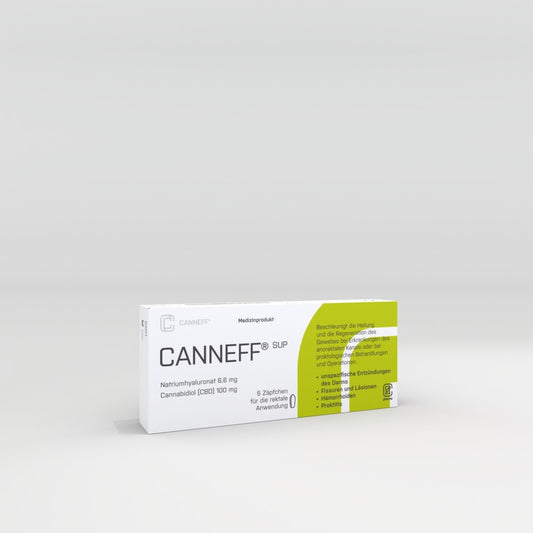
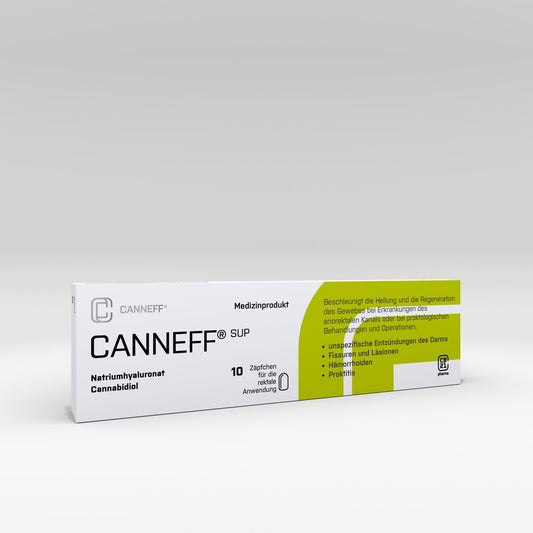
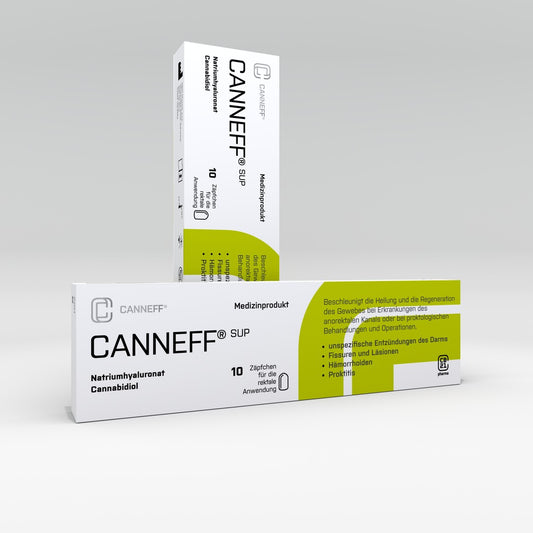
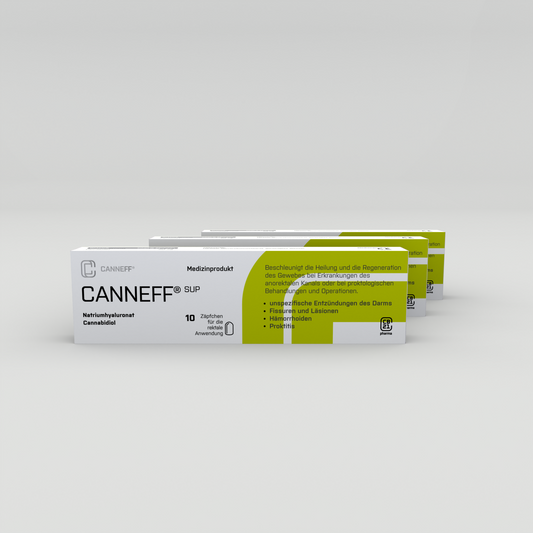
Hemorrhoid ointments can relieve symptoms but do not eliminate the cause of hemorrhoids. Additionally, using CANNEFF® SUP suppositories for hemorrhoids can be useful, as they support healing and have anti-inflammatory effects.
Are over-the-counter or prescription hemorrhoid ointments better?
Over-the-counter ointments are sufficient for many sufferers, especially with mild to moderate symptoms. They often contain natural active ingredients or mild local anesthetics.
Prescription ointments, on the other hand, contain stronger active ingredients like cortisone, which specifically combat inflammation. However, these preparations should only be used for a short time, as they can thin the skin over the long term. Read more about various therapy options in the blog post on treatment of hemorrhoids.
How often should hemorrhoid cream be applied?
The frequency of application depends on the product. Generally, it is recommended:
-
2 to 3 times daily apply a thin layer to the affected area.
-
After each bowel movement to apply again.
-
For internal hemorrhoids, the cream can be carefully applied with an applicator.
It is important to follow the package instructions and not use cortisone creams for longer than 7 days.
Can hemorrhoid cream be used during pregnancy?
During pregnancy, only creams with herbal or mild active ingredients should be used. Especially recommended are:
|
Recommended creams during pregnancy |
Active ingredients |
|
Witch hazel creams |
Witch hazel extract |
|
Chamomile creams |
Chamomile extract |
|
Tannin-containing creams |
Oak bark, tannin |
|
CANNEFF® SUP suppositories |
Natural CBD formula for relief with CANNEFF® SUP suppositories |
Cortisone-containing or strongly numbing creams should only be used after consulting a doctor.
Which active ingredients are contained in hemorrhoid creams?
The most common active ingredients are:
-
Lidocaine and benzocaine → Numbing for pain relief
-
Witch hazel and horse chestnut → Herbal, anti-inflammatory
-
Cortisone (hydrocortisone, prednisolone) → Reduces inflammation
-
Zinc oxide and tannin → Promote healing
-
Heparin and horse chestnut extract → Promote blood circulation
Are there natural or herbal alternatives to hemorrhoid creams?
Yes, some herbal preparations can help with mild symptoms. Alternatives include:
|
Herbal remedy |
Effect |
|
Witch hazel |
Anti-inflammatory, reduces swelling |
|
Aloe Vera |
Cooling, promotes healing |
|
Horse chestnut extract |
Strengthens the vein walls |
|
Chamomile cream |
Soothes irritated skin |
Home remedies such as sitz baths with chamomile or oak bark can support the effect of the ointments. Read more about various therapy options in the blog post on treatment of hemorrhoids.
How long does it take for a hemorrhoid ointment to work?
The first effects are often felt within minutes, especially with ointments containing anesthetic agents. Significant relief usually occurs after 2–3 days. With regular use, symptoms noticeably decrease after 7–10 days. If symptoms do not improve after 14 days, a doctor should be consulted.
What side effects can hemorrhoid ointments have?
Although most ointments are well tolerated, the following side effects may occur:
-
Skin irritation or allergic reactions (Itching, redness)
-
Thinning of the skin with prolonged use of cortisone ointments
-
Burning sensation immediately after application (especially with essential oils)
If severe side effects occur, treatment should be discontinued and a doctor consulted. Early diagnosis facilitates the proper treatment of hemorrhoids and significantly improves the chances of healing. If hemorrhoids remain untreated, surgical removal may be necessary in advanced stages of hemorrhoidal disease. More information can be found in the blog post about hemorrhoid surgery.
Can hemorrhoids be treated with cortisone ointments?
Yes, cortisone creams can effectively reduce inflammation-related swelling and itching. However, they should only be used short-term (max. 7 days) as they can damage the skin in the long run. Better alternatives for long-term treatment are herbal creams or CANNEFF® SUP suppositories, which have anti-inflammatory and healing-promoting effects without side effects.
Which cream is suitable for external and which for internal hemorrhoids?
The choice of cream depends on the type of hemorrhoids:
|
Type of hemorrhoids |
Suitable cream |
|
External hemorrhoids |
Creams with lidocaine, witch hazel, or aloe vera |
|
Internal hemorrhoids |
Creams with applicator (e.g., with cortisone or heparin) |
For internal hemorrhoids, suppositories are also a good alternative as they act directly at the affected site and are easy to use. Hemorrhoid creams are an effective treatment method to relieve symptoms such as itching, pain, and swelling. Over-the-counter creams with herbal ingredients are sufficient for many patients, while stronger preparations with cortisone or local anesthetics can be used short-term. The correct application and choice of cream – depending on the type of hemorrhoids – is crucial for treatment success. If there is no improvement after two weeks, a doctor should be consulted. Read more about various therapy approaches in the blog post on hemorrhoid treatment.