

What physical and psychological symptoms occur during menopause?
Hormonal changes during menopause do not always come with symptoms. While some women hardly notice the changes, others report significant physical and emotional impairments. Menopause is often only recognized when menstruation completely stops. About one-third of women experience severe symptoms, another third moderate symptoms, and the last third have little or no symptoms.
The frequency and intensity of symptoms vary greatly and depend on various factors such as cultural influences, family and social environment, general health, and individual perception. Especially common in peri- and postmenopause are hot flashes and sweating episodes (vasomotor symptoms), which are considered the most important clinical parameters. However, the perception of these symptoms is very individual: while some women feel significantly impaired in their quality of life, others experience only mild or hardly noticeable symptoms.
It is also possible that symptoms are not solely due to hormonal changes but are intensified by other factors such as relationship problems or stress. Therefore, it is important to discuss any symptoms with a gynecologist. In our blog post, we explain in detail which symptoms can occur.
Vaginal dryness
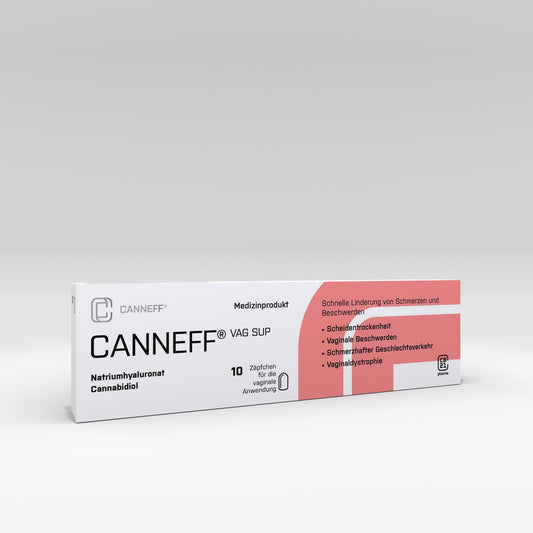
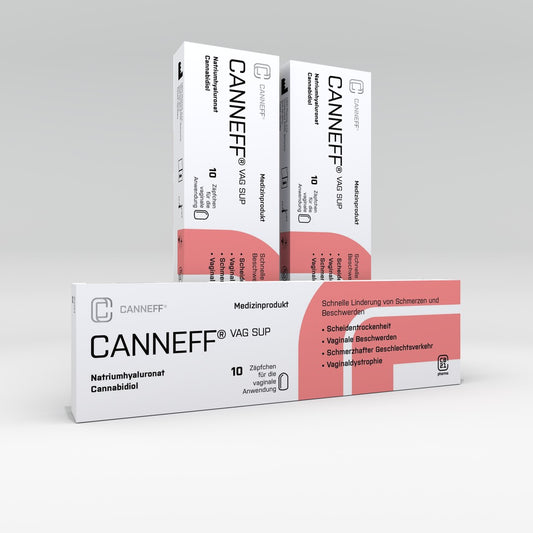
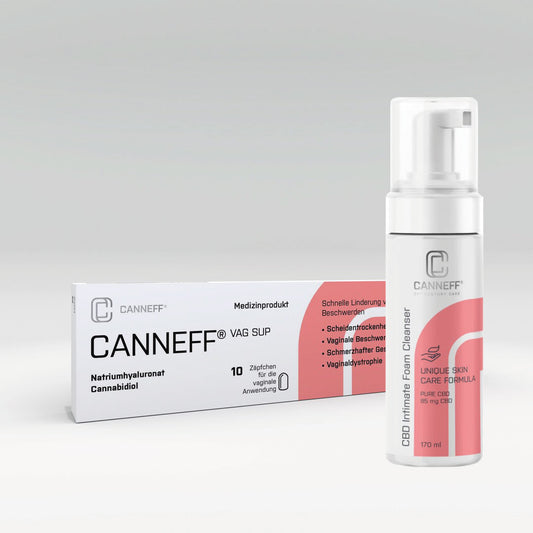
Due to the decrease in estrogen, the mucous membrane in the vagina breaks down, leading to vaginal dryness. This phenomenon is also called vaginal atrophy and ultimately causes the loss of the vagina’s lubricating and gliding properties. Very often, this results in pain during intercourse, tears and injuries, as well as a sore vagina and recurring infections due to the missing protective barrier. CANNEFF VAG SUP CBD suppositories with hyaluronic acid can improve lubrication, prevent pain, support healing of small injuries and tears, and strengthen the vaginal wall.
Menstrual cycle complaints
Irregular menstrual bleeding and changed bleeding patterns are common during menopause. Typical cycle disorders include oligomenorrhea (extended cycle of 35 to 90 days) and polymenorrhea (shortened cycle under 25 days). Hypomenorrhea means low blood loss, while hypermenorrhea is over 80 ml per cycle. Menorrhagia describes prolonged bleeding over eight days. Unexpected bleeding outside the cycle (metrorrhagia) can also occur. The complete cessation of menstruation, amenorrhea, often marks the end of menopause.
Weight gain
Many women notice changes in body shape during menopause, especially an increase in the abdomen, waist, and breasts. These changes are often due to the body's decreasing energy consumption with age.
Hot flashes and heavy sweating
About half of women report hot flashes during menopause. These usually occur suddenly and last only a few seconds up to five minutes. They often start in the chest area and spread over the neck and face. Hot flashes are often accompanied by skin redness and sweating. Products like CANNEFF VAG SUP CBD suppositories with hyaluronic acid have shown positive effects on hot flashes in menopause in studies.
Palpitations and dizziness
Hot flashes can be accompanied by palpitations and dizziness. These symptoms are usually harmless but should be medically evaluated if they occur repeatedly, regardless of hot flashes.
Sleep disturbances during menopause
Sweating and palpitations or rapid heartbeat during hot flashes can disrupt sleep and cause severe fatigue. An absorbent towel or spare bedding near the bed can help. Sleep rituals, exercise, and herbal remedies like valerian support restful sleep. CANNEFF VAG SUP CBD suppositories have shown improvement in physiological menopausal symptoms, including sleep disturbances during menopause, in clinical studies.
Mood swings during menopause
Hormonal changes during menopause can lead to mood swings. Additionally, life changes often contribute to emotional challenges. Mild mood swings can often be alleviated with herbal remedies like St. John's Wort.
Inner restlessness and nervousness during menopause
Inner restlessness and nervousness are common symptoms during menopause, often caused by hormonal fluctuations. They manifest as tension, sleep disturbances, and irritability. Relaxation techniques, exercise, and a balanced diet can help alleviate symptoms. Medical advice is recommended for severe symptoms. CANNEFF VAG SUP CBD suppositories have shown improvement in physiological menopausal symptoms, including inner restlessness and nervousness during menopause, in clinical studies.
Urinary incontinence during menopause
Estrogen deficiency can lead to thinning of mucous membranes and weakening of the pelvic floor, which promotes urinary incontinence. Pelvic floor exercises and estrogen-containing creams can effectively relieve symptoms. In severe cases, surgical intervention to strengthen the pelvic floor may be considered. Additionally, a urinary tract infection should be ruled out.
Loss of libido during menopause
Hormonal fluctuations and physical changes during menopause often lead to loss of libido. Vaginal dryness and other symptoms can further reduce sexual desire. Lubricants and local estrogen therapies improve comfort during intercourse. Besides hormonal causes, psychological factors also play a role. Open communication with the partner and therapeutic support can help maintain sexual intimacy in the relationship.
Joint complaints during menopause
With increasing age and declining estrogen levels, muscle mass decreases, often leading to joint pain. Estrogen deficiency also impairs blood circulation and reduces collagen production, making joints less protected. Regular exercise and targeted training strengthen muscles and joints and can effectively relieve symptoms. CANNEFF VAG SUP CBD suppositories have shown improvement in physiological menopausal symptoms, including joint complaints during menopause, in clinical studies.
Hair and skin problems during menopause
The decline in estrogen can lead to thinning scalp hair and increased unwanted hair growth on the body. Stabilizing the hormonal balance can help reduce hair loss and regulate hair growth.
Osteoporosis during menopause
After menopause, estrogen deficiency increases the risk of osteoporosis, which can lead to fragile bones. Preventive measures such as exercise and targeted therapies can help maintain bone density.
Bleeding during menopause
Irregular menstruation is common during menopause. However, bleeding after menopause should be medically evaluated as it may indicate serious conditions.
Depression during menopause
Depression is as common during menopause as in other life phases. However, women with previous depression have a higher risk of relapse. Mild mood swings can often be alleviated with herbal remedies like St. John's Wort, while major depression requires professional treatment. CANNEFF VAG SUP CBD suppositories have shown improvement in physiological menopausal symptoms, including depressive moods, in clinical studies.
What influence do life changes have on symptoms during menopause?
Life changes can have a significant impact on the intensity and perception of symptoms during menopause. Physical changes such as hormonal fluctuations and typical menopausal symptoms often coincide with other major life adjustments. These include changes in partnership, family obligations like children moving out, professional challenges, or transition into retirement. These psychosocial stresses can trigger stress, anxiety, and insecurity, which can intensify physical menopausal symptoms such as hot flashes, sleep disturbances, or inner restlessness and nervousness.
Women who perceive these changes as loss or limitation tend to suffer more from symptoms such as depressive moods, irritability, or inner restlessness. On the other hand, positive life changes, such as setting new personal goals or focusing on one’s own well-being, can help better cope with menopause and alleviate symptoms. Emotional and mental attitudes toward these changes therefore play a crucial role in how menopausal symptoms are experienced and processed.
What opportunities and potentials exist despite menopausal symptoms?
The menopause also offers the chance to redesign one’s life. This phase can be used to focus more on personal needs, promote physical and mental health, and develop new goals. With a positive outlook, the changes can be seen as potential for personal growth.
Can CANNEFF CBD suppositories with hyaluronic acid help with physiological menopausal symptoms?
The CANNEFF VAG SUP CBD suppositories provide versatile relief for various vaginal complaints and conditions. They are especially effective for painful intercourse and help treat vaginal dryness, itching, and symptoms caused by menopause or hormonal changes, chemotherapy, or contraceptives. Additionally, the suppositories support healing of atrophic or dystrophic vaginal mucosa, especially after pelvic radiation therapy or childbirth.
They also help relieve symptoms after vaginal infections or yeast infections and promote healing after surgeries or injuries, such as after removal of cervical tissue or conizations. For specific lesions caused by radiation therapy or injuries to the cervix from foreign bodies or cervical cancer, the suppositories also provide effective support.
Furthermore, they reduce bleeding that can occur during treatment of cervicitis and aid healing of vaginal wounds after surgeries or childbirth. Side effects from chemotherapy and hormonal treatment of estrogen-sensitive tumors, such as breast cancer, can also be alleviated by using the suppositories.

What do clinical studies show about CANNEFF VAG SUP in women with menopausal symptoms?
A comprehensive investigation of the CANNEFF VAG SUP CBD suppositories for relieving menopausal symptoms included a pilot study and a subsequent clinical study. The pilot study involved 30 women with an average age of 64.4 years who suffered from menopausal and postmenopausal symptoms as well as sexual problems. Over 30 days, participants used the CANNEFF VAG SUP CBD suppositories daily. Effects were measured using the Menopause Rating Scale (MRS), the Manchester Short Assessment of Quality of Life (MANSA), and blood tests to check hormone levels and the CA-125 marker. The results were promising: after 30 days, women reported a significant reduction in symptoms, especially hot flashes, sleep disturbances, inner restlessness, depressive moods, memory problems, and joint pain. Quality of life also improved according to MANSA scores, with participants reporting better psychosocial functioning and increased self-confidence.
The subsequent clinical study was interventional, placebo-controlled, and double-blind. It included 50 menopausal women who received either CANNEFF VAG SUP CBD suppositories or a placebo for 30 days. Symptoms were again assessed using MRS and MANSA scales and blood tests. The results confirmed the positive effects of the pilot study: women using the CBD suppositories experienced a significant reduction in hot flashes, sleep disturbances, depression, and joint pain, as well as moderate improvement in quality of life. In contrast, the placebo group showed no significant symptom changes, and the minimal quality of life improvement was attributed to the placebo effect.