

Which vaginal suppositories help with bacterial infections of the vagina?
In bacterial infections of the vagina, vaginal suppositories with antibacterial active ingredients are mainly used. Particularly frequently, Metronidazole are used, which specifically target anaerobic bacteria that disrupt the balance of the vaginal flora in bacterial vaginosis. Also Clindamycin suppositories are a common alternative, especially in mixed infections. Both medications effectively reduce the number of germs and relieve symptoms such as discharge, burning, or unpleasant odor. Additionally, lactic acid-containing suppositories can be used to restore the disturbed vaginal environment after antibiotic treatment. The targeted rebuilding of the physiological lactobacillus flora prevents relapses and stabilizes the pH value. It is important to use the suppositories for the entire recommended period, even if symptoms disappear early, to avoid a recurrence of the infection.
|
Indication |
Type of active ingredient |
Example preparations |
Treatment duration |
|
Bacterial infection |
Antibiotic (e.g., metronidazole) |
Arilin®, Clindamycin AL® |
5–7 days |
|
Fungal infection |
Antifungal (e.g., clotrimazole) |
Canesten®, Gyno-Pevaryl® |
1–3 days |
|
Disturbed vaginal flora |
Lactic acid, probiotics |
Vagisan® lactic acid, Gynophilus® |
7–14 days |
|
Mucous membrane care/regeneration |
Hyaluronic acid + CBD |
7–14 days (short-term) |
What do suppositories with lactic acid do for a disturbed vaginal flora?
Suppositories with lactic acid or lactobacillary cultures play a crucial role in regenerating a disturbed vaginal flora. They do not primarily act against pathogens but create the conditions for a healthy vaginal microbiota. Lactic acid lowers the pH value of the vagina and creates an acidic environment that promotes the growth of beneficial lactobacilli while suppressing pathogenic germs. In women whose vaginal flora is disturbed by antibiotics, hormonal fluctuations, or mechanical irritations, lactic acid suppositories can help rebuild the natural protective barrier of the mucous membrane. Especially in cases of recurrent bacterial vaginosis, but also after fungal infections or during menopause, their use is a sensible preventive measure.
When should vaginal suppositories be used – in the morning or evening?
Vaginal suppositories should generally be used in the evening before going to bed are applied. This recommendation is based on body position: when lying down, the suppository remains longer in the vagina, can fully dissolve, and distribute the active ingredients evenly. If the suppository is inserted in the morning or during the day, there is a risk that the substance may leak out prematurely due to upright walking or movement, reducing its effectiveness. Additionally, nighttime vaginal discharge can be hygienically absorbed with a simple panty liner. For certain preparations, twice-daily use may also be recommended – the exact application should always follow the package leaflet or medical advice.
How do suppositories for fungal infections differ from those for bacterial infections?
Suppositories for fungal infections contain antifungals, which specifically target yeast fungi like Candida albicans are effective. Common active ingredients are Clotrimazole, Miconazole or Nystatin. These medications act fungicidally, meaning they kill fungi, and typically relieve accompanying itching and burning after just a few applications. In bacterial infections, however, antibiotic active Vaginal suppositories are used, for example, with Metronidazole or Clindamycin, which primarily act against anaerobic bacteria. While antifungals usually work locally, some antibiotics also have a systemic component. Additionally, the duration of use and the pH value of the vaginal environment, which the preparations influence, differ. To choose the right therapy, a microbiological examination by a gynecologist is recommended.
Can CANNEFF® vaginal suppositories with CBD and hyaluronic acid promote healing?
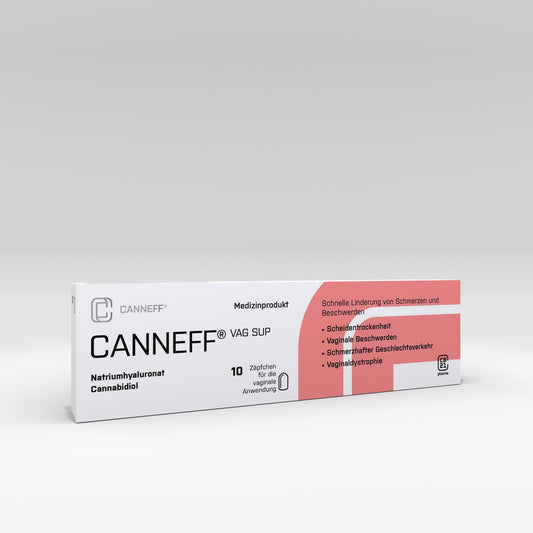
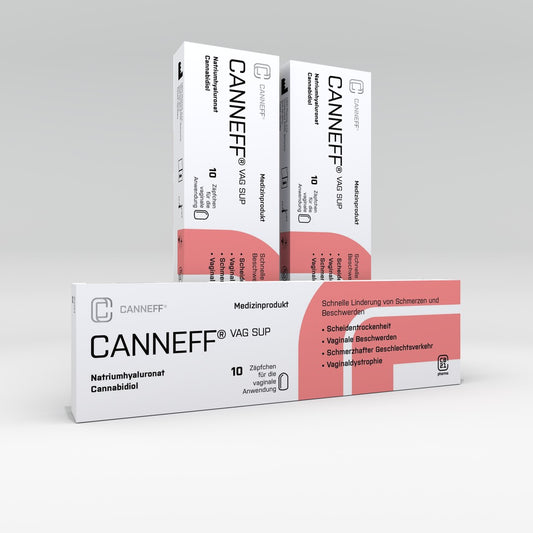
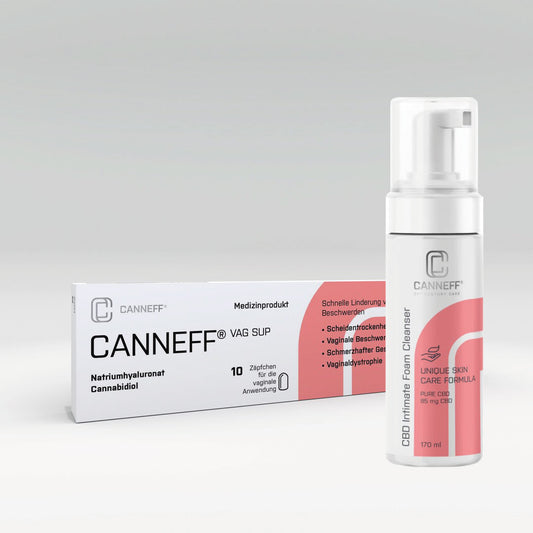
CANNEFF® vaginal suppositories contain a unique combination of CBD (cannabidiol) and Hyaluronic acid, which have a caring and healing-promoting effect, especially in inflammatory and irritative conditions of the vaginal mucosa. CANNEFF® acts anti-inflammatory, soothing, and antioxidative. CANNEFF® provides intensive moisture supply and regeneration of the vaginal epithelium. These properties make CANNEFF® especially valuable in the aftercare of colpitis, in vaginal dryness, mucosal tears, or hormonally induced changes, such as during menopause. The application is also suitable as a complement to antibiotic or antifungal treatment to strengthen the mucosal barrier and sustainably relieve symptoms.
How long does therapy with vaginal suppositories last?
The duration of therapy with vaginal suppositories depends on the active ingredient and the severity of the infection. Acute yeast infections can often be treated with clotrimazole preparations within 1 to 3 days are treated. Bacterial infections, on the other hand, require a longer application period, usually 5 to 7 days, depending on the preparation. Lactic acid treatments or nourishing suppositories like CANNEFF® are often used over a period of 7 to 14 days recommended, but can also be used in courses over several weeks if necessary. It is crucial not to stop the therapy prematurely, even if the symptoms have already subsided, to avoid relapses.
What side effects can occur with suppositories?
Vaginal suppositories are considered a well-tolerated form of administration because the active ingredients act locally and directly at the affected site. However, side effects can occur in individual cases. These include local irritation, Burning, Itching or an increased feeling of discharge immediately after insertion. Some women also report a mild intolerance to preservatives or carrier oils in the products. In case of allergic reactions or persistent complaints, use should be discontinued and medical advice sought. In very rare cases, vaginal yeast overgrowth can occur after antibiotic suppositories, requiring targeted follow-up treatment.
What should be considered when using vaginal suppositories?
The correct use of vaginal suppositories is crucial for therapeutic success. The suppository should be inserted as deeply as possible into the vagina, ideally while lying down and with clean hands. It is recommended to rest for at least 30 minutes immediately after insertion, but better to apply before going to bed. During treatment, tampons should be avoided and panty liners used instead to hygienically catch any leaking active ingredients. Intimate washes, soaps, and perfumed products should be avoided during this phase as they can further burden the vaginal environment. During sexual activity, depending on the active ingredient, a temporary pause should be observed or latex contraceptives avoided, as certain preparations can impair the tear resistance of condoms.
Which over-the-counter suppositories are useful for vaginal inflammation?
Over-the-counter suppositories can be a first, low-threshold measure for mild to moderate complaints. For fungal infections, clotrimazole-containing preparations are the most commonly used remedies and freely available in pharmacies. For milieu regeneration, lactic acid suppositories or probiotic preparations also available over the counter. Herbal suppositories such as CANNEFF® with CBD and hyaluronic acid They are suitable for mucous membrane care, inflammation reduction, and moisture supply – ideal for irritation or hormonally induced colpitis. However, it remains important: if symptoms do not subside within a few days or worsen, medical evaluation is essential.
How does hyaluronic acid in suppositories help with vaginal dryness and inflammation?
Hyaluronic acid is a natural component of the skin and mucous membranes and has an exceptional ability to bind water. When used in vaginal suppositories, it provides moisture, promotes regeneration, and strengthens the barrier function of the mucous membrane. Especially in cases of vaginal dryness, which often occurs during menopause or after antibiotic treatments, hyaluronic acid can soothe the mucous membrane, help micro-injuries heal faster, and restore the body's natural protective function. In combination with other active ingredients – such as CBD in CANNEFF® – the effect can be even enhanced. This synergistic combination promotes both regeneration and anti-inflammatory protection of the vaginal flora.