

What symptoms occur with lichen sclerosus?
Lichen sclerosus usually develops gradually and often goes unnoticed in early stages. The first signs are mild itching, dry skin, and whitish discolorations in the affected area. As the disease progresses, the following symptoms appear:
|
Symptom |
Description |
Affected body areas |
|
Itching |
Often intense, sometimes unbearable itching, especially at night. |
Genital area, anus, thighs |
|
Burning & pain |
Especially during intercourse or urination. |
Vaginal area, penis, urethra |
|
Skin hardening |
The skin becomes parchment-like, brittle, and less elastic. |
Labia, foreskin, glans, anus |
|
Whitish spots |
Milky-white, confluent spots on the skin. |
Genital and perianal area |
|
Tears & bleeding |
Fragile skin leads to frequent small tears. |
Vulva, penis, anus |
|
Shrinkage of skin areas |
Regression of the labia or foreskin narrowing. |
Vulva, penis, urethra |
How does lichen sclerosus manifest in women?
Women are significantly more often affected than men, especially after menopause. Lichen sclerosus usually occurs on the vulva, clitoral hood, and labia but can also spread to the perianal region.
Typical symptoms in women:
-
Whitish skin changes on the vulva, often accompanied by redness
-
Itching that leads to scratch injuries and inflammation
-
Shrinkage of the labia, altering the anatomy of the vulva
-
Pain during intercourse (dyspareunia) due to scarred, sensitive skin
-
Problems urinating if the urethra is affected
-
Increased susceptibility to infections, as the damaged skin offers little resistance to bacteria and fungi
If untreated, the condition can cause the clitoris to disappear under adhesions, the vaginal opening to narrow, and scarring to permanently alter the skin.
What symptoms does lichen sclerosus cause in men?
In men, lichen sclerosus mainly affects the glans, foreskin, and penile shaft. The most common consequence is an acquired foreskin narrowing (phimosis), as the foreskin skin hardens and loses its elasticity.
Typical symptoms in men:
-
Whitish, hardened spots on the foreskin or glans
-
Pain or burning during urination if the urethra is affected
-
Difficulty retracting the foreskin, leading to tears and inflammation
-
Painful erections because the hardened skin is no longer stretchable
-
Increased susceptibility to inflammation (balanitis) under the foreskin
-
Shrinking or deformation of the glans if the disease progresses
In men, lichen sclerosus is the most common cause of acquired phimosis. In severe cases, surgical removal of the foreskin (circumcision) may be necessary to avoid pain and functional limitations.
Can lichen sclerosus cause itching?
Yes, itching is one of the first and most common symptoms. The itching is often intense and occurs in flare-ups, especially at night or after mechanical irritation. Constant scratching causes small injuries, inflammation, and bleeding, which further worsen the disease course.
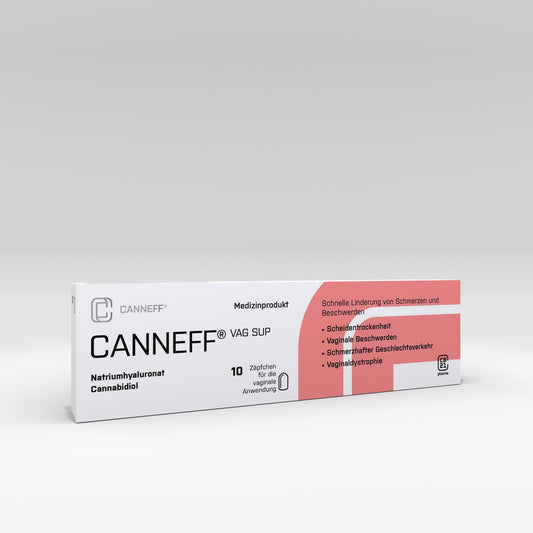
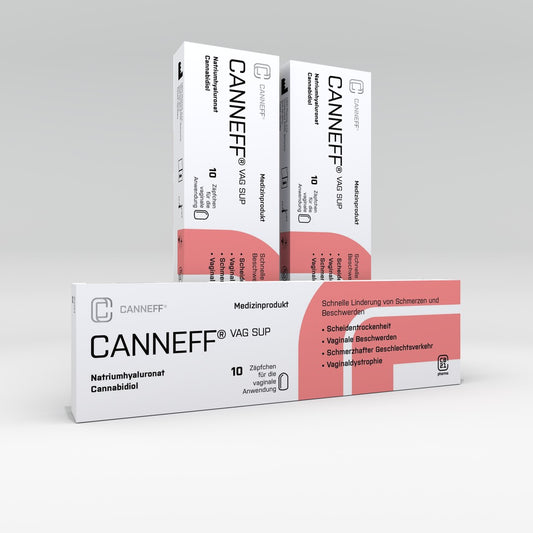
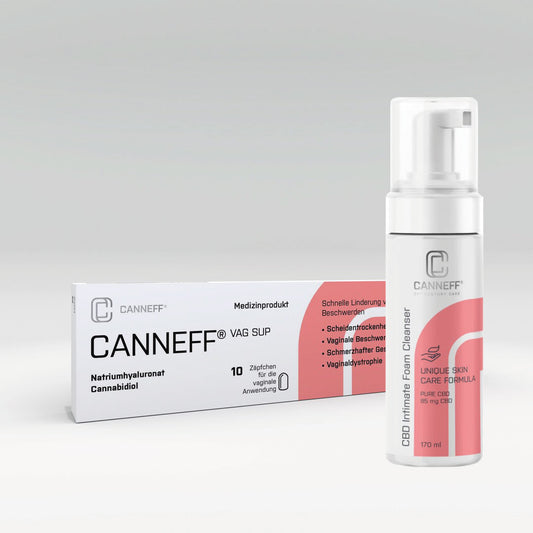
The skin becomes thinner, more cracked, and less resistant to infections due to chronic irritation. Early treatment with anti-inflammatory creams, nourishing ointments, and products like CANNEFF® VAG SUP can help reduce itching and prevent skin lesions.
Why do skin changes occur in lichen sclerosus?
The skin changes are caused by chronic inflammation of the connective tissue layer (dermis). The following factors contribute to the skin changes:
|
Factor |
Effect on the skin |
|
Overactive immune response |
Destroys the body's own skin cells and leads to inflammation. |
|
Reduced collagen production |
The skin becomes thinner and loses its elasticity. |
|
Chronic inflammatory processes |
White spots form due to fibrosis (hardening of connective tissue). |
|
Impaired blood circulation |
The skin receives fewer nutrients and atrophies. |
Can lichen sclerosus cause pain during sex?
Yes, many affected individuals complain of Pain during intercourse (dyspareunia). Causes include:
-
Shrinking of the vaginal opening, making penetration painful
-
Reduced elasticity of the skin due to scarring
-
Microtears and inflammation due to friction
-
Reduced moisture production of the mucous membrane
Products like CANNEFF® VAG SUP, which Hyaluronic acid and cannabidiol (CBD) contained, can help to To increase moisture, regenerate the mucous membrane, and relieve pain.
What are the signs of lichen sclerosus in the early stage?
Lichen sclerosus appears as white, hardened skin areas often accompanied by redness, cracks, or thickening. In advanced stages, adhesions and shrinkage can occur.
What skin changes occur in lichen sclerosus?
The typical skin changes in lichen sclerosus initially manifest as whitish, parchment-like skin that often resembles scar tissue. These altered skin areas appear pale, thin, and slightly shiny, which is due to a disturbed collagen structure and reduced blood flow.
As the disease progresses, the skin becomes increasingly thin and brittle, making it particularly susceptible to small tears and bleeding. Even slight mechanical stimuli such as friction from clothing or touch can injure the sensitive areas, causing pain, inflammation, and itching.
In later stages, scarring and shrinkage of skin structures occur, especially in the genital area. This can cause the labia to shrink, the clitoral hood to adhere, or the vaginal opening to narrow. In men, the foreskin and glans are often affected, which can lead to acquired phimosis.
Additionally, skin hardening with loss of elasticity develops, making the affected skin areas stiffer and less stretchable. This can lead to pain during sexual intercourse, urination, or bowel movements and significantly impair the quality of life of those affected. Early treatment is crucial to slow down or prevent these changes.
The typical changes are:
-
whitish, parchment-like skin
-
thin, brittle skin prone to cracks
-
scarring and shrinkage of skin structures
-
skin hardening with loss of elasticity
Why do scars and shrinkage occur in lichen sclerosus?
Scars form because of chronic inflammation the normal skin structure to be destroyed and is replaced by hardened connective tissue. Scar formation can cause labia shrink, the clitoris disappears under adhesions, or the foreskin on the penis narrows.
A early treatment can help prevent these late effects. CANNEFF® VAG SUP supports the moisture retention and regeneration the mucous membrane and can help, Minimizing scar formation.