

What types of suppositories are used for bladder infections?
Suppositories play a supportive role in the treatment of bladder infections, especially when local measures are needed to relieve symptoms or prevent recurrent infections. Here are the most common types of suppositories used for bladder infections:
Pain-relieving and anti-inflammatory suppositories:
These contain active ingredients such as diclofenac or ibuprofen, which have anti-inflammatory effects and relieve pain. They are often used for acute symptoms to alleviate discomfort.
Vaginal suppositories with lactic acid bacteria:
These suppositories help stabilize the vaginal flora and protect against the colonization of harmful bacteria that can lead to bladder infections. They are especially helpful for recurrent infections.
Hormone-containing suppositories (estrogen):
For women after menopause, hormone-containing suppositories are an option. They strengthen the mucous membranes in the intimate area and reduce the risk of infections.
Suppositories with herbal ingredients:
Natural preparations, such as those with extracts from chamomile, tea tree oil, or aloe vera, offer a soothing effect on irritated mucous membranes and can have anti-inflammatory effects.
Suppositories with CBD and hyaluronic acid:
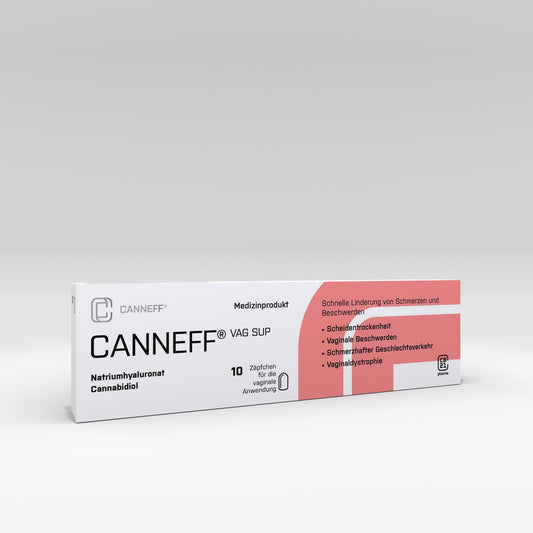
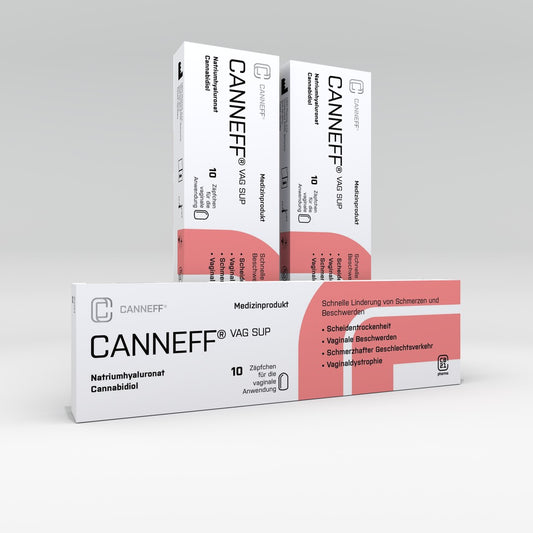
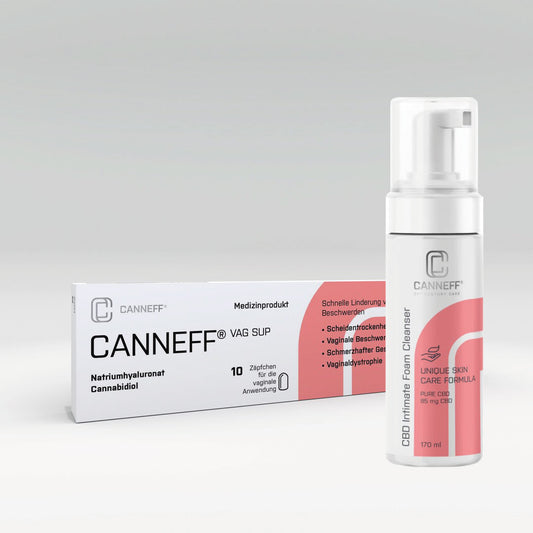
Products like CANNEFF VAG SUP combine the anti-inflammatory effect of CBD with the regenerative property of hyaluronic acid. They support mucous membrane healing and relieve symptoms such as burning and pain.
Antifungal or antibacterial suppositories:
For specific infections, such as those caused by fungi or rare bacterial pathogens, suppositories with antifungal or antibacterial active ingredients can be prescribed.
When are suppositories useful?
Suppositories are especially useful when symptoms in the intimate area need to be relieved locally or when accompanying vaginal infections are present that could promote a bladder infection. They are also suitable for patients who have difficulty taking tablets.
The choice of suppository should always be made in consultation with a doctor to ensure the appropriate therapy for individual symptoms.
How do suppositories work against bladder infections?
Suppositories used for the treatment of bladder infections act locally in the intimate area and exert their effect through special ingredients. They aim to relieve symptoms, regenerate the mucous membranes, and reduce the risk of infections. Here are the mechanisms of action of the different types of suppositories:
Pain relief and anti-inflammatory effect:
Suppositories with anti-inflammatory active ingredients such as diclofenac or ibuprofen reduce local inflammatory reactions and relieve pain often associated with bladder infections. They act quickly because they become active directly in the tissue.
Strengthening of the mucous membranes:
Products like CANNEFF VAG SUP with CBD and hyaluronic acid support the regeneration of the mucous membranes. CBD has anti-inflammatory and pain-relieving effects, while hyaluronic acid hydrates the mucous membranes and strengthens their natural barrier function.
Restoration of vaginal flora:
Vaginal suppositories with lactic acid bacteria promote the balance of the vaginal microflora. A healthy vaginal flora can prevent harmful bacteria from the intestine from reaching the urethra and causing a bladder infection.
Hormonal support:
Suppositories with estrogen strengthen the mucous membrane in the intimate area for women during menopause. They improve blood circulation and the thickness of the mucous membranes, making them less susceptible to infections.
Antibacterial or antifungal effect:
Antiseptic or antibiotic suppositories combat specific pathogens that can cause infections in the intimate area and bladder infections. They target the germs specifically without burdening the entire body.
Relief from irritation:
Suppositories with herbal ingredients, such as chamomile or tea tree oil, soothe irritated mucous membranes, have mild antibacterial effects, and promote healing.
Advantages of suppositories for bladder infections:
Local effect: The active ingredients exert their effect directly at the site of the symptoms.
Protection of the digestive tract: Suppositories bypass the gastrointestinal tract and do not cause side effects there.
Support of therapy: They complement systemic treatments, such as taking antibiotics, and promote faster recovery.
When are suppositories particularly suitable?
Suppositories are especially suitable for:
Chronic or recurrent bladder infections: They strengthen the mucous membrane and prevent new infections.
Accompanying complaints in the intimate area: Dryness, irritations, or pain can be alleviated by suppositories.
Women in menopause: Estrogen-containing or regenerating suppositories can support the mucous membranes.
Patients with antibiotic intolerance: Suppositories offer an alternative treatment option for the symptoms of a bladder infection.
Suppositories should always be used after consulting a doctor to ensure they are optimally tailored to individual complaints.
Are suppositories an effective alternative to oral medications?
Suppositories are not a complete alternative to oral medications for acute bladder infections, as they cannot fight the infection systemically. However, they are an effective supplement or alternative for relieving symptoms, mucous membrane regeneration, and infection prevention. The combination of suppositories, such as CANNEFF VAG SUP, with oral medications often provides the best results. Medical advice is important to determine the optimal therapy.
Advantages of suppositories compared to oral medications:
Local effect:
Suppositories act directly in the intimate area, where many symptoms of a bladder infection, such as irritations or mucous membrane inflammations, occur. They bypass the digestive tract and exert their effect precisely at the affected site.
Protection of the gastrointestinal tract:
Unlike antibiotics or painkillers taken orally, suppositories do not burden the stomach or intestines. This is especially beneficial for sensitive patients.
Regeneration of the mucous membranes:
Products like CANNEFF VAG SUP with CBD and hyaluronic acid strengthen the mucous membranes and relieve irritation caused by recurring infections.
Fewer systemic side effects:
Suppositories act locally and minimize the risk of side effects that can occur with systemic therapies, such as antibiotics (e.g., yeast infections or stomach issues).
Special target groups:
Women in menopause, pregnant women (after medical consultation), or people with chronic complaints often benefit from suppositories, as they strengthen the mucous membrane and relieve local symptoms.
Limitations of suppositories as sole therapy:
No systemic effect:
Suppositories do not systemically fight the cause of a bacterial bladder infection, such as Escherichia coli bacteria. In cases of acute infection, they are usually insufficient and must be combined with antibiotics.
Limited area of effect:
Suppositories mainly act in the intimate area and support mucous membrane regeneration, while oral medications work systemically and combat infections throughout the urinary tract.
Not suitable for severe infections:
For complicated or advanced infections, such as pyelonephritis, oral or intravenous medications are necessary, as suppositories cannot reach such infections.
How quickly do suppositories work in the treatment of bladder infections?
The duration of effect of suppositories in the treatment of bladder infections depends on the type of active ingredients contained and the treatment goal. Generally, suppositories act locally and relatively quickly, especially in relieving symptoms such as pain, irritation, or inflammation in the intimate area.
Factors influencing the speed of action:
Type of active ingredients:
Pain-relieving ingredients (e.g., local anesthetics or anti-inflammatory substances) can provide noticeable relief within 15–30 minutes.
Regenerating substances Like hyaluronic acid (e.g., in CANNEFF VAG SUP), several applications over days are needed to sustainably strengthen and heal the mucous membrane.
Estrogen-containing suppositories They act slowly and are intended for the long-term improvement of mucous membrane condition.
Severity of symptoms:
For mild irritations or discomfort, relief can occur almost immediately.
For chronic or recurring complaints, it takes longer to notice improvement because mucous membrane regeneration requires time.
Regular use:
To achieve full effect, suppositories usually need to be used over several days or weeks, especially for chronic conditions like interstitial cystitis.
|
Type of effect |
Duration of effect |
|
Pain relief |
15–30 minutes |
|
Anti-inflammatory effect |
Hours to a few days |
|
Mucous membrane regeneration |
Multiple applications over days/weeks |
|
Hormonal effect (estrogen) |
Days to weeks |
Areas of application and speed of effect:
Acute bladder infection:
Suppositories with anti-inflammatory and pain-relieving effects can help reduce symptoms in the short term. However, in bacterial infections, they are not a standalone therapy but only supportive. Read more about the causes of bladder infections here.
Chronic complaints (e.g., interstitial cystitis):
Regenerating and soothing suppositories like CANNEFF VAG SUP work slowly and over an extended period. Noticeable improvement usually appears after a few days of regular use.
Prevention and long-term support:
Suppositories that strengthen the mucous membrane or stabilize the local microbiome have preventive and long-term effects.
For which patients are suppositories particularly suitable?
Suppositories are especially suitable for:
Women with sensitive mucous membranes: Suppositories like CANNEFF VAG SUP soothe the mucous membrane and promote regeneration, e.g., in interstitial cystitis or during menopause.
Patients with local complaints: Ideal for irritations, pain, or inflammation in the intimate area, as they act directly on the site.
Patients with oral intolerances: When tablets or capsules are not tolerated due to gastrointestinal complaints.
Chronic bladder infections: Suppositories for long-term therapy, such as for strengthening the mucous membrane or hormonal support.
Suppositories are an effective, gentle alternative or complement to other therapies. Read more about the treatment of bladder infections here.
Are there side effects when using suppositories against bladder infections?
Yes, side effects can occur when using suppositories against bladder infections, but they are rare. These include:
Local irritations: Mild burning, itching, or redness in the intimate area.
Allergic reactions: To ingredients like CBD, hyaluronic acid, or other active substances.
Hormonal side effects: With estrogen-containing suppositories, e.g., feeling of breast tension or slight mucous membrane changes.
Intolerances: Hypersensitivities are rare but can cause increased dryness or discomfort.
It is advisable to check the ingredients before use and consult a doctor if symptoms persist.
How to safely use suppositories for a bladder infection?
The safe use of suppositories for a bladder infection is as follows:
Wash hands: Clean thoroughly before and after use.
Clean intimate area: Clean gently with water to avoid contamination.
Assume position: Lying down or with legs slightly bent.
Insert suppository: Gently and deeply insert into the vagina (or into the rectum as directed by a doctor).
Stay calm: Remain lying down for a few minutes after application to prevent the suppository from slipping out.
Use should follow the package leaflet or medical advice.
Can suppositories be used preventively against bladder infections?
Yes, suppositories can be used preventively against bladder infections, especially in women who frequently suffer from recurrent infections. Preventive suppositories often contain ingredients such as:
Hyaluronic acid: For regeneration and strengthening of the bladder mucosa.
Estrogen: For postmenopausal women to promote a healthy vaginal flora and mucous membrane.
CBD and anti-inflammatory substances: As in CANNEFF VAG SUP suppositories, to prevent inflammation and strengthen local immunity.
These suppositories can be used regularly or after risk situations (e.g., sexual intercourse) to reduce the risk of bladder infections. Use should always be coordinated with a doctor.
Which ingredients do suppositories for treating bladder infections typically contain?
Suppositories for treating bladder infections often contain a combination of anti-inflammatory, mucous membrane-protecting, and antimicrobial ingredients. These active substances are designed to relieve symptoms, regenerate the mucous membrane, and reduce the risk of infection. Here are the most common ingredients and their effects:
|
Ingredient |
Effect |
|
Hyaluronic acid |
Promotes mucous membrane regeneration and strengthens the bladder’s protective barrier. |
|
Chondroitin sulfate |
Supports the restoration of the bladder lining and has anti-inflammatory effects. |
|
CBD (cannabidiol) |
Relieves inflammation, soothes the mucous membrane, and reduces pain. |
|
Estrogen |
Improves vaginal flora and strengthens the mucous membrane in postmenopausal women. |
|
Antibiotic substances |
Target bacterial infections locally in the area of application. |
|
Plant extracts |
Nasturtium, horseradish root, or cranberry have antibacterial and anti-inflammatory effects. |
|
Lactobacilli |
Support a healthy vaginal flora that inhibits the growth of pathogenic bacteria. |
Suppositories for treating bladder infections often combine several active ingredients to effectively address both the symptoms and causes of the infection. Hyaluronic acid and chondroitin sulfate are particularly common as they strengthen and regenerate the bladder lining. CBD, as found in the CANNEFF VAG SUP suppositories, has a soothing and anti-inflammatory effect, supporting healing and relieving pain. For women in menopause, the addition of estrogen can be helpful to balance hormone-related changes in the mucous membrane. Plant extracts, such as nasturtium or cranberry, provide natural support in fighting bacteria and preventing infections.
The specific selection of ingredients should be individually tailored to the patient's needs and discussed with a doctor.